

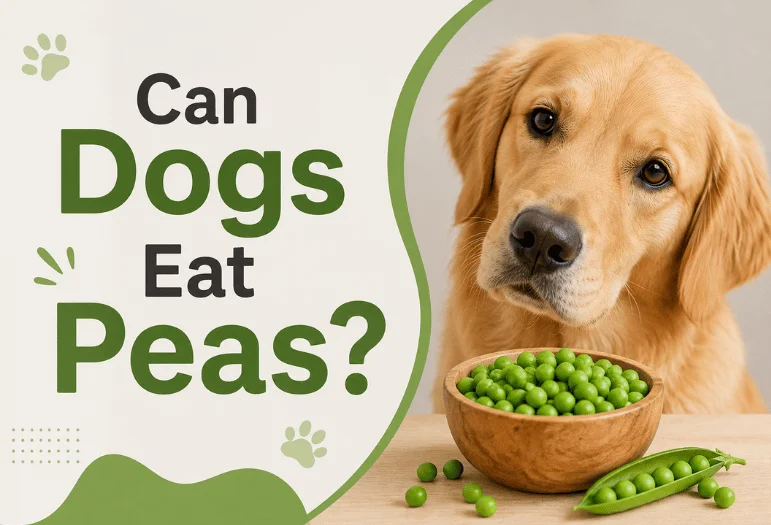
Peas are not toxic. That part is settled, and every page on the first results page tells you the same thing. The question worth your attention is the one a federal agency opened a file on. It has almost nothing to do with a spoonful of green peas in a food bowl.
So, can dogs eat peas? Yes. What actually changes the answer is the type, the packaging, and above all, the amount in your dog’s daily kibble. There is more on this in Can Dogs Eat Bell Peppers.
Quick answer: Plain garden, snow, and sugar snap peas are safe as an occasional treat, fresh or frozen. Canned ones carry too much salt. Dried split peas need cooking first. Something else deserves more caution: legume-heavy kibble is under federal scrutiny for a possible heart link, and dogs prone to urate stones should skip peas entirely.
| Topic | Answer |
|---|---|
| Can dogs eat peas? | Yes, in moderation. |
| Safe types | Fresh, frozen, snow, and sugar snap peas. |
| Avoid | Canned peas (high sodium) and uncooked dried split peas. |
| Serve | Plain only—no salt, butter, garlic, or onions. |
| Not suitable for | Dogs with kidney disease or urate bladder stones. |
| Main concern | Pea-heavy grain-free diets are under FDA review for a possible DCM link, but no cause has been confirmed. |
| Bottom line | Plain peas are a healthy occasional treat for most dogs. |
The Heart Question Everyone Skips Past
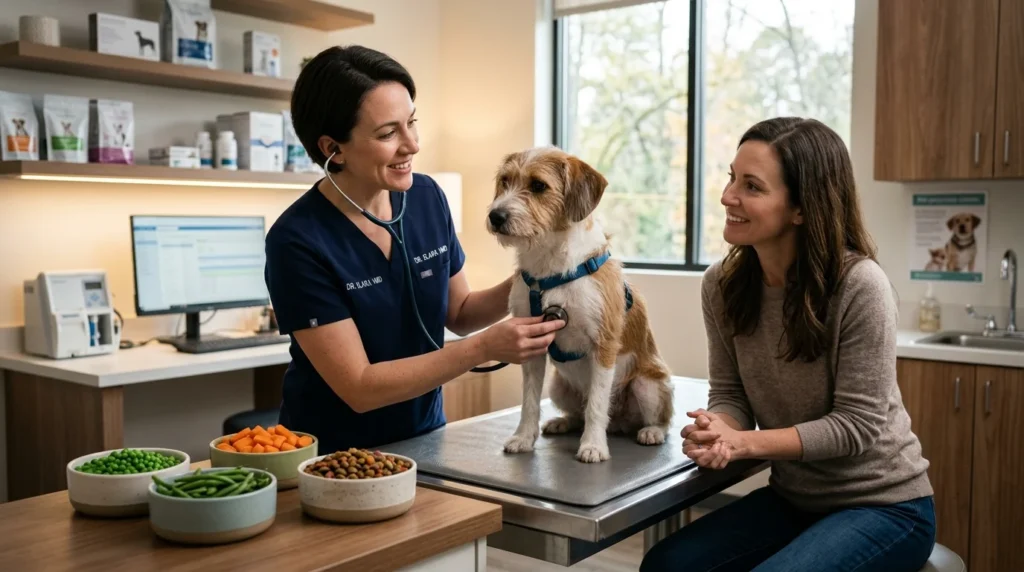
In 2018, the US Food and Drug Administration began looking into reports of dilated cardiomyopathy, or DCM, in breeds that rarely get it. DCM is a disease where the heart muscle thins and stretches until it pumps poorly. One common thread showed up in the diets.
According to the FDA’s investigation page, the agency received 524 reports of DCM between January 1, 2014 and April 30, 2019. Of the products named in those reports, 93 percent contained peas or lentils. Ninety-one percent were labeled grain-free.
Now the measured part, because this is where most write-ups go wrong in one direction or the other. The FDA has never established cause. Its own page says adverse event reports “do not supply sufficient data to establish a causal relationship” on their own.
Owners report the foods they notice, vets report the cases they see, and grain-free food was selling hard through those exact years. It stopped issuing public updates in December 2022 and asked owners to talk to their veterinarian before switching anything.
A 2025 narrative review in Veterinary Sciences by Mornard and colleagues found that taurine deficiency, the original suspected mechanism, turned out to be uncommon in affected animals. Some had raised plasma taurine instead. Its authors point toward fiber and bile acid handling, plus shifts in gut bacteria, and they conclude the evidence supports an association rather than proof. Several affected pets improved after a diet change.
Has your dog got a heart murmur, or a breed history of cardiac disease? That conversation belongs with your vet. Our animal health articles are a reasonable place to read up first. None of that makes a few peas dangerous. It makes pea-based kibble a question.
The Six Forms of Peas, Side by Side
| Form | Verdict | Why |
| Garden (English) peas, fresh or frozen | Safe | Plain and unsalted, with fiber and vitamin K. Frozen straight from the bag works as a hot-weather treat. |
| Snow peas | Safe | The flat pod is soft and edible. Chop it for a small dog so it cannot lodge sideways. |
| Sugar snap peas | Safe | Whole pod, crunchy, popular with dogs. Pull the tough string along the seam first. |
| Canned peas | Caution | Packed in salt brine. Rinsing helps, but plain frozen is the easier choice. |
| Dried split peas | Caution | Rock hard and starchy uncooked. Cook them plain. Leftover pea soup usually hides salt, ham, and onion. |
| Pea protein, pea starch, pea flour | Depends on the whole recipe | Not a treat at all. This is a base ingredient, and heavy inclusion is what the FDA investigation actually concerns. |
Can Dogs Eat Peas Safely? Key Takeaways
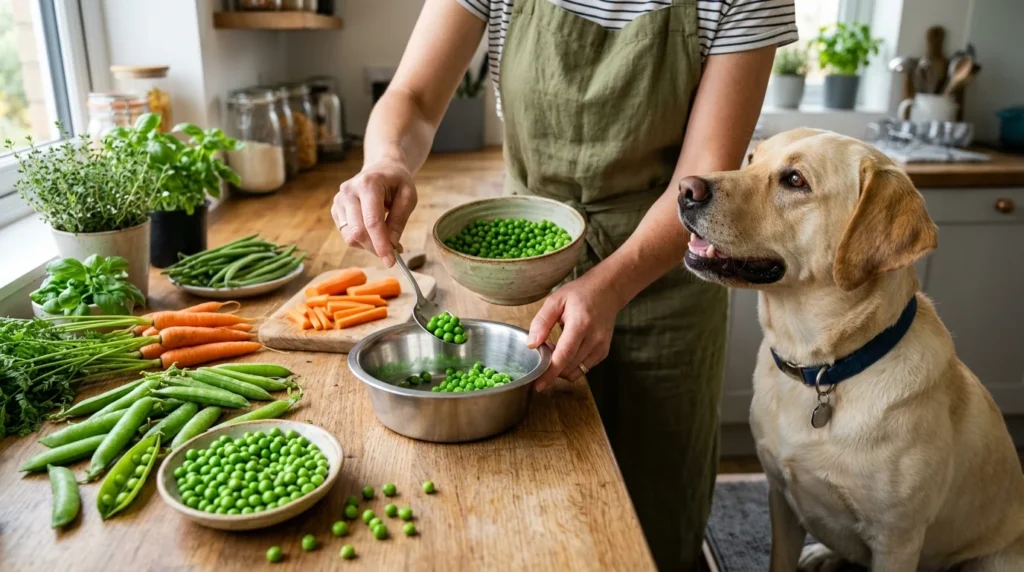
- Yes, in small amounts, and the plainer the better.
- Rank order: frozen and fresh first, canned last, dried split peas only after cooking.
- Treats of any kind should stay under 10 percent of daily calories.
- Peas in the bowl and peas as the second ingredient in the bag are two different conversations.
- Urate stone formers and dogs on a prescription kidney diet are the real exceptions.
Fresh Peas Are a Treat. Pea Protein Is a Formula Decision.
Pea protein became popular for reasons that have nothing to do with your dog. It is cheap, it pushes the protein number on the label up, and it lets a manufacturer drop grains without losing structure in the kibble.
Here is the part almost nobody explains. One legume can appear on an ingredient panel three or four separate times: peas, pea protein, pea starch, pea fiber. Each line looks modest. Added together, they can outweigh the meat sitting at the top of the list. Ingredient splitting is legal. It is also common, and invisible unless you know to look.
Two practical checks before you buy:
- Count every pea-derived line on the panel, not just the first one.
- Look for a statement that the food meets AAFCO profiles through feeding trials rather than formulation alone.
A food with peas in position seven is not the same product as one built on pea protein. If you are weighing up a switch, our dog food and feeding guides cover how to read a panel properly.
The Dogs That Should Skip Peas
Urate stone formers
This is the hazard the ranking pages leave out. Some breeds carry a mutation in the SLC2A9 gene that causes hyperuricosuria, and they build urate bladder stones. Dalmatians and Bulldogs head the list, along with Black Russian Terriers. Any dog with a liver shunt sits in the same position. Vets manage these patients on purine-restricted diets for life.
Peas are not a high-purine food. Organ meats are far worse, and plant proteins sit at the low end overall. But legumes rank higher than most vegetables, and a dog already on a prescribed low-purine diet should not be getting unplanned extras from the kitchen. Ask the vet who wrote the diet plan.
Dogs with chronic kidney disease
Renal patients are usually managed on controlled phosphorus and potassium. Peas carry a meaningful amount of both. One or two will not undo a treatment plan, but a daily habit can, and the owner rarely connects the two.
Small breeds and gassy stomachs
Pods are fibrous. Swallowed whole, a snap pea can make a Chihuahua gag. Legumes also ferment, so a dog with a sensitive gut may reward you with wind that clears a room.
Serving Sizes and Prep That Take Two Minutes
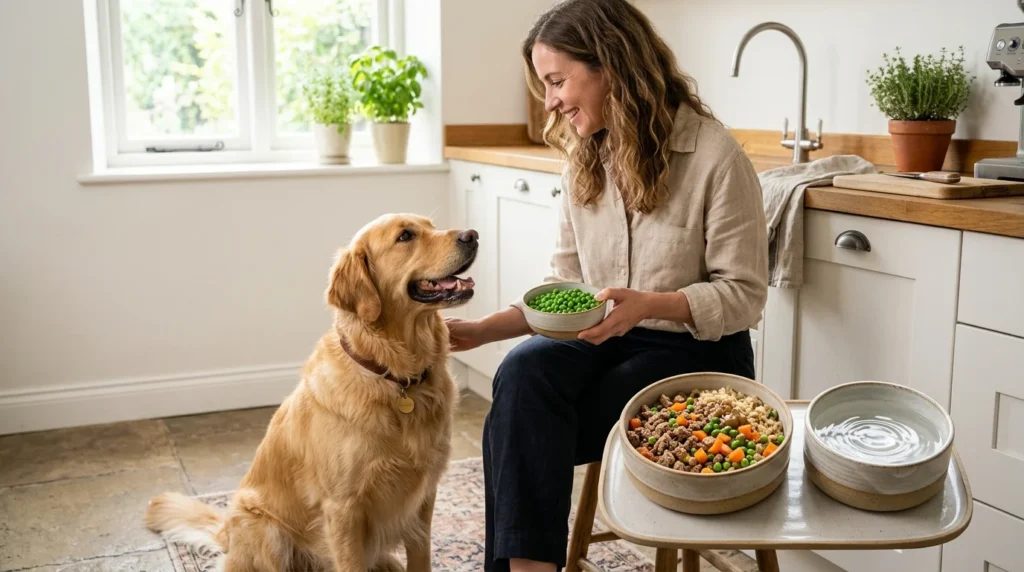
Portion by body weight, not by handful.
- Under 10 lbs: 3 to 5 peas
- 10 to 30 lbs: about 1 tablespoon
- 30 to 60 lbs: about 2 tablespoons
- Over 60 lbs: up to a quarter cup
A one-pound bag of plain frozen peas costs about $2 in most US supermarkets. Preparation is short. Rinse them. Skip the butter and oil. Added salt matters more than the peas themselves, and so does any garlic or onion. Steam or boil plain, or serve frozen. Mash them for a puppy or a senior with worn teeth. Introduce any new food on a day when you will be home to watch, a habit worth applying across your everyday pet care routine.
Start with one or two. Wait a day.
What to Do With This
Peas earn a spot as a low-calorie treat for most healthy pets. Check the label on the bag with the same attention you give the bowl. Flag any pea-heavy grain-free food with your vet at the next visit, especially if your dog has a heart murmur, a stone history, or kidney disease. That single conversation is worth more than any article.
Frequently Asked Questions
Yes, a few plain peas daily are fine for a healthy adult. Keep all treats under 10 percent of daily calories, and count peas toward that share rather than treating them as free.
Snow pea and sugar snap pods are edible and safe. Garden pea pods are tough and stringy, so shell those and serve the peas alone.
Rinsing removes a fair share of the surface salt, so an occasional rinsed spoonful is unlikely to harm a healthy dog. For a heart or kidney patient, use plain frozen instead.
Yes, mashed and in tiny amounts, once they are on solid food. Growing puppies need a complete diet, so extras should stay small.
Not on your own. The FDA specifically asks owners to consult a veterinarian first. Bring the bag or a photo of the panel to your next appointment.
No. The ornamental sweet pea is a flowering vine, not a vegetable. ASPCA listings mark it toxic to horses and non-toxic to canines, though it is still not food.