

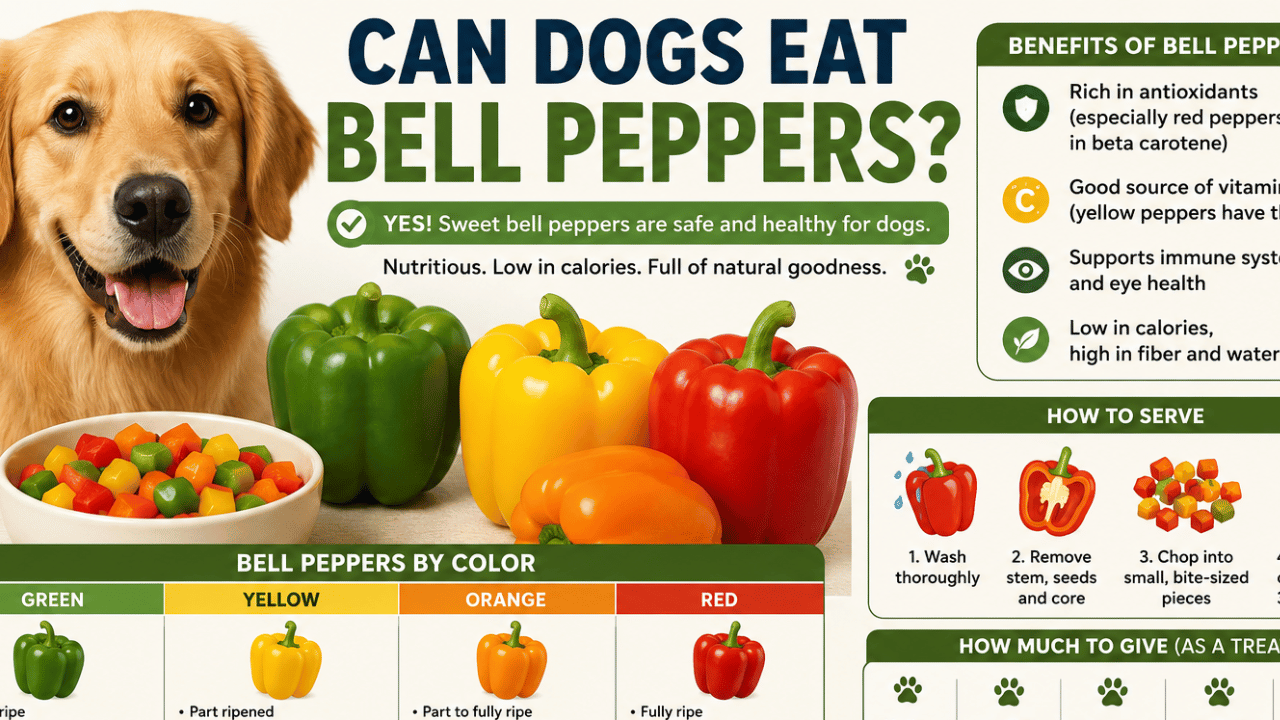
Sweet peppers belong to the small group of vegetables that are fine for dogs. So can dogs eat bell peppers? Yes, in every color, raw or cooked, with the stem and seeds taken out first. What actually matters is which color goes in your cart.
Quick answer: sweet peppers of every color are safe for dogs and carry no capsaicin. Red is the fully ripe version and by far the richest in beta carotene. Green is the same fruit picked early, so it is tougher and more bitter. Serve raw or steamed, chopped small, with seeds and stem out, under a tenth of daily calories.
| Color | Ripeness | Vitamin C | Beta carotene | Texture for a dog | Verdict |
| Green | Picked unripe | 80.5 mg | 208 mcg | Thick skin, grassy, slightly bitter | Fine, chop it smaller. |
| Yellow | Part ripened | 183.4 mg | 120 mcg | Softer, sweeter | Vitamin C leader |
| Orange | Part to be fully ripe | Grouped with yellow by USDA | Grouped with yellow by USDA | Soft and sweet | Good, but no separate data |
| Red | Fully ripe | 127.8 mg | 1,624 mcg | Softest, sweetest | Strongest all-rounder pick |
Figures are USDA values for raw sweet pepper per 3.5 ounces.
Key Takeaways
- Sweet peppers are non-toxic to dogs. No color is off limits.
- Red is ripe and sweet, loaded with beta carotene. Green is unripe and chewier, the one fussy dogs refuse.
- Yellow, not red, tops the vitamin C table.
- Cut the stem and core away and rinse the seeds out. Neither is poisonous, but neither digests well.
- Treats of any kind stay under 10 percent of your dog’s daily calories.
- The real hazard is a hot pepper, not a sweet one. Chili varieties carry capsaicin; bell varieties carry none.
Why Ripeness Changes The Food in Your Hand
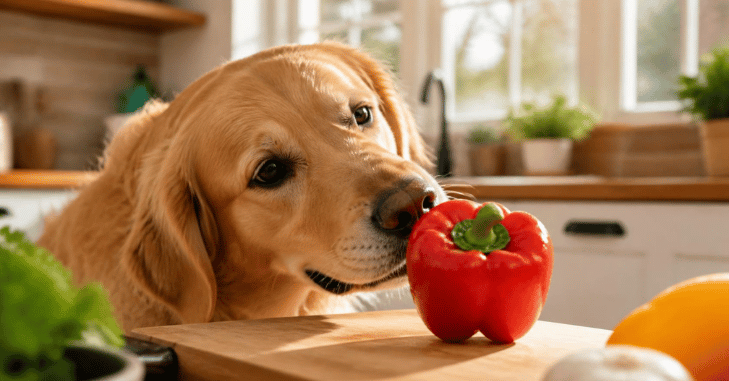
A green pepper and a red pepper are usually the same plant on the same day of a different week. Growers pick green early. Left on the vine, that fruit turns yellow, then orange, then red, and its pigments and sugars climb the whole time. Can Dogs Eat Bell Peppers? You are not choosing between four vegetables. You are choosing four points on one ripening curve.
The gap that opens up is large. According to the USDA’s National Nutrient Database, raw red sweet pepper carries 1,624 micrograms of beta-carotene per 3.5 ounces. Green sweet pepper holds 208 micrograms. That is close to eight times as much in the ripe fruit. Beta-carotene is what a dog converts into vitamin A for vision and immune function.
Vitamin C runs the other way from what most pet articles claim. Figures from the same USDA vitamin C tables put yellow sweet pepper at 183.4 mg per 3.5 ounces. Red trails at 127.8 mg and green at 80.5 mg. So red wins on pigment, not on ascorbic acid. Dogs also make their own vitamin C in the liver, so this matters far less for them than it does for you.
Orange is the odd one out. USDA logs it together with yellow rather than separately, so an orange pepper has no entry of its own to compare. Treat it as a sweeter, softer midpoint.
Green Peppers: The Unripe Option Our Dog Will Notice
Green is the cheapest color in the produce aisle for a reason. It spends the least time on the plant. US retail prices sat near $1.60 a pound across all colors in mid-2026, with green typically the low end and red the high one.
That shows up on the plate. Green fruit has firmer walls, a waxy skin, and a grassy, faintly bitter flavor from compounds that fade as the pepper ripens. Plenty of dogs eat it happily. Plenty of others take one lick and walk away, then eat a red slice from the same board.
Firm skin also survives the gut better. A dog that bolts food may pass recognizable green flecks the next morning, which is untidy rather than dangerous. Chop green pieces smaller than you would red ones, or steam them for three minutes to soften the walls. The same logic runs through our breakdown of pea types ranked by safety. Soft and small beats raw and chunky for a sensitive stomach.
The Nightshade Worry and the Pepper That Really Is a Problem
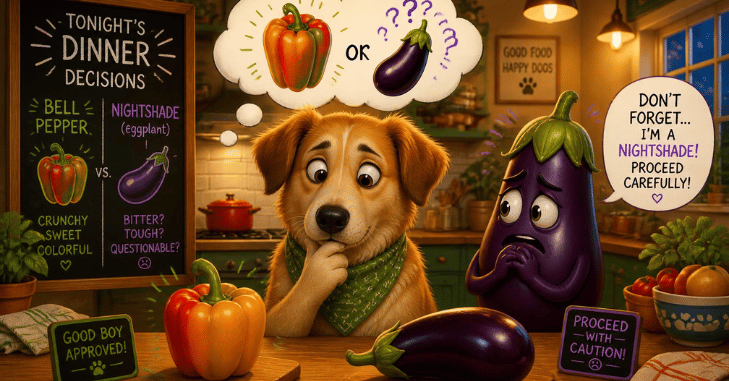
Peppers sit in the nightshade family, which is where the internet panic starts. Solanine is the toxin people are thinking of, and it belongs to the genus Solanum: potato sprouts, green potato skin, and tomato foliage. Sweet peppers are Capsicum annuum, a different genus in the same family. They do not carry a solanine load worth worrying about.
Capsaicin is the compound that deserves respect, and sweet peppers do not have it. Bell varieties measure zero on the Scoville scale because they carry a recessive gene that shuts down capsaicinoid production. Jalapeno, serrano, and cayenne are cultivars of that same species with the gene switched on—same species, opposite outcome.
So the risk is a mix-up, not the vegetable. A dog that steals a jalapeno slice off a taco gets burning, drooling, and pawing at the mouth, often with vomiting a few hours later. Offer water, hold off on food, and call your vet if the vomiting keeps going. Dried chili flakes and hot sauce are worse than fresh chili because the dose is concentrated.
Seeds, Stem, and Skin: What to Cut Off
None of these parts are poisonous. All three are harder work than the flesh.
- Seeds: tiny and indigestible, easy to rinse away. A stray few will pass through without drama; a mouthful can add up to gas.
- Stem and core: woody and fibrous. This is the piece a small dog could choke on or lodge in the gut, so bin it.
- Skin: edible but waxy. Steaming softens it, which helps seniors and dogs with worn teeth.
- Leaves and stalks of the plant itself: keep dogs away from the growing plant in the yard. The fruit is the food, not the foliage.
Seed removal comes up with almost every fruit, and the stakes vary wildly. Pepper seeds are a digestive nuisance. A stone fruit pit is a different category of problem, as the two pit risks in nectarines show.
How Much Can a Dog Eat?
Use body weight, not a handful. These are per-serving amounts of chopped raw pepper, offered a few times a week rather than daily.
| Dog’s weight | Serving size |
| Under 10 lbs | 1 to 2 teaspoons, chopped fine |
| 10 to 25 lbs | About 1 tablespoon |
| 25 to 50 lbs | 2 to 3 tablespoons |
| 50 to 90 lbs | Up to a quarter of a medium pepper |
| Over 90 lbs. | Up to half a medium pepper |
The ceiling behind all of it is the 10 percent rule: treats and extras should stay under a tenth of daily calories, so the balanced diet stays balanced. Start with one small piece the first time and wait a day before offering more.
How to Serve Them Without Spoiling a Good Vegetable
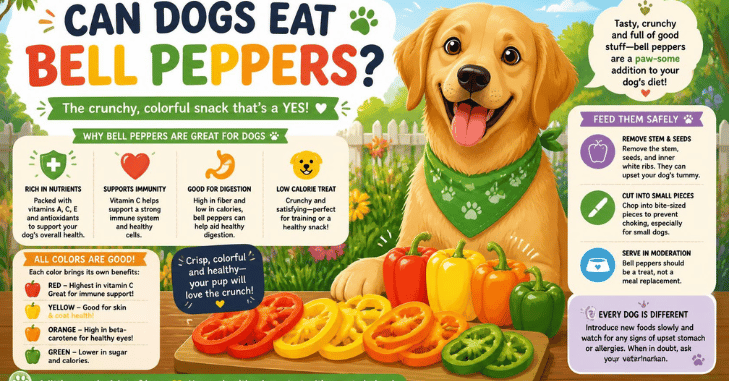
Preparation is where most pepper problems begin, and almost none of them involve the pepper.
- Wash the outside, then cut the pepper in half lengthwise.
- Pull out the stem, core, and seed cluster and throw them away.
- Slice the flesh into pieces smaller than your dog’s throat.
- Serve raw for crunch, or steam for three to five minutes for an easier chew.
- Cool it before it goes in the bowl.
Skip the oil, butter, and salt. Skip the seasoning too. Garlic and onion powder are standard in fajita and stir fry mixes, and both are genuinely toxic to dogs. The toxic garlic dose by body weight is smaller than most owners expect, which is why leftover cooked peppers from your own dinner are usually a no.
Two other preparations to leave alone. Stuffed peppers carry rice, cheese, ground meat, and salt your dog does not need. Pickled peppers are worse, for the same sodium reasons behind the risks in pickles and brined vegetables.
Can Dogs Eat Bell Peppers Every Day?
You can, in a small amount, though rotation serves your dog better. A varied treat list spreads the nutrients around and stops a dog fixating on one texture. Daily feeding also raises the odds of loose stools, since raw pepper brings plenty of fiber and water. Three or four times a week suits most dogs.
Signs It Did Not Agree with Your Dog

Mild gas or one soft stool after a new food is common and passes on its own. Watch for anything beyond that.
Call your vet if you see repeated vomiting, diarrhea lasting more than a day, a swollen or painful belly, retching without producing anything, or unusual lethargy. Those signs point to an obstruction or an intolerance rather than a treat that did not suit. Puppies, seniors, and small breeds dehydrate fastest, so give them less rope.
Conclusion
Can Dogs Eat Bell Peppers are one of the safest vegetables you can offer your dog when prepared correctly. Red, yellow, green, and orange sweet peppers are all non-toxic, but red peppers stand out for their high beta carotene content, while yellow peppers provide the most vitamin C. Remove the stem, core, and seeds, serve small bite-sized pieces raw or lightly steamed, and keep portions within the 10% treat guideline. Avoid hot peppers, garlic- or onion-seasoned recipes, and heavily salted or pickled versions. When fed in moderation, bell peppers make a crunchy, low-calorie treat that adds variety to your dog’s diet without unnecessary risks. For the full picture, read Can Dogs Eat Spinach.
FAQ
No. Sweet peppers are non-toxic, and no color is more dangerous than another. The toxicity question belongs to hot chili varieties and to the garlic or onion people cook peppers with.
Yes, from around 12 weeks, in tiny amounts. Puppies need their growth formula for nearly all of their calories, so keep extras to a teaspoon or less and steam it soft.
Red, for most dogs. It is the ripest, the sweetest, and the easiest to chew, and it carries roughly eight times the beta-carotene of green. Yellow is the pick if vitamin C is your priority.
Both work. Raw keeps more vitamin C and gives a satisfying crunch; steaming softens the skin and suits older dogs. Boiling leaches nutrients into the water, so steam instead.
One medium sweet pepper is unlikely to harm an average-sized dog. Expect gas and possibly a loose stool. Watch for straining or repeated vomiting in a small dog, since the core and stem are the parts that can lodge.
They are a good one. Diced red pepper is low in calories, sweet enough to hold attention, and easy to carry. Count the pieces toward that 10 percent ceiling.