
Half the fruit was on the counter. Your dog took care of the other half. Before you start typing symptoms into a search bar, know that the soft orange flesh is the least worrying part of this particular snack.
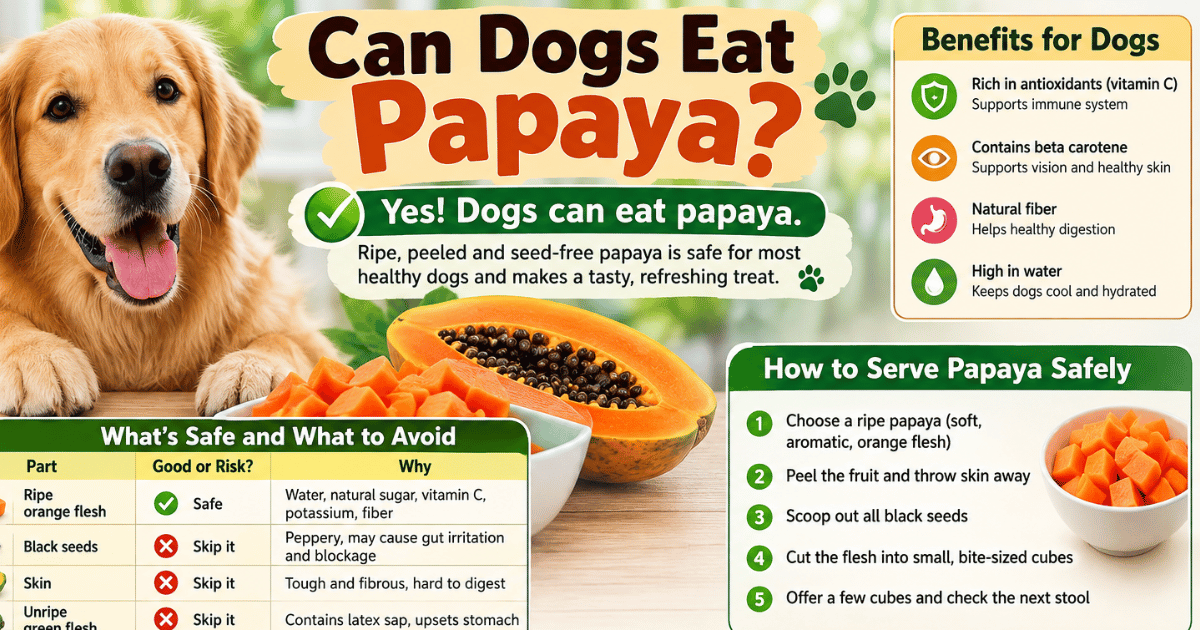
Short answer: Yes. Can dogs eat papaya? Ripe flesh, peeled and scooped clean of seeds, suits most healthy dogs as an occasional treat. The seeds and the tough skin are the parts you take out. Keep the serving small, because the sugar and fiber upset a stomach long before the calories become a problem.
What Does Each Part of the Fruit Do to Your Dog?
Split the fruit up, and the advice stops being vague. Each part behaves differently, and so does the fix.
| Part of the fruit | What it does to your dog | What to do with it |
| Ripe orange flesh | Mostly water and natural sugar, with vitamin C, potassium, and a little fiber | Peel it, cube it, and keep it inside the treat limit below. |
| Black seeds | Peppery and rich in benzyl isothiocyanate. Small, slick, easy to swallow in clumps | Scoop every one out before the bowl goes down. |
| Skin | Tough and fibrous. It does not break down in the gut. | Throw it out; never hand over a strip. |
| Unripe green flesh | Loaded with milky latex sap, which irritates the stomach lining | Wait until the fruit is soft, orange, and fragrant |
| Dried strips and chews | Sugar was concentrated several times over, sometimes with sweeteners added. | Read the bag, or hand over fresh fruit instead. |
| Leaves and stem | The same latex, and no nutritional reason to offer them | Keep them off the floor. |
Key Takeaways
- The ripe flesh is a low-risk snack. Portion size is the only variable that matters much.
- The seeds are not a poisoning emergency. They are a choking and blockage risk.
- The skin blocks guts. It does not poison them.
- All treats together belong inside 10 percent of your dog’s daily calories.
- Diabetic dogs and dogs with a pancreatitis history get none of it.
- Dried strips carry several times the sugar of the fresh version.
What Does the Ripe Flesh Actually Deliver?
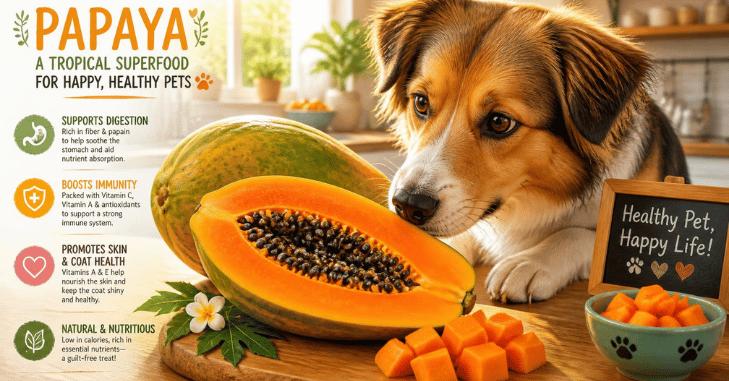
A 3.5-ounce serving of raw papaya holds 43 calories, 60.9 mg of vitamin C and 182 mg of potassium, according to USDA FoodData Central. It is nearly 90 percent water. That makes it a light, cooling snack on a hot afternoon and a poor excuse for a supplement.
Here is the part the wellness copy leaves out. Healthy dogs make their own vitamin C in the liver, so they do not need yours. Can Dogs Eat Papaya? A complete food already covers the potassium and the vitamin A. Feed the fruit because your dog likes it, not because it fixes anything.
The one genuinely interesting compound is papain, the enzyme that breaks down protein and gives the flesh its slightly fizzy edge on the tongue. Papain is why some owners reach for this fruit when a dog seems gassy. Any effect from a few small cubes is modest at best, and a dog with ongoing digestive trouble needs a diagnosis rather than fruit. Also worth reading: Can Coyotes Be Domesticated.
Are the seeds toxic, or just a bad idea?
Almost every page on this topic says the seeds contain cyanide, then stops. Chemistry gives a sharper answer than that, and the difference changes what you should worry about.
Williams and colleagues published a 2013 analysis in the Journal of Food Composition and Analysis. This fruit carries an abundance of glucotropaeolin, the glucosinolate that converts to benzyl isothiocyanate, alongside low levels of cyanogenic glycosides. Their paper called the pairing unusual, since the two compound classes were assumed to be mutually exclusive.
Translate that into kitchen terms. The peppery bite in the seeds comes from benzyl isothiocyanate, a gut irritant in quantity, and the cyanogenic fraction is small. A dog would have to eat an absurd volume of seeds to approach a cyanide problem.
Realistic hazards are duller and far more common. Seeds are slippery, so a dog swallows a mouthful without chewing. In a small dog, a clump of them can lodge. In any dog, a big spoonful means an irritated gut and a rough night.
That makes this fruit unlike a stone fruit, where a single swallowed pit is the entire emergency. Our guide to nectarines and their stones covers the version of this problem that ends in surgery.
The Skin is a Blockage Risk, Not a Poison
Nothing in the peel will poison your dog. It is built to survive shipping, and a canine digestive tract cannot take it apart. A strip of it travels through mostly intact. In a Chihuahua or a puppy, intact is exactly the problem, because the small intestine narrows to roughly the width of a pencil. Peel the fruit over the trash, not over the floor.
Green Fruit and the Latex Problem
Unripe green papaya is a different food. Cut into it and white sap runs out, thick with latex and far more papain than the ripe flesh carries. That sap irritates the mouth and the stomach lining, and it is the reason green fruit is cooked in savory dishes rather than eaten raw.
Wait for it to give under your thumb and a sweet smell at the stem end. Firm, green, and squeaky means it goes back in the fruit bowl.
How Much is Safe by Body Weight
Start with the ceiling veterinary nutritionists use. UC Davis School of Veterinary Medicine puts a hard number on it. Its 2020 treat guidelines for dogs state that treats and extra food items should not exceed 10 percent of daily caloric intake. Everything else, 90 percent or more, comes from a complete and balanced diet. That ceiling covers every biscuit, chew, and scrap of fruit combined.
| Your dog’s weight | Rough daily calories | 10 percent treat allowance | Sensible first serving |
| Under 10 lb | 250 to 400 | 25 to 40 calories | 1 or 2 half-inch cubes |
| 10 to 25 lb | 400 to 750 | 40 to 75 calories | 2 or 3 cubes |
| 25 to 50 lb | 750 to 1,200 | 75 to 120 calories | 4 or 5 cubes |
| 50 to 90 lb | 1,200 to 1,700 | 120 to 170 calories | About a quarter cup |
| Over 90 lb | 1,700 and up | 170 calories and up | About a third of a cup |
Run the numbers and something odd falls out of them. A quarter cup of cubes adds roughly 15 calories, so even a terrier could clear its whole treat allowance on fruit and still be nowhere near full. The calorie ceiling is not what stops you.
The stomach is. Fiber and fructose arriving in a gut that rarely sees either produce soft stool inside a day, which is why the right-hand column stays well under that ceiling. We take the same approach with other produce, and the reasoning behind our portion guidance for peas maps onto fruit almost exactly.
Can Dogs Eat Papaya Every Day?

You can, within the 10 percent rule, but there is little reason to. A daily fruit habit trains a dog to hold out for the treat instead of eating dinner, and it stacks sugar onto a diet that already balances itself.
Twice or three times a week is plenty. Rotate it with green beans, blueberries, or plain cucumber so no single food dominates the treat allowance.
Dogs That Should Skip It
- Diabetic dogs. Free sugars complicate insulin timing, and a 3.5-ounce serving contains close to 2 teaspoons of sugar.
- Dogs with a pancreatitis history. Their diets are managed tightly, and novel treats undo that.
- Dogs on a prescription GI or elimination diet. One new food invalidates the trial.
- Puppies under six months. Their guts are still settling. Stick to their food.
- Dogs who bolt food whole. Cubes still need chewing, and a gulper skips that step.
Ask your veterinarian first if your dog sits in any of those groups. The answer is often yes with conditions rather than a flat no.
Dried Strips, Chews, and Canned Fruit
Drying removes the water and leaves the sugar behind, so an ounce of dried papaya carries several times the sugar of an ounce of fresh. Many bags also add cane sugar on top of that, and some sweeten with xylitol, listed on labels as birch sugar. Xylitol drops canine blood sugar hard and damages the liver, and there is no safe amount of it.
Canned fruit brings its own problems: heavy syrup, sometimes sulfites, and occasionally an artificial sweetener. Reading the panel matters more than the headline on the front of the pack, which is the same habit that decides whether a jar of pickles is harmless or not. Fresh fruit sidesteps all of it. Buy the fruit, not the treat.
Your Dog Swallowed Seeds or a Strip of Skin
Most dogs pass a small amount of either within one to three days, and you will never know it happened. Watch anyway.
Call your veterinarian the same day if you see repeated vomiting, no bowel movement for 24 hours, a hunched back, a hard or painful belly, refusing food, or unusual quietness. Call sooner if your dog is small, if the amount was large, or if the skin went down as a whole piece.
Do not make your dog vomit at home. A pet who has swallowed something bulky can choke on the way back up, and your veterinarian may want the item where it is until they have looked at it.
How to serve it
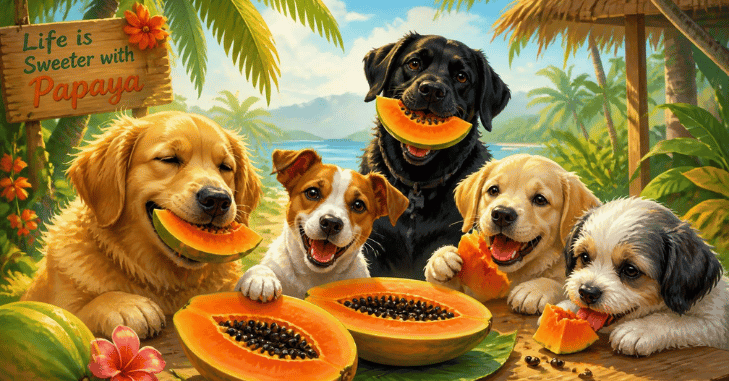
- Pick a fruit that yields to gentle pressure and smells sweet at the stem.
- Wash the outside, then peel it and throw the skin straight in the trash.
- Halve it and scrape out every black seed with a spoon.
- Cut the flesh into cubes your dog has to chew, roughly half an inch for a small dog.
- Offer one cube, wait a day, and check the next stool before you offer more.
Conclusion
Can Dogs Eat Papaya? Can papaya be a safe, refreshing treat for most healthy dogs when served the right way? Always choose ripe papaya, remove the seeds and tough skin, and offer only small, bite-sized portions as an occasional snack. While the soft flesh is low in calories and rich in nutrients, too much can cause digestive upset because of its natural sugar and fiber.
Avoid unripe papaya, dried sweetened products, and canned varieties, and never feed the peel or seeds. When prepared properly and served in moderation, papaya is a healthy addition to your dog’s treat rotation without replacing a complete and balanced diet.
Frequently Asked Questions
Water and fiber can soften stool a little, and papain may help protein move along. Constipation lasting more than a day or two needs a veterinarian, not fruit, because the causes range from dehydration to a prostate problem.
Wait until six months, then offer a single small cube. Puppy digestion is easily thrown off, and growth diets are balanced tightly enough that extras genuinely matter.
Skip both. Juice strips out the fiber and concentrates the sugar, and smoothies usually carry dairy, honey, or a sweetener your dog does not need.
No. Enzyme supplements are dosed far higher than anything in a cube of fruit, and they belong in a treatment plan your veterinarian wrote.
One slice from a medium or large dog usually passes. So, can dogs eat papaya after a mishap like that? Yes, next time with the peel removed. For now, watch for the warning signs above and call your clinic if any of them show up.