


The cucumber underneath was never the problem. What makes a pickle a pickle is the brine, and no two jars mix it the same way. One holds salt, vinegar, dill and nothing else; the next holds garlic, onion, sugar and turmeric.
Can dogs have pickles? A plain dill slice won’t poison a healthy adult dog, but it isn’t a good treat. One small dill spear carries 283 mg of sodium. Skip any jar that lists garlic, onion powder, or xylitol, and hand over plain cucumber instead.
What’s in the jar decides the answer
Line the jars up, and the pattern is obvious. Salt is the constant. Everything the maker stirred in on top of it is what changes the verdict.
| Jar on the shelf | Ingredients of concern | Verdict for your dog |
| Plain dill | 809 mg sodium per 3.5 oz, vinegar | One slice at most, healthy adults only |
| Kosher dill | Same brine plus whole garlic cloves | Leave it, the garlic changes the math |
| Bread and butter | Sugar, onion, mustard seed, turmeric | No |
| Sweet gherkins | Heavy sugar syrup stacked on salt | No |
| Hot and spicy | Chili, cayenne, black pepper | No, expect vomiting or diarrhea |
| Any jar listing garlic or onion powder | Concentrated allium, damages red blood cells | No, and phone your vet if a lot went down |
| Reduced sodium dill | 18 mg sodium per 3.5 oz, still vinegar | Harmless in a slice, still pointless |
| The brine itself | The saltiest thing in the jar | Never |
| Plain raw cucumber | 2 mg sodium per 3.5 oz, water and fiber | Yes, this is the one |
Key takeaways
- One dill slice holds roughly 57 mg of sodium. A small spear holds 283 mg.
- The published daily sodium allowance for a 33 lb dog is 200 mg, so a single spear clears a whole day.
- Salt poisoning from a stolen snack is unlikely. Thirst and stomach upset are the realistic outcomes.
- Garlic and onion powder on the label matter more than the salt does.
- Any dog on a heart or kidney diet gets none of it, ever.
- Plain cucumber delivers the same crunch for 2 mg of sodium per 3.5 oz.
Can Dogs Have Pickles? Read the ingredient list before you decide
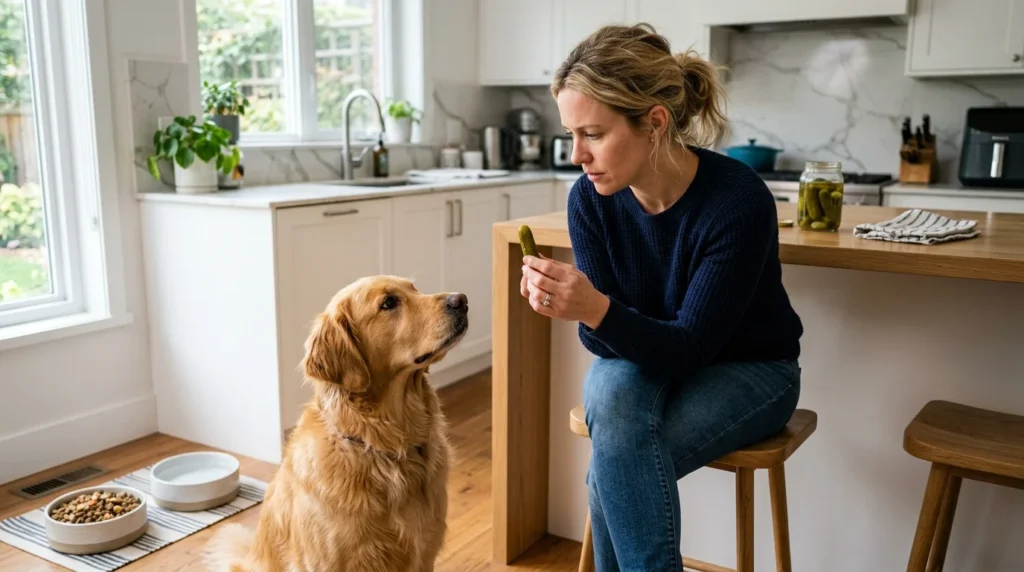
Turn the jar around. Most brands print a short list, and you’re hunting for four words: garlic, onion, xylitol, and “spices”. Garlic and onion both belong to the allium family, and both damage canine red blood cells. Powder concentrates the dose. One clove floating in kosher dill brine is bad enough; garlic powder stirred through the liquid is worse, because it reaches every slice in the jar.
Xylitol turns up in a small number of no-sugar-added sweet pickles. It is the most dangerous thing that can appear on that label, and it acts fast. See it, and the whole jar is off the table, brine included.
Sodium hides on the nutrition panel rather than the ingredient list, so check both. Most dill brands land near 300 mg per serving, and a serving is usually one spear. Our pet food and feeding guides apply the same label habit to treats and toppers.
The jars people ask about most
Kosher dill
Kosher here means brined with garlic, not certified kosher. That catches people out. Almost every kosher dill jar holds whole cloves, so the liquid carries allium compounds that plain dill brine doesn’t. One slice is unlikely to hurt a 60 lb Labrador. It still isn’t worth handing over.
Bread and butter, and sweet gherkins
These trade some salt for sugar, which helps nobody. USDA lists sweet pickle relish at 811 mg of sodium and about an ounce of sugar in every 3.5 oz. Onion and mustard seed usually ride along. Neither jar offers a dog anything it needs.
Hot and spicy
Chili and cayenne irritate a canine gut on the way through. Drooling comes first, then vomiting or diarrhea a few hours later. Nothing in there is toxic. It’s simply miserable for an animal that can’t tell you why it hurts.
The sodium math nobody prints

Here is the number every other page leaves out. According to USDA FoodData Central, dill and kosher dill pickles carry 809 mg of sodium per 3.5 oz. The same record puts a small spear at 1.2 oz, which works out at 283 mg. One thin slice holds about 57 mg. A whole large pickle, 4 inches long, holds roughly 1,092 mg.
Now the other half of the sum. The National Research Council’s owner guide, Your Dog’s Nutritional Needs, sets the daily recommended sodium allowance at 200 mg for an adult dog weighing 33 pounds.
That assumes the dog eats 1,000 calories a day. So one small spear hands it about 140% of a full day’s sodium in a single bite. For a 10 lb terrier on roughly 400 calories, the same spear lands near 350%. Dinner already supplied the allowance, so the spear stacks on top.
Read that number carefully, because an allowance is a floor and not a ceiling. Healthy kidneys and a full water bowl clear surplus sodium without drama. The figure matters because it shows how small a dog’s sodium world is, and how fast one salty snack fills it.
Sodium ion poisoning is real, and further off than it sounds
Salt toxicosis, also called sodium ion poisoning, is the endpoint every article on this topic gestures at without quantifying. It deserves a number too.
The Merck Veterinary Manual reports that clinical signs appear once a 33 lb dog takes on roughly an ounce of salt. It puts the acute oral lethal dose near two ounces. Dill pickle runs about 2% salt by weight.
Do the division. That dog would have to eat around 3.2 lbs of pickle to reach the lower figure. Call it 40 small spears, in one sitting, on top of dinner. For a closer look at this, see Can Dogs Eat Asparagus.
Brine is the realistic risk, not the vegetable. A dog that laps up half a jar of liquid takes on far more salt per mouthful than one that swipes a spear off the counter. Watch for staggering, tremors, disorientation and relentless drinking. Our animal health guides walk through what a poisoning call looks like from the owner’s side of the phone.
The trouble you’re far more likely to see
Most dogs that steal a pickle are fine by bedtime. Some are not.
- Thirst and an empty water bowl. Sodium pulls water along with it, so expect a restless night and possibly an accident indoors.
- Vomiting or loose stools. Vinegar and spice cause this far more often than the salt does.
- Gas and bloating after the sweet varieties, thanks to the sugar load.
Then there’s the group nobody writes for. Dogs with congestive heart failure, chronic kidney disease, or high blood pressure often eat a prescription low-sodium diet. The entire point of that diet is holding the daily total down. One spear can undo a day of careful feeding, so the answer there isn’t “a little is fine”. It’s none.
Your dog cleared the counter. Now what?
- Find the jar and read the ingredient list. Garlic powder, onion powder, or xylitol turns this from a nuisance into a phone call.
- Work out the amount. One slice taken by a 50 lb retriever is a shrug. Half a jar taken by a 12 lb dachshund is not.
- Fill the water bowl and leave it down. Never restrict water after a salty snack.
- Watch closely for four hours. Vomiting once is common; repeated vomiting, wobbling, or tremors mean call now.
- Phone your vet or the ASPCA Animal Poison Control Center with the label in your hand.
Skip the home remedies floating around online. Making a dog vomit without veterinary instruction can cause more damage than the snack did. Our everyday pet care advice covers the small routines that keep counters clear in the first place.
Plain cucumber is the snack you were reaching for
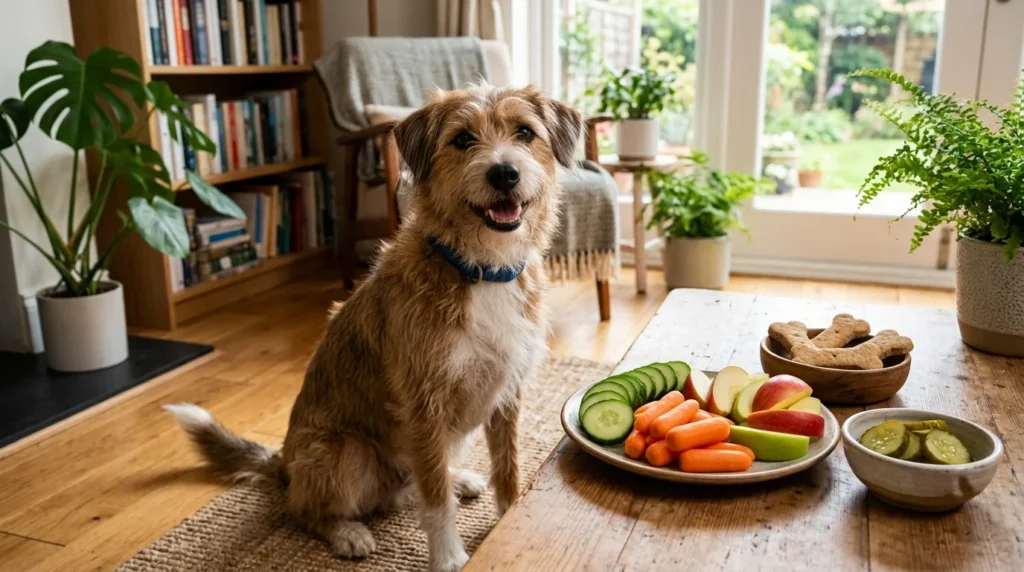
Strip the brine away and what’s left is genuinely good. USDA lists raw cucumber with peel at 2 mg of sodium per 3.5 oz, against 809 mg for the pickled version. Cucumber is roughly 95% water, holds almost no calories, and keeps the same satisfying snap.
Cut it into coins for a small breed so a chunk can’t lodge in the throat. Leave the peel on for the fiber. Serve it cold in July, and you have a treat that costs about $1 and asks nothing of your dog’s kidneys.
Try the swap this week. Put a cucumber coin where the spear would have gone and see whether your dog even notices the difference.
Can dogs have pickles? FAQs
One slice won’t harm a healthy adult, though those 57 mg of sodium buy you nothing. Kosher dill is a firmer no, because garlic sits in the brine.
You can offer a plain dill slice to a healthy adult without much worry. There’s no upside, so most owners are better off skipping the ritual entirely.
No. Brine is the saltiest part of the jar and carries every seasoning in solution. Pour it down the sink.
Extra thirst and a full bladder overnight, most likely. A minority of dogs vomit. Call your vet if the label lists garlic or onion powder.
No. Some vitamins survive the brining, but the sodium riding along cancels the benefit. Cucumber gives you the useful half without the salt.
Give them none. Puppies carry a fraction of an adult’s sodium allowance, and a young gut handles vinegar poorly.