

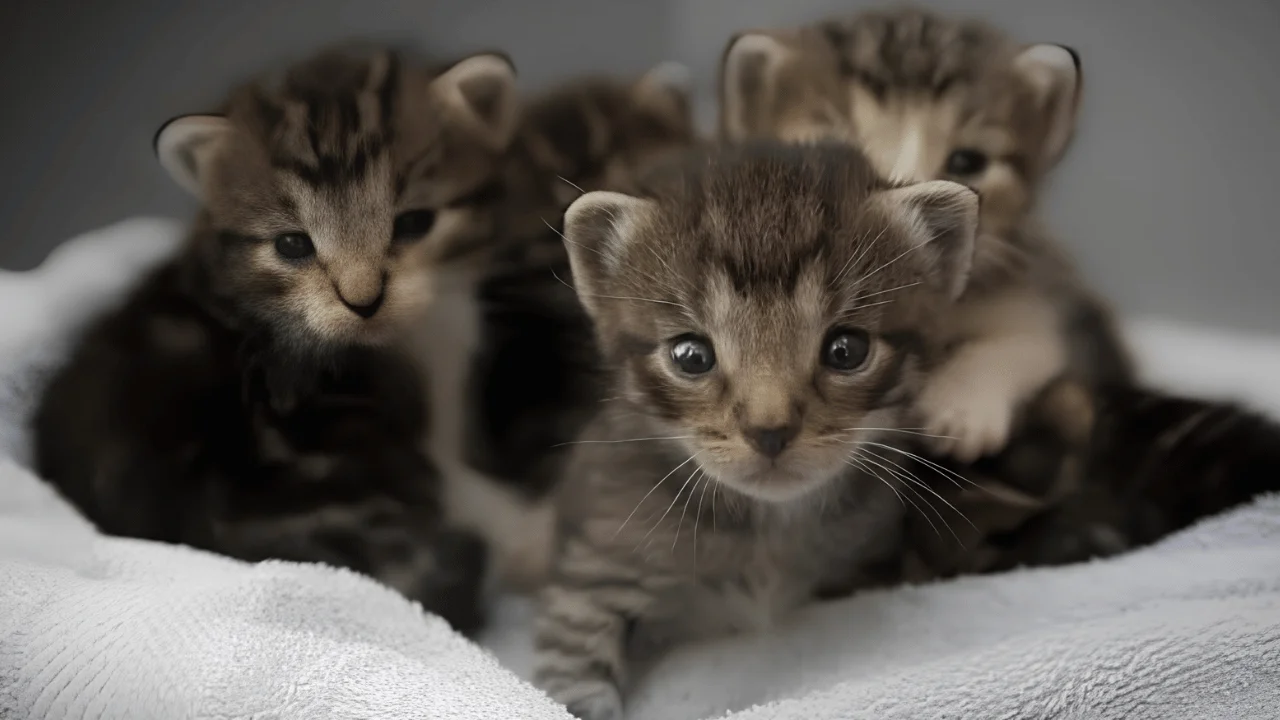
If you’re wondering when do male cats start spraying, watch the months around puberty. Spraying often appears near six months of age. Some intact kittens can begin a little earlier.
Not every male kitten will develop this behavior. Hormones raise the risk, but territory and stress matter too. Early neutering can reduce hormone-driven urine marking before it becomes established.
Quick answer: Male cats usually begin spraying around sexual maturity, often near six months. Some intact kittens may start around four or five months. Others never spray at all. Neutering before puberty lowers hormone-driven marking risk. Neutered cats can still spray because of stress, territory, or social conflict.
Male Cat Spraying at a Glance
| Question | What U.S. cat owners should know |
|---|---|
| Typical starting age | Around 5–6 months, near sexual maturity |
| Can it start earlier? | Yes, some kittens may begin around 4–5 months. |
| Do all males spray? | No |
| Highest-risk group | Intact males |
| Can neutered males spray? | Yes, especially with stress or territorial conflict. |
| Common posture | Standing, tail upright and often quivering |
| Common target | Walls, doors, furniture, and other vertical surfaces |
| Amount of urine | Usually small compared with normal urination |
| Best preventive step | Discuss neutering timing with your veterinarian. |
| Emergency warning | Repeated straining with little or no urine |
Key takeaways
- Spraying often begins as a kitten approaches sexual maturity.
- Intact males are more likely to urinate than neutered males.
- A standing posture and vertical target strongly suggest spraying.
- Squatting and leaving a puddle may indicate another urinary problem.
- U.S. veterinary guidance supports neutering pet cats by five months when appropriate.
- Stress can trigger marking even after neutering.
- A male cat unable to pass urine needs emergency veterinary care.
When Do Male Cats Start Spraying by Age?
Most owners first face this behavior between five and eight months. Six months is a useful midpoint, not a deadline. Individual puberty timing means one kitten may develop the behavior before another.
A four-month-old kitten is less likely to show hormone-driven marking. Yet early sexual development can make spraying possible at that age. An intact kitten approaching five months deserves a neutering discussion with a veterinarian.
By six months, reproductive hormones can strongly influence territorial and mating behavior. An intact adolescent may also roam, vocalize, or become more interested in nearby cats. Spraying can become one part of that wider behavioral change.
Adult cats can begin marking without any previous history. A new pet, move, renovation, or neighborhood cat may provide the trigger. Age becomes less useful once environmental stress enters the picture.
An age-and-action timeline
| Age | What may be happening? | Useful next step |
|---|---|---|
| Under 4 months | Most kittens remain prepubertal. | Watch litter habits and schedule routine veterinary care. |
| 4–5 months | Early puberty may begin. | Discuss neutering before marking develops. |
| Around 6 months | Sexual maturity is common. | Watch for standing urine marking. |
| 7–12 months | Hormonal and territorial behavior can strengthen | Address spraying promptly if it starts. |
| Adult | Stress can trigger new marking. | Look for household or territorial changes. |
Why Puberty Can Trigger Spraying

Urine marking is a communication behavior rather than simple bladder emptying. Cats use scent to signal presence, reproductive status, and territorial information. Intact males have particularly strong hormonal reasons to leave those signals.
The behavior often appears where another cat might encounter the scent. Door frames, windows, walls, and furniture edges are common targets. Outdoor cats visible through windows can trigger marking inside the home.
Spraying is not revenge or deliberate misbehavior. Punishment may increase fear and make the underlying stress worse. The better approach is finding the hormonal, social, or environmental cause.
Is Your Cat Spraying or Peeing Outside the Litter Box?
This distinction matters because the two problems can need different responses. Spraying usually leaves a small mark on a vertical surface. Ordinary urination usually involves squatting and a larger amount.
| Clue | Spraying | Regular or inappropriate urination |
|---|---|---|
| Posture | Standing | Squatting |
| Tail | Raised, often quivering | Usually lower or relaxed |
| Surface | Often vertical | Usually horizontal |
| Volume | Small | Larger |
| Typical purpose | Scent communication | Emptying the bladder |
| First concern | Hormones or stress | Litter-box or medical issue |
A cat can show both behaviors, so the table is not a diagnosis. Sudden elimination changes still deserve veterinary attention. Medical conditions can look like behavioral problems.
Petistra’s guide to male cat anatomy and urinary warning signs explains why urinary problems deserve extra caution in males. Their urethra is relatively narrow, which raises obstruction risk. Straining without producing urine is not typical spraying.
Does Neutering Stop Male Cat Spraying?
Neutering removes an important hormonal driver of marking. Cornell notes that intact males are the group most associated with spraying. Yet about 10% of neutered males may still spray.
Timing matters for prevention because puberty can arrive surprisingly early. The American Veterinary Medical Association supports neutering cats not intended for breeding by five months. Your veterinarian can confirm whether that timing suits your kitten.
Neutering also cannot erase every environmental trigger. A fixed cat may still mark when another cat threatens his perceived territory. Household conflict, moving, or routine changes can have the same effect.
Why a Neutered Male May Still Start Spraying
A sudden return to urine marking often means something changed. Look at where the marks appear before buying deterrents or changing litter. Location can reveal the trigger faster than the smell does.
Common triggers include:
- An unfamiliar cat outside a window or patio door
- A new cat, dog, baby, roommate, or visitor
- Conflict between cats already sharing the home
- Moving to another house or apartment
- Furniture changes or home renovations
- A new feeding or work schedule
- Too few litter boxes or guarded resources
- Strong unfamiliar animal scents brought indoors
Multi-cat households need enough separate resources to reduce conflict. That includes litter boxes, water, food, resting areas, and escape routes. One cat should not need to pass another to reach essential resources.
For litter setup choices, Petistra’s cat litter guide covers texture and acceptance factors. Its litter box enclosure guide also explains why cramped boxes can create problems. Better litter access will not cure every marking problem, but it removes one source of tension.
What to Do When a Male Cat Starts Spraying
First, confirm that you are seeing marking rather than painful urination. Watch his posture and inspect where the urine lands. A short phone video can also help your veterinarian understand the behavior.
Next, arrange a veterinary examination if the behavior is new. This is especially useful when the pattern does not clearly match spraying. A medical problem should be ruled out before assuming stress is responsible.
Then address the most likely trigger. Block views of outdoor cats and separate conflicting resources indoors. Clean marked areas with a pet urine product designed to remove remaining odor.
Avoid ammonia-based cleaners around marked locations. The ASPCA advises against them because urine contains ammonia-related odors. Remaining scent can encourage a cat to revisit the same place.
Never punish, shout at, or frighten a cat after finding a urine mark. He will not connect delayed punishment with the earlier behavior. More anxiety can instead create another reason to mark.
When Spraying Is Really a Veterinary Emergency
True spraying usually involves a small amount of urine deliberately placed on a surface. Repeated litter-box visits with almost nothing produced are different. Pain, crying, vomiting, or increasing distress make the situation more concerning.
Cornell identifies urethral obstruction as an absolute veterinary emergency. Male and neutered male cats have a greater obstruction risk because of their narrower urethra. A complete blockage can become fatal without rapid treatment.
Seek emergency veterinary care if your cat repeatedly strains but cannot produce a normal urine stream. Do not wait overnight to see whether the problem improves. An emergency clinic is appropriate when your regular veterinarian cannot provide immediate care.
Frequently Asked Questions
When Do Male Cats Start Spraying if They Are Not Neutered?
Many intact males begin near sexual maturity, commonly around five to six months. Some kittens can start around four months. Others reach adulthood without developing regular marking.
Do All Male Cats Spray?
No, the behavior is possible but not inevitable. Intact males have the greatest hormonal motivation to mark. A stable environment and timely neutering can lower the chance substantially.
Can a Neutered Male Cat Still Spray?
Yes, and neutering does not remove every reason for marking. Cornell reports that about 10% of neutered males spray. Stress and territorial conflict remain common triggers.
Can Female Cats Spray Too?
Yes, females can urinate marks even though males do it more often. Both intact and spayed females may spray under certain conditions. Petistra covers the differences in its female cat spraying guide.
What Does Male Cat Spray Look Like?
The cat usually backs toward a wall or another upright object. His tail rises and may quiver while he releases a small urine spray. The amount is normally much smaller than a regular litter box urination.
Should I Wait Until My Kitten Sprays Before Neutering Him?
Waiting for spraying to begin is not necessary. U.S. veterinary guidance supports neutering pet cats by five months when there is no reason to delay. Discuss your kitten’s health and timing with his veterinarian.
The Next Step for Your Cat
If your kitten is approaching five months, ask your veterinarian about an appropriate neutering date. Early planning may reduce hormone-driven urine marking. It also gives you time to discuss any behavior changes before they become routine.
If spraying has already started, identify whether hormones, stress, or territorial conflict is involved. Clean previous marks and reduce the trigger whenever possible. Get veterinary help when the pattern is new, persistent, or difficult to identify.
