
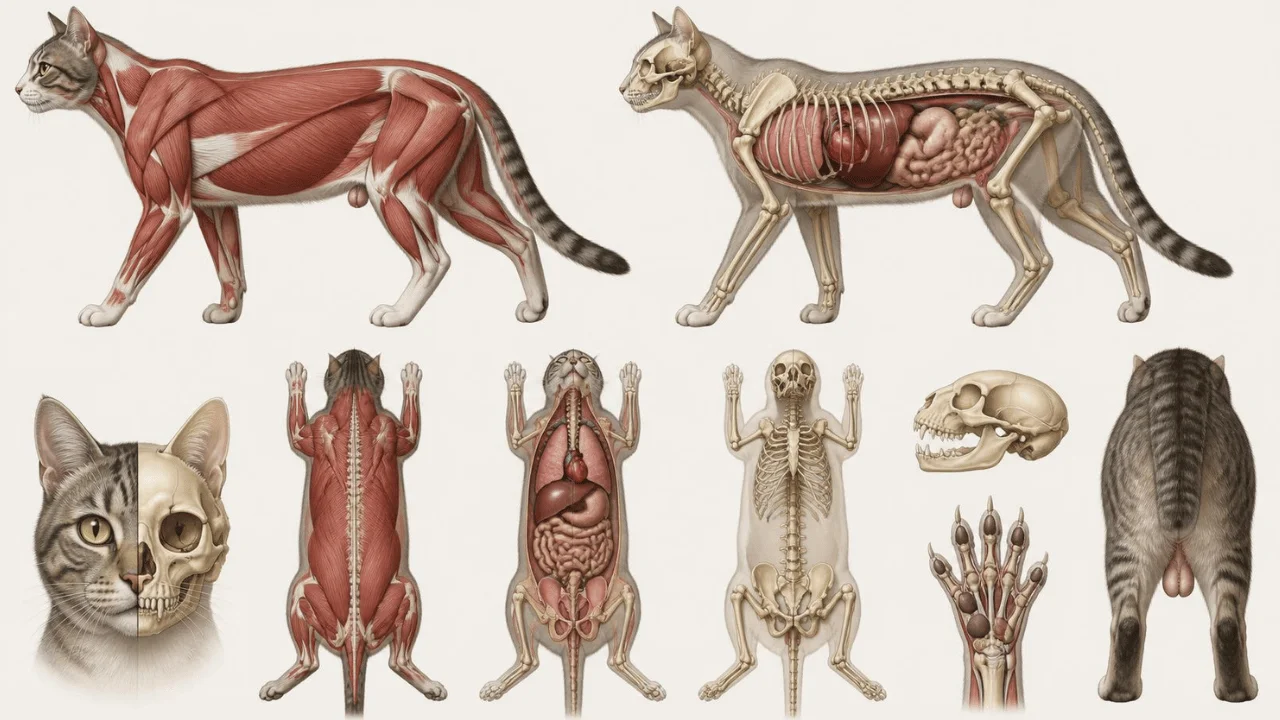
Understanding male cat anatomy helps you tell what is normal, recognize a male kitten, and spot problems that need veterinary care. Male and female cats share most body structures, but their reproductive organs and urinary tracts have important differences. Those differences are especially relevant when identifying kittens, understanding neutering, and watching for urinary blockage.
Quick answer: Male cats have the same major body systems as females, but their reproductive tract includes the testicles, epididymides, ductus deferens, prostate, bulbourethral glands, penis, and scrotum. Their urethra is longer and narrows as it enters the penis, which helps explain why urinary blockage is a particular emergency risk in males.
| Part | Where or what it is | Why owners should know it |
|---|---|---|
| Testicles | Paired reproductive organs, normally in the scrotum | Produce sperm and testosterone |
| Scrotum | Skin pouch below the anus | Holds the testicles in an intact scrotum |
| Epididymis | Coiled structure attached to each testicle | Stores and matures sperm |
| Ductus deferens | Tube leading from the epididymis | Carries sperm toward the urethra |
| Prostate | Small gland near the bladder and urethra | Contributes fluid to semen |
| Bulbourethral glands | Small paired glands near the base of the penis | Part of the reproductive tract |
| Penis and prepuce | The penis rests inside a protective sheath. | Used for urination and mating |
| Urethra | Tube from the bladder through the penis | Carries urine and can become dangerously blocked |
Key Takeaways
- Male reproductive organs include the testes, epididymides, ductus deferens, prostate, bulbourethral glands, and penis.
- The penis normally sits inside the prepuce, so owners may rarely see it.
- An intact adult tom has testosterone-dependent penile spines.
- Neutering removes the testicles but does not remove the penis or urinary tract.
- A male that strains repeatedly but produces little or no urine needs emergency veterinary attention.
Male Cat Anatomy at a Glance: What You Can See Externally
The clearest external differences are found beneath the tail. In an intact male, the anus sits at the top, followed by a wider space containing the scrotum, with the preputial opening farther below. Female kittens have a much shorter distance between the anus and genital opening, and their lower opening looks more like a vertical slit.
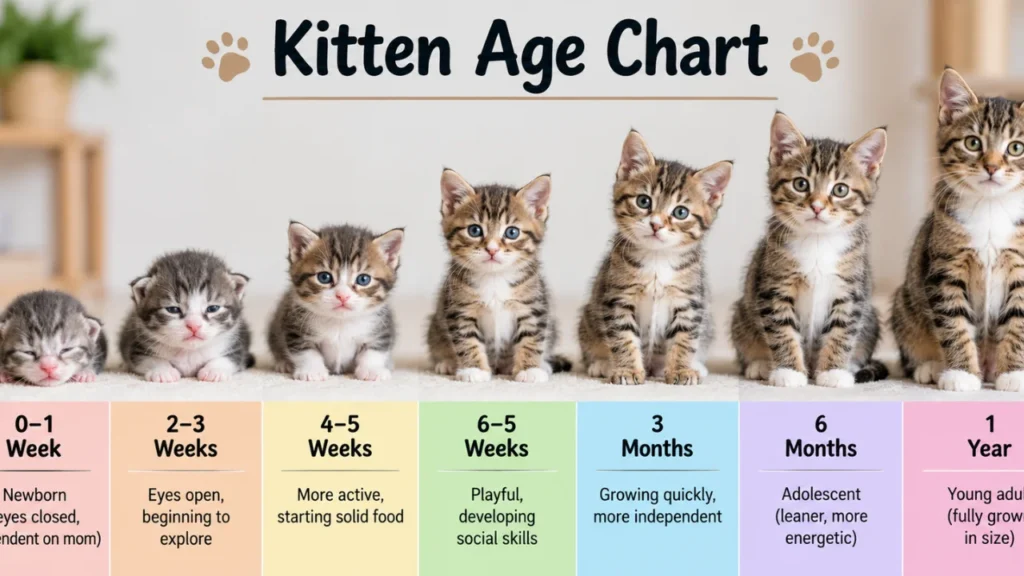
That spacing becomes easier to judge as kittens grow. Petistra’s guide to telling whether a kitten is male or female shows the age-related differences owners can check safely. Its kitten age chart can also help when you are estimating the age of a rescue or stray.
Male cats also have nipples, despite not nursing kittens. They usually form two rows along the chest and abdomen and may be difficult to see through thick fur. A small nipple should not be confused with a tick, although any new swelling, discharge, or painful lump deserves veterinary attention.
Inside the Male Reproductive System
The testicles produce sperm and male sex hormones, including testosterone. Sperm then move into the epididymis, where they mature and are stored before entering the ductus deferens. That tube carries sperm toward the pelvic urethra during ejaculation.
Cats also have a small prostate gland and paired bulbourethral glands. Veterinary literature describes these as the tomcat’s accessory sex glands, while structures such as seminal vesicles found in some other mammals are absent. The prostate lies close to the urinary tract and contributes much of the fluid found in feline semen.
An intact mature tom also develops small backward-pointing spines on the penis. These structures depend on androgen hormones such as testosterone and are involved in feline reproduction. Research shows that their size decreases when androgen levels fall after castration.
How the Urinary Tract Connects With Male Reproductive Anatomy
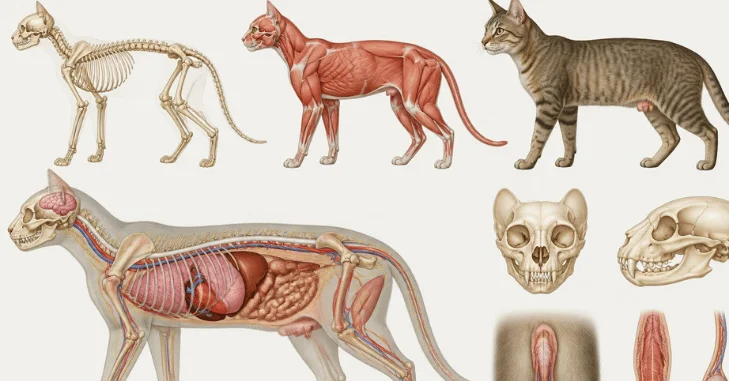
The kidneys make urine, which travels through the ureters into the bladder. Urine then leaves the bladder through the urethra and exits through the penis. The pelvic and penile portions of the urethra therefore form an important connection between urinary and reproductive anatomy.
The shape of that urethra has a major health consequence. Compared with the female tract, the male urethra is longer and becomes narrower as it enters the penis, making obstruction more likely. Stones, inflammatory material, mucus, and other debris can prevent urine from leaving the bladder.
A blocked urethra is a veterinary emergency, not a problem to monitor overnight. Warning signs include repeated litter-box visits, straining, crying while urinating, blood in the urine, genital licking, and passing little or no urine. The Cornell Feline Health Center reports that the time from a complete urinary obstruction until death may be less than 24 to 48 hours, so a suspected blockage needs treatment the same day.
Petistra’s discussion of spraying and urinary warning signs in cats can help distinguish marking behavior from symptoms that suggest pain or urinary disease. Spraying typically involves purposeful urine marking, while repeated straining with almost nothing coming out is a different and potentially dangerous pattern. When you are unsure, a veterinary examination is safer than trying to diagnose the cause at home.
What Changes After a Male Cat Is Neutered?
Neutering, or castration, removes both testicles under anesthesia. The penis, prepuce, bladder, urethra, and most other structures remain in place, so a neutered tom still urinates through the same pathway. Removing the testicles prevents sperm production and greatly lowers the main source of testosterone.
Hormone-dependent anatomy changes afterward. The prostate becomes smaller after castration, and penile spines progressively regress as testosterone falls. Published feline reproductive literature reports that penile spines can disappear after complete castration, although the process takes time rather than occurring immediately.
The empty scrotal skin also remains after routine surgery. It commonly becomes smaller and less noticeable with time, which is why an adult neutered tom may appear to have no visible testicles at all. If there is doubt about whether an adopted cat was fully neutered, a veterinarian can examine him rather than relying on appearance alone.
Identifying a Male Kitten Safely
Look at both the shape and spacing beneath the tail rather than searching only for testicles. The genital opening is rounder in males, and the space between it and the anus is greater than in females of a similar age. The testicles become easier to recognize as a young tom develops.
Avoid squeezing the genital area or trying to force the penis from its sheath. Handle a young kitten gently, support the whole body, and keep the inspection brief.
One or both testicles may occasionally fail to descend normally, a condition called cryptorchidism. A retained testicle may sit in the groin or abdomen, so the absence of two obvious scrotal testes does not prove that a cat has already been neutered. Merck identifies cryptorchidism as an important reproductive disorder and recommends veterinary management rather than breeding an affected animal.
What Looks Normal and What Needs a Vet?
Normal appearance varies with age, coat length, puberty, and neuter status. Small nipples, a hidden penis, an empty-looking scrotum after neutering, or difficulty seeing the genital structures through thick fur can all occur in healthy animals. You should judge changes in context rather than assuming every unfamiliar feature is abnormal.
Contact your veterinarian when you notice swelling, discharge, persistent licking, pain, a new lump, blood, or an unexplained change around the genital area. An apparently missing testicle in an unneutered youngster also deserves examination. These signs have several possible causes, and a physical examination is more useful than trying to identify the condition from a photo.
Seek emergency veterinary care if your tom repeatedly strains but cannot produce a normal stream of urine. A complete urethral obstruction prevents waste from leaving the body and can become life-threatening rapidly. U.S. owners should use an emergency veterinary hospital if their regular clinic cannot see the cat immediately.
Frequently Asked Questions
Where is a male cat’s penis?
The penis is located below the scrotal area and normally rests inside a protective sheath called the prepuce. That makes it much less visible than many new owners expect. You generally do not need to expose it during routine home checks.
Do male cats have nipples?
Yes, males have nipples along the underside of the body, much like females. They are usually small and may be hidden by fur. Their presence is normal and does not help determine sex reliably.
Why are male cats more likely to get urinary blockages?
Their urethra is relatively long and becomes narrow as it passes into the penis. That narrow section can become blocked by inflammatory material, mucus, crystals, stones, or other material. A cat that strains without passing urine needs immediate veterinary care.
What male cat anatomy changes after neutering?
The testicles are removed, so sperm production stops, and testosterone falls. Hormone-dependent tissues such as the prostate and penile spines then regress. The penis, bladder, urethra, and prepuce remain present.
Can a male have only one visible testicle?
Yes, one testicle can remain outside the scrotum because of cryptorchidism. A cat with one retained testicle may still produce testosterone and may remain fertile when the other testicle is normal. A veterinarian should examine the animal and discuss complete neutering.
The Next Step for Owners
Knowing the major structures gives you a useful baseline, but anatomy alone cannot diagnose illness. Check your cat during normal grooming and pay attention to urination, discomfort, swelling, and sudden behavioral changes. If he strains without producing urine, skip home treatment and contact an emergency veterinarian immediately.