
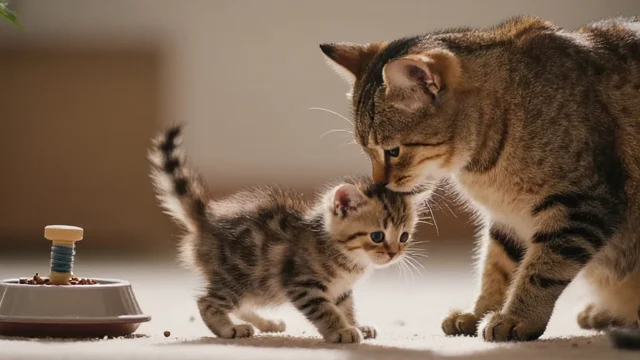
Bringing home a tiny cat is exciting, but leaving the litter too early can affect feeding, confidence, and social behavior. If you’re asking when can kittens leave their mom, eight weeks is generally the earliest reasonable point for a healthy, fully weaned youngster. When the family can safely stay together, waiting until about 10 to 12 weeks may provide extra time for social learning.
Quick answer: A healthy young cat should generally remain with its mother until at least eight weeks old and should be fully weaned before moving. Waiting until roughly 10 to 12 weeks can offer added social-development benefits because the youngster continues learning play manners, communication, and boundaries from its mother and littermates.
Kitten separation age at a glance
| Age | Typical development | Ready to leave? |
|---|---|---|
| Birth to 4 weeks | Depends heavily on nursing, warmth, and maternal care | No |
| 4 to 6 weeks | Weaning begins; solid food is introduced | Usually no |
| 6 to 7 weeks | More independent but still learning and often finishing weaning | Too early in most situations |
| 8 weeks | Common minimum; usually eating independently | Often, if healthy and fully weaned |
| 10 to 12 weeks | More time for social learning and play skills | Often an excellent window |
| 12+ weeks | Physically independent with additional family socialization | Appropriate for many home-raised litters |
The ASPCA says the weaning process usually starts at about four weeks and is commonly completed between eight and 10 weeks. VCA notes that the best age to bring a new young cat home is generally between eight and 12 weeks, depending on the individual.
Key takeaways
- Eight weeks is a practical minimum, not a deadline that requires immediate separation.
- Being able to eat solid food is only one sign of readiness.
- A few additional weeks with the family can support play manners and social communication.
- Six or seven weeks is usually earlier than necessary when the mother is healthy and available.
- An orphaned or endangered baby needs a different care plan rather than an arbitrary waiting period.
When can kittens leave their mom safely?

Eight weeks is the earliest commonly recommended age for a routine move to a new home. By then, a healthy young cat is usually eating appropriate solid food, drinking independently, using a litter box, and regulating normal daily activities without constant maternal care. Alley Cat Allies also identifies eight weeks as a major milestone when young cats are fully weaned and can begin moving toward adoptive homes.
That does not mean every eight-week-old animal is automatically ready. VCA places the preferred homecoming window between eight and 12 weeks because development differs between individuals. A smaller, sick, poorly weaned, or socially immature youngster may benefit from more time before a major transition.
Why eight weeks is the usual minimum
Food independence is one major reason. The ASPCA reports that most mother cats continue nursing until about eight weeks, while weaning itself may continue until eight to 10 weeks. Removing a young animal before that process is complete can turn a normal developmental transition into a feeding problem.
The mother provides more than milk during this period. Young cats watch her eat, groom, use her environment, respond to unfamiliar events, and interact with other cats. Their littermates also provide constant feedback about how hard to bite, when play has gone too far, and how feline body language works.
If you’re caring for a young litter, Petistra’s guide on identifying whether a kitten is male or female can also help with basic records before adoption. Sex identification becomes easier as the litter matures, so an early guess can be rechecked before veterinary and adoption paperwork is completed.
Why 10 to 12 weeks can be even better
A young cat does not stop learning from its family the day nursing ends. Social play continues after weaning, and the AAHA/AAFP feline life-stage guidelines note that play between cats peaks at around 12 weeks. Those extra interactions give a youngster repeated practice with pursuit, pouncing, wrestling, restraint, and recovery after social conflict.
Research also gives owners a reason not to rush separation without a need. A study involving 5,726 pet cats found that animals reportedly weaned before eight weeks had a higher probability of owner-reported aggression than those weaned later. The study was observational, so it shows an association rather than proving that separation age alone caused each behavior difference.
A later move is not mandatory in every case. Shelters may place healthy animals at eight weeks, while breeders and home-raised litters may have the flexibility to wait longer. The useful distinction is eight weeks as a common minimum and roughly 10 to 12 weeks as a potentially beneficial window when circumstances allow.
How to tell whether a young cat is ready to leave
Age should be your starting point, not your only test. Before arranging the move, watch the animal across several normal days rather than judging readiness after one successful meal. A healthy candidate should be consistently independent in the basic routines needed in the new home.
Look for these signs:
- At least about eight weeks old.
- Fully or essentially weaned from nursing.
- Eating appropriate kitten food reliably.
- Drinking water independently.
- Using the litter box without routine help.
- Active, alert, and gaining weight appropriately.
- Comfortable spending periods away from the mother.
- Playing and interacting normally with littermates.
- Free of obvious illness such as marked lethargy, persistent diarrhea, or breathing difficulty.
- Assessed on an appropriate veterinary care schedule.
Eating solid food at six weeks does not erase the value of another two or more weeks with the family. Independence develops in layers, and social maturity does not arrive at the same moment as the ability to chew food. That is why readiness should combine age, health, weaning, and behavior instead of relying on one milestone.
What can happen when separation occurs too early?
Kittens separated before eight weeks lose normal access to maternal care and part of an important social-learning period. Early-weaned cats have been associated in research with higher rates of aggression and certain repetitive behaviors, although individual outcomes vary widely. An animal separated early can still become a friendly, secure adult with good care and appropriate social experiences.
One lesson normally learned through littermate play is bite control. When one youngster bites too hard, the other may stop playing, move away, or respond, giving immediate feedback that a human cannot duplicate perfectly. Petistra’s guide to why cats bite and how play behavior develops explains why hands should not become substitute prey during play.
Early separation also creates practical challenges if weaning is incomplete. An animal that still depends on nursing may need kitten milk replacer and an age-specific feeding plan rather than ordinary cow’s milk. If a young animal becomes weak, cold, or stops feeding, see Petistra’s fading kitten syndrome emergency guide and contact a veterinarian promptly.
A week-by-week guide from birth to 12 weeks
Development changes quickly during the first three months. The table below helps separate the ability to survive away from the mother from the broader question of whether leaving is beneficial. Individual development still matters, especially after illness, low birth weight, or interrupted nursing.
| Age | What is happening | Separation guidance |
|---|---|---|
| 0 to 3 weeks | Heavy dependence on maternal warmth and milk | Keep the family together unless emergency care requires otherwise |
| 4 to 5 weeks | Weaning starts and movement becomes coordinated | Continue maternal access while introducing appropriate food |
| 6 to 7 weeks | Eating and litter habits improve | Avoid routine rehoming if the mother remains available |
| 8 to 9 weeks | Most are weaned and physically more independent | Routine adoption may be appropriate |
| 10 to 12 weeks | Continued social play and behavioral learning | Extra family time can be beneficial |
| After 12 weeks | Fully independent in normal circumstances | Ready for transition if healthy and socialized |
The ASPCA describes weaning as a gradual process rather than an abrupt event. Its guidance recommends allowing young animals to remain with their mother during weaning whenever possible. Gradual independence gives both the babies and the nursing mother time to adjust.
What if you find a young cat outside without its mother?
Do not assume a baby outdoors has been abandoned because the mother is temporarily absent. She may be searching for food or waiting for people to leave before returning, so healthy, quiet babies often need monitoring before intervention. Both the ASPCA and Alley Cat Allies advise against automatically removing young litters when the mother may still be caring for them.
Watch from a reasonable distance and look at the animals’ condition. Clean, warm, plump, quiet babies suggest that maternal care may still be occurring, while illness, injury, persistent crying, weakness, or a confirmed absent mother calls for faster help. Contact a veterinarian or experienced rescue organization when you are unsure how old the animals are or whether intervention is necessary.
An orphan is an exception to normal separation guidance because there is no mother available to provide care. Young orphans may need warmth, kitten milk replacer, help eliminating, frequent feeding, and close monitoring based on age. Veterinary or rescue guidance is especially valuable because care requirements change quickly during the neonatal period.
How to make the move to a new home easier
A planned transition reduces the number of changes the youngster faces at once. Prepare one quiet room before pickup instead of immediately giving access to the entire house. Familiar food, a predictable routine, and safe hiding options make the first few days easier to manage.
Use this simple setup:
- Keep the current food at first. Change diets gradually rather than combining rehoming stress with a sudden menu change.
- Prepare a low, easy-to-enter litter box. Put it away from food and water.
- Create one safe room. Include bedding, scratching surfaces, toys, food, water, and hiding places.
- Use toys instead of hands for play. This supports appropriate biting and chasing habits.
- Schedule veterinary care. Confirm vaccinations, parasite control, weight, microchipping, and spay or neuter plans with your clinic.
For the trip home, Petistra’s cat carrier guide for safer veterinary and car travel can help you choose a secure setup. You can also review the cat litter guide before preparing the litter area, especially if the animal has been using a different substrate in the foster or breeder home.
Try to keep the first days calm rather than filling them with introductions. Let the newcomer approach family members at its own pace, and introduce resident animals gradually. Predictability helps the young cat learn that the new environment is safe.
The practical rule to remember
For a healthy litter with a capable mother, do not plan routine separation before eight weeks. If the family can safely remain together, giving them roughly 10 to 12 weeks can provide more time for social development without preventing positive human socialization. The goal is not to keep the family together for an arbitrary number of days, but to send a healthy, independent, behaviorally prepared young cat into its new home.
If you’re preparing a litter for adoption, use age, weaning status, health, and behavior as a combined checklist. Confirm any health concerns with your veterinarian, then prepare the new family with the same food, familiar routine, safe carrier, and litter setup. A patient start can make the first week easier for both the animal and the person bringing it home.
Frequently asked questions
Eight weeks is a common minimum for a healthy, fully weaned animal. VCA gives an eight-to-12-week range for bringing a youngster home, while additional family time can support social learning. If staying together is safe and practical, waiting closer to 10 or 12 weeks is a reasonable choice.
Six weeks is usually too early for routine rehoming when the mother remains healthy and available. The animal may already eat solid food, but weaning and social development are still underway. Waiting at least until eight weeks removes an avoidable developmental risk.
Yes, many healthy young cats can move at eight weeks if they are fully weaned, eating reliably, healthy, and developmentally ready. Eight weeks is also a common shelter and rescue adoption milestone. Waiting to 10 or 12 weeks can still offer useful social-learning time when the home situation allows it.
Occasional nursing does not always mean the animal depends on milk for nutrition. Some older babies continue nursing for comfort even while eating a complete solid diet. Judge readiness using age, independent food intake, health, behavior, and veterinary advice rather than nursing behavior alone.
Contact a veterinarian or experienced rescue organization as soon as possible. Neonatal care can involve temperature control, frequent feeding, safe milk replacer, weight monitoring, and help with elimination. Do not delay professional advice if a baby is cold, limp, not feeding, losing weight, or showing breathing problems.