


At eight weeks, your new cat is small but far from helpless. Most kittens this age are weaned, coordinated, curious, and ready to learn a household routine, yet they still need frequent meals, preventive veterinary care, safe play, and patient socialization. The first week home is less about doing everything at once and more about creating steady, repeatable habits.
Quick answer: An 8 week old kitten is usually fully weaned, active, coordinated, and ready for a steady home routine. Feed a complete growth diet in several small meals, provide fresh water and a low-sided litter box, schedule a veterinary exam, and use positive daily play and handling to build confidence.
What to Expect at Eight Weeks
| What to check | What is typical at this age |
|---|---|
| Weight | About 1.9-2.1 lb is a useful average reference, though healthy individuals vary by breed and background. |
| Food | Complete food made for growth, usually divided into three to four small meals each day. |
| Development | Energetic, coordinated, playful, and able to eat and use the litter box independently. |
| Teeth | The baby teeth should be present by this stage. |
| Veterinary care | The first wellness visits and FVRCP vaccine series normally begin around 6 to 8 weeks. |
| Litter | A low-sided box works well; non-clumping material remains the cautious choice if the young cat still mouths litter. |
| Activity | Expect short bursts of running, climbing, pouncing, and eating, followed by frequent naps. |
Key takeaways
- Feed a complete and balanced growth diet rather than adult cat food.
- Plan three or four small meals and keep clean water available all day.
- Arrange a veterinary appointment early, even if the adoption paperwork lists prior vaccines.
- Keep the first few days calm and limit access to one safe room before opening the whole house.
- Treat play, handling, carrier practice, and new experiences as part of daily care.
8 Week Old Kitten Care: 9 Priorities for the First Week
- Keep the same food at first. Sudden changes in food can upset the stomach, so ask the shelter, breeder, or foster home what was being fed.
- Offer several small meals. A growing young cat has high energy needs and a small stomach, making frequent meals easier to manage.
- Provide fresh water in a separate bowl. Place it away from the litter tray and somewhere quiet.
- Book the first veterinary visit. Bring any vaccine, deworming, microchip, and adoption records with you.
- Start with one safe room. Include food, water, a bed, a scratching surface, toys, and an easy-to-reach litter box.
- Make toileting simple. Scoop often and avoid placing the box next to loud appliances or busy doorways.
- Use toys instead of hands for wrestling. Wand toys and small toss toys teach better boundaries during the peak play-fighting stage.
- Make the carrier part of the room. Leave it open with soft bedding so it doesn’t predict a stressful trip. Petistra’s cat carrier guide explains how to build that habit.
- Watch daily patterns. Appetite, stool, energy, breathing, and body weight can reveal illness before a new owner notices anything dramatic.
Feeding at Eight Weeks
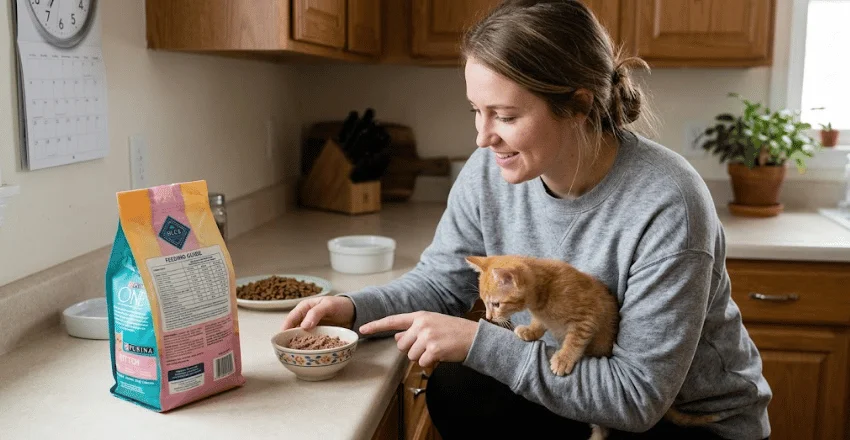
Choose a complete food formulated for growth, and use the package feeding chart as your starting point rather than a universal cup measurement. Calorie density varies widely between wet and dry foods, so the correct portion depends on the product and your pet’s weight. Kittens also need more food per pound than adults, and Cornell recommends three meals daily for young cats under six months. Our related guide, Ultimate Kitten Age Chart, goes further into this.
A practical routine is breakfast, midday food, dinner, and a small evening meal if the daily amount is split four ways. Wet food should not sit at room temperature for long periods, while measured dry food can remain available longer if that feeding approach suits your household. Keep treats small because the main diet should provide most of the nutrients required for growth.
A simple feeding checklist
- Use food labeled for growth or kittens.
- Follow the product’s daily calorie or portion guidance.
- Divide the daily amount into three or four meals.
- Keep fresh water available at all times.
- Change diets gradually over several days when possible.
- Call your veterinarian if appetite drops sharply or your young cat repeatedly vomits after eating.
Vaccines, Parasites, and the First Vet Visit
In the U.S., the AAHA/AAFP schedule starts the core FVRCP series at about 6 to 8 weeks and repeats doses every three to four weeks until at least 16 weeks of age. Maternal antibodies fade at different times, which is why one early dose does not complete the kitten vaccination series. Rabies timing depends on the vaccine product and state or local law, so your veterinarian should set the exact schedule.
Your veterinarian may also check the stool for intestinal parasites, examine the ears and skin, review flea prevention, and discuss the timing of future spay or neuter. Do not apply a flea or tick product unless the label specifically covers your pet’s age and weight or your veterinarian approves it. Petistra’s panleukopenia prevention guide explains why completing the FVRCP series matters, while its ear mite guide covers the dark ear debris often seen in young cats.
Litter Training and a Safer Home
Most young cats already understand the basic concept of a litter box by 8 weeks, as toileting behavior develops earlier. Give them a low-sided tray that is easy to access, and place it in a quiet spot they can reach without having to cross the entire house. If your pet still chews or tastes litter, a non-clumping paper product is a cautious choice during this stage.
Cat-proof the room at floor level, because that is where a curious young animal gets into trouble first. Secure electrical cords, strings, hair ties, medications, cleaning products, toxic plants, small swallowable objects, and gaps behind appliances or furniture. For litter options, Petistra’s cat litter guide takes a conservative approach for young animals and discusses paper pellets alongside other common materials.
Make the first room easy to understand
- Put food and water away from the litter tray.
- Give the animal at least one covered or sheltered sleeping spot.
- Add a stable scratching surface.
- Offer several light toys that cannot be swallowed.
- Block unsafe climbing areas until coordination improves further.
- Open additional rooms gradually after eating; toileting stays consistent.
Play, Biting, and Socialization
Play fighting is normal at this age, and social play often peaks between roughly six and nine weeks. Use wand toys, balls, soft mice, and other objects that put distance between teeth and your fingers. If biting ends the game every time while calm toy play keeps it going, your pet starts learning which behavior works.
Positive social experiences still matter because the sensitive socialization period may remain open until around 9 or 10 weeks in some individuals. Introduce household sounds, gentle handling, different people, carriers, grooming tools, and other safe experiences in short sessions without forcing contact. If teeth and claws are becoming the main challenge, Petistra’s cat biting guide can help separate normal play from fear, pain, or overstimulation.
Warning Signs That Need Veterinary Attention
Young animals can become dehydrated or weak more quickly than healthy adults, so changes in appetite and energy levels deserve attention. Contact your veterinarian promptly if your pet stops eating, loses weight, becomes unusually weak, develops repeated vomiting or diarrhea, or has discharge from the eyes or nose. Trouble breathing, collapse, pale gums, or severe lethargy warrants urgent veterinary care.
A daily weight check can be useful during the first week if your new arrival is small, underweight, recently ill, or came from a rescue setting. Use the same scale at roughly the same time and look for the trend rather than worrying about a single small fluctuation. A falling weight combined with poor appetite or low energy is a reason to call the clinic rather than waiting for the next routine appointment.
Your First-Week Next Step
Set up one safe room before giving your new pet full access to the house, and then add the feeding schedule and veterinary appointment to your calendar. Bring every medical record to that visit so the clinic can see which vaccines, parasite treatments, and tests have already been completed. A predictable routine for food, litter, play, sleep, and gentle handling gives a young cat the clearest path to settling in confidently.
Frequently Asked Questions
Eight weeks is a common age for adoption, and veterinary behavior references describe roughly 8 to 14 weeks as an appropriate period for moving into a new home. Time with littermates still supports social learning, so there can be benefits to staying together longer when the situation is safe and well managed. Once your new pet comes home, continue gentle social experiences and structured play.
There is no reliable universal cup or can amount because foods contain different calories per ounce. Start with the daily feeding amount printed for your pet’s current weight and age, then divide it into three or four meals. Your veterinarian can adjust that amount after checking body condition and growth.
Yes, frequent naps mixed with short periods of intense activity are normal at this age. A healthy young cat should still wake for meals, respond to you, play, and explore during active periods. Sleeping becomes concerning when accompanied by poor appetite, weakness, hiding, vomiting, diarrhea, or difficulty waking.
The core FVRCP series commonly begins around 6 to 8 weeks in the United States. AAHA/AAFP guidance calls for repeat doses every three to four weeks until the series extends through at least 16 weeks because maternal antibodies can interfere with earlier doses. Your veterinarian will add rabies and other preventive care based on local laws, lifestyle, health, and previous records.