


Your dog got to the chicken on the counter and swallowed it before you could move. Or you’re considering a raw diet and want a straight answer first. Those are two different questions, and this page answers the urgent one first.
So, can dogs eat raw chicken? A healthy adult dog that swallows a stolen piece will usually be fine. The real danger is often the bone, or the bacteria now on your countertop. Fed on purpose, raw poultry carries documented risks to your pet and to the people in your home.
How worried to be, based on what was actually eaten
Not all raw chicken accidents are equal. A boneless strip off the cutting board is a different problem from a cooked drumstick out of the trash. Then there’s the wing from a package that sat out all night.
| What your dog ate | Risk level | What to do |
| Raw boneless meat, fresh from the package | Low | Watch at home. Note the time. |
| Raw chicken on the bone (wing, thigh, neck) | Moderate | Call your vet. Do not make her vomit. |
| Cooked chicken bones from a roast or takeout | High | Call your vet or an emergency clinic now. |
| Raw meat left out for hours, or past its date | Moderate | Call your vet, and say how long it sat out. |
| Marinated or seasoned raw chicken | Moderate to high | Call your vet with the ingredient list to hand. |
| Raw chicken plus string, netting or a foam tray | High | Emergency clinic. Packaging rarely passes on its own. |
| Any amount, in a puppy, a senior or a sick pet | Elevated | Call your vet whatever the amount was. |
One rule cuts through all of that. If bone, packaging, or seasoning was involved, phone somebody. If it was a plain piece of muscle meat, you’re mostly washing and watching.
Key takeaways
- Plain raw meat, healthy adult pet: an upset stomach at worst, most of the time.
- Cooked bones are the emergency, not raw ones. Cooking is what makes bones splinter.
- Salmonella often skips the dog and lands on the household instead.
- The FDA found Salmonella in 15 out of 196 raw pet food samples and none in 120 dry dog food samples.
- Major US veterinary bodies advise against raw feeding. Some owners go ahead anyway, so the handling rules are below.
Your dog just stole some: The first hour
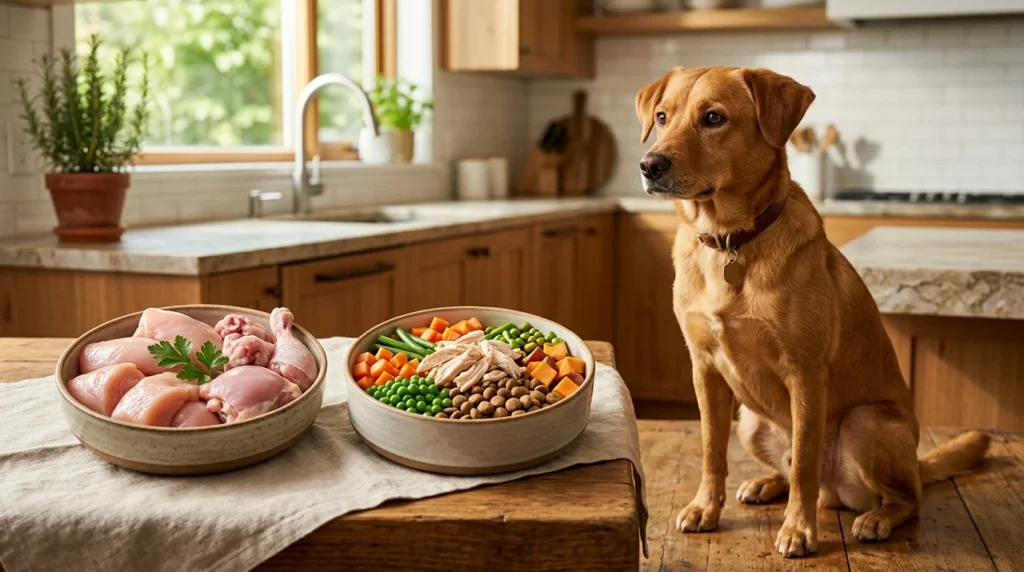
Don’t hurt her trying to help her. Fingers down the throat and kitchen remedies off the internet cause more damage than a piece of chicken usually will.
Here’s the order that works.
- Take the rest away, then work out how much is gone. Guess high if you’re unsure.
- Look for bone. Count what you can still see against what was in the pack.
- Write down the time. You’ll be asked, and you won’t remember it six hours later.
- Wash everything the meat touched, including your hands and her muzzle.
- Call your vet if bone, seasoning, or packaging was in the mix. Otherwise watch.
Only bring the meal back up if a vet tells you to, and only the way they tell you. Bone fragments can cut on the way out as easily as on the way down. Once the panic passes, our pet food and feeding guides cover what belongs in the bowl in the first place.
Call the vet now if any of these apply
- Retching, heavy drooling, or pawing at the mouth.
- Blood in vomit or stool.
- A belly that looks bloated or hurts when touched.
- Your pet is under six months, over ten years, pregnant, or on medication that suppresses the immune system.
- Cooked bone was involved, at any size.
Phone before you drive in. Most US emergency clinics charge an exam fee of roughly $100 to $200 before any x-rays. Two minutes on the phone often tells you that you don’t need to spend it.
The next three days: what to watch for
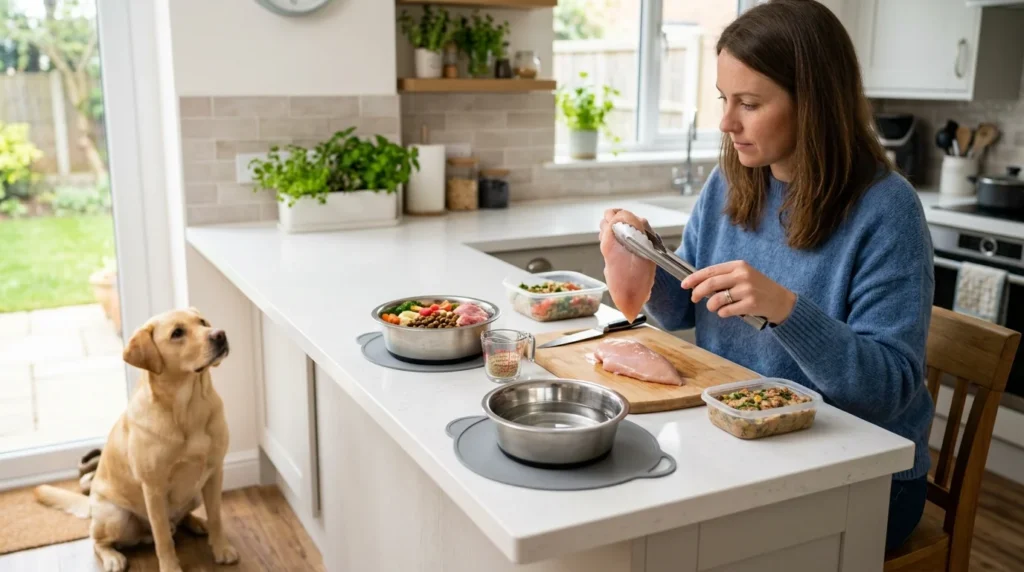
Salmonella and campylobacter don’t announce themselves straight away. Symptoms usually start somewhere between six hours and three days after the meal, and they look like ordinary stomach upset at first.
Watch for loose stool, vomiting, a refused dinner, low energy, or a fever. Mucus or blood in the stool moves this from “keep watching” to “call today”. Most healthy dogs clear it on their own within a few days.
Puppies and old dogs don’t get that luxury. Dehydration catches them fast. A young puppy with repeated diarrhea needs to be seen the same day, not the next morning.
Salmonella, Campylobacter, and Listeria: what’s really in the meat
Raw poultry carries bacteria. That’s the whole reason your own chicken goes in the oven until it reaches 165°F.
According to the US Food and Drug Administration, salmonella turned up in 15 out of 196 raw pet food samples, and listeria monocytogenes in 32 out of 196. The same survey found neither organism in any of the 120 dry dog food samples it tested.
That sampling ran from October 2010 to July 2012. Those figures describe packaged raw food rather than the thigh your dog grabbed off the counter. The point still carries. Raw poultry is a plausible source of bacteria, and heat is what removes the question.
Most healthy dogs handle a small dose. Their stomach acid is stronger than ours, and food moves through them faster. That resilience is real, and it is also why the human half of this problem gets missed. For more on spotting illness early, browse our animal health articles.
The household risk most pet pages skip
Almost every page on this question answers it for the dog. The other half of the answer is you. Your dog can carry salmonella without ever looking unwell, and shed it in stool for weeks. That matters if you have a crawling baby, an elderly parent, or anyone on chemotherapy at home. Those are the people who end up in the hospital, not the animal that ate the chicken.
Bowls, licked hands, a wet muzzle, the towel you dried her with: those are the routes. Wash the bowl in hot soapy water after every raw meal. Keep it out of the rack beside your own plates.
Raw bones and cooked bones are not the same problem
This distinction gets flattened into “bones are bad”, and the flattening costs owners a lot of unnecessary worry.
Cooking dries bone out and makes it brittle. A cooked drumstick splinters into sharp shards that can pierce the throat, stomach, or intestine. That is a genuine emergency, and it’s why the leftover roast carcass is more dangerous than anything in the raw pack.
Raw bone bends more than it splinters. It still carries real risks:
- Choking, especially in a gulper who barely chews.
- Blockage, if a large piece goes down whole.
- Cracked teeth, which weight-bearing bones often cause.
- Constipation, from bone meal packing the colon.
So raw bone beats cooked bone. Safer is not the same as safe.
So can dogs eat raw chicken as a diet? What vets say
The American Veterinary Medical Association discourages feeding raw or undercooked animal proteins to dogs and cats, citing the risk to both animal and human health. The FDA takes the same line. So do most veterinary schools.
Raw feeders point to glossier coats and smaller stools, and plenty of them report exactly that. What the evidence has not produced is a proven health benefit big enough to price in the bacterial risk.
One finding is worth knowing before you switch. A 2018 study in the Journal of Veterinary Internal Medicine compared 27 dogs with suspected acute polyradiculoneuritis, a nerve condition that causes paralysis, against 47 healthy controls. Owners of affected dogs had 70.7 times higher odds of reporting raw chicken in the diet.
That is one study; its confidence interval is wide, and it does not prove cause. It’s still the sort of thing you’d want to have read beforehand.
Feeding raw anyway? Handle it like raw chicken for people
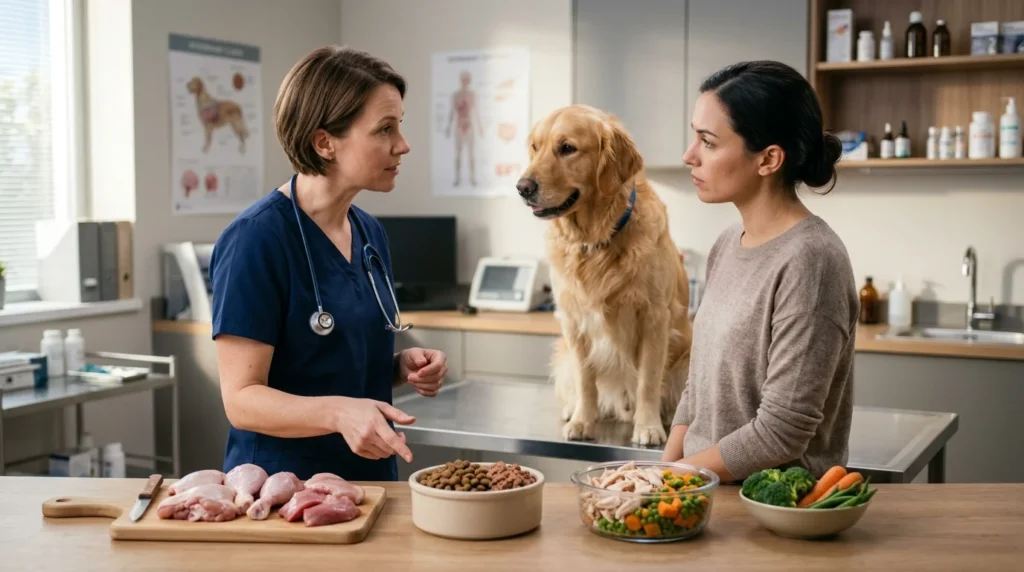
Plenty of owners consider all of this and go ahead regardless. If that’s you, handling is where the risk drops.
- Thaw in the refrigerator or the microwave, never on the counter.
- Don’t rinse the meat. Rinsing sprays bacteria around the sink.
- Keep one cutting board for the pet, and out of rotation for family food.
- Wash your hands with soap for at least 20 seconds afterwards.
- Disinfect surfaces with about one tablespoon of bleach per quart of water.
- Lift the bowl after 20 minutes and wash it rather than letting it sit.
- Skip face licks after a raw meal, and keep the food away from anyone immunocompromised.
Talk to your own vet before you switch, especially with a puppy, a senior, or a pet who has kidney or liver disease. Balanced raw diets are harder to build than most recipes admit. Our everyday pet care advice covers the routine side of keeping an animal well.
The one-line version
Plain raw meat and a healthy pet: wash up and watch. Cooked bone, seasoning or packaging: call the clinic. And if raw feeding is something you’re considering as a routine, go in with the handling rules already in place, not after the first bad week.
FAQs
Some do, for years. Others pick up salmonella in week one. There’s no test that tells you in advance which one you have, and the risk to your household doesn’t change either way.
Usually six hours to three days. Campylobacter can take a little longer. If she is bright and eating normally after 72 hours, you’re most likely past it.
Not about her, probably. Worry about the counter, the bowl, and your hands instead. Even a well-looking animal can shed bacteria in stool for weeks after the meal.
They’re a choking risk for gulpers, and they’re the exact food behind the paralysis research above. Frozen ones are harder still. Most vets would point you at a chew that isn’t bone.