
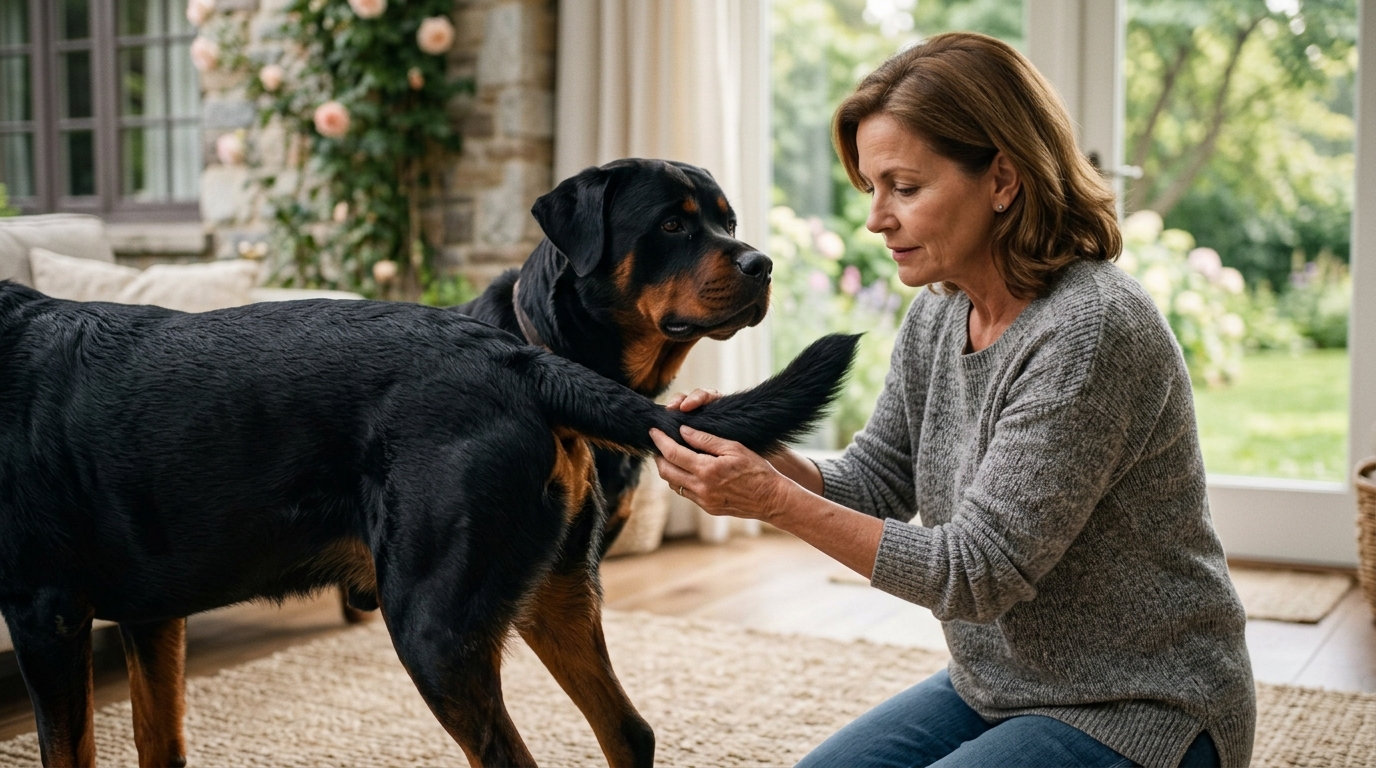
A Rottweiler with tail is a normal Rottweiler that has kept its natural, full-length tail. Rottweiler puppies are born with tails unless a rare congenital difference affects them. The short-tailed appearance familiar to many Americans usually results from tail docking.
Natural tails are increasingly familiar to owners, breeders, and dog-show audiences. Current American breed guidance recognizes both docked and undocked tails. Understanding the difference helps owners separate natural anatomy from a traditional cosmetic appearance.
| Key fact | What owners should know |
|---|---|
| Natural tail | Rottweilers are normally born with tails |
| Tail appearance | Strong, substantial, and carried differently with mood or movement |
| Docking | Removes part of a puppy’s natural tail |
| U.S. breed standard | Describes both docked and undocked tails |
| Pet ownership | A full tail doesn’t make the dog a different breed |
| Daily care | Check the tail during routine grooming |
| Veterinary concerns | Swelling, wounds, pain, or unusual movement need attention |
Direct answer: A Rottweiler can naturally have a long tail and still be a purebred Rottweiler. The familiar short tail usually comes from docking rather than genetics. Current American breed standards describe both docked and undocked tails, so a full tail alone doesn’t mean the dog is mixed or unusual.
What Does a Rottweiler With Tail Look Like?
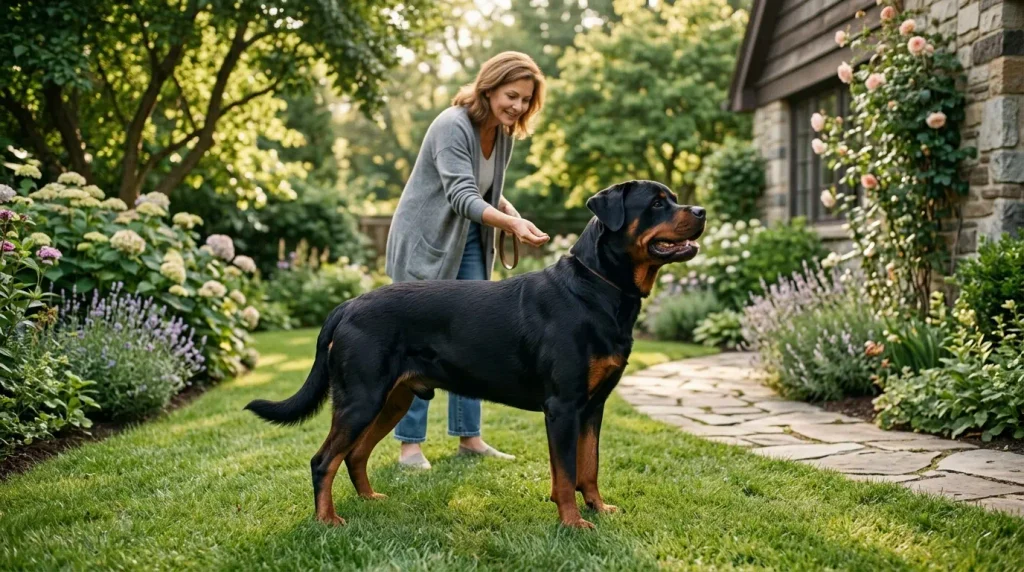
A natural Rottweiler tail is strong and substantial, matching the dog’s muscular build. It extends from the topline rather than ending in the familiar short stump. Its position can change depending on movement, excitement, and relaxation.
The American Rottweiler Club standard says an undocked tail may be carried straight or with an upward curve. It can also hang when the dog rests. Tail set matters more to the standard than the tail’s length.
Owners may notice considerable movement when their dog becomes excited. A happy dog can sweep its tail from side to side with surprising force. That movement is especially noticeable on a large, powerful breed.
Are Rottweilers Born With Tails?
Yes, Rottweilers are normally born with full tails. The breed doesn’t naturally have the extremely short tail commonly associated with its traditional American appearance. That shorter appearance generally results from docking during puppyhood.
This distinction can surprise people who have mostly encountered docked adults. Photos, television, and older breed imagery helped make the short tail seem natural. Seeing an adult with its original tail can therefore look unfamiliar at first.
A natural tail also doesn’t indicate that the dog belongs to another Rottweiler variety. Breed identity depends on ancestry and many physical characteristics. Tail length by itself doesn’t establish whether a dog is purebred.
Why Were Rottweiler Tails Traditionally Docked?
Tail docking has historical links with working dogs and long-standing breed traditions. Rottweilers worked as drovers, guardians, and versatile utility dogs. Docking later became strongly associated with the breed’s familiar appearance.
Historical explanations often focus on reducing possible injuries during demanding work. Modern companion dogs usually live under different conditions from historical working animals. For many dogs today, appearance and tradition are central parts of the docking discussion.
Veterinary organizations also consider animal welfare when discussing cosmetic procedures. The American Veterinary Medical Association opposes canine tail docking when performed solely for cosmetic purposes. Owners considering any procedure should discuss health implications with a licensed veterinarian.
Natural Tail vs. Docked Tail
The main difference is straightforward: one dog retains its original tail, while the other has had part removed. Both appearances can occur among registered Rottweilers under current American standards. The dog’s underlying breed characteristics aren’t created by docking.
| Feature | Natural tail | Docked tail |
|---|---|---|
| Length | Full natural length | Much shorter |
| Cause | Normal anatomy | Surgical removal of part of tail |
| Movement | Highly visible | Less visible |
| Current U.S. standard | Described | Described |
| Routine observation | Check full tail for injury | Check remaining tail area |
| Breed identity | Still a Rottweiler | Still a Rottweiler |
The difference is especially noticeable when a dog runs or greets people. A long tail adds visible movement to the dog’s body language. A docked dog communicates through many of the same signals, although the tail is less visually prominent.
Does the AKC Allow a Natural Rottweiler Tail?
Current American Rottweiler Club guidance describes both docked and undocked tails. The revised breed standard became effective in August 2022. American Rottweiler Club educational material states that the standard has no preference between those two tail lengths.
For an undocked dog, the standard focuses heavily on correct tail set and carriage. The tail can extend straight or curve upward while moving. It may hang naturally when the dog is resting.
This change matters because older information remains widespread online. An article, forum post, or breed description written before the revision may describe different expectations. Owners should check the publication date before relying on breed-standard advice.
Does a Full Tail Change a Rottweiler’s Personality?
Keeping the natural tail doesn’t turn the dog into a different type of Rottweiler. Temperament develops through genetics, early experiences, socialization, training, health, and the dog’s environment. Tail length shouldn’t replace those factors when evaluating an individual dog.
A full tail can make some emotional signals easier for people to notice. Tail height, movement, speed, and overall posture can contribute to canine communication. Owners should still read the entire body rather than interpreting the tail alone.
Look at the dog’s facial expression, ears, posture, movement, and situation together. A moving tail doesn’t automatically mean a dog wants physical contact. Learning complete canine body language as part of everyday pet care is particularly useful with strong working breeds.
Caring for a Rottweiler’s Natural Tail
A healthy natural tail doesn’t require complicated grooming. Owners can include it in the same routine checks used for paws, ears, coat, and skin. Run your hands gently along the tail and watch for changes.
Check for cuts, swelling, tender areas, hair loss, or skin irritation. Active dogs can strike their tails against furniture, doors, fencing, or other hard surfaces. Early attention can prevent a small injury from becoming harder to manage.
Don’t repeatedly bend or manipulate a painful tail to investigate it yourself. Contact your veterinarian about animal health concerns when the dog shows persistent pain, bleeding, swelling, or sudden changes in carriage. Trouble moving the tail after an injury also deserves professional assessment.
Can a Long Tail Cause Problems?
Most dogs can live normally with their natural tails. A tail can still be injured because it contains bone, nerves, muscles, blood vessels, and other tissues. Large dogs with enthusiastic tail movement may occasionally strike nearby objects.
Repeated impacts can sometimes produce wounds around the tail tip. Owners can reduce risks by keeping cramped areas clear and monitoring injuries promptly. A veterinary examination is appropriate when bleeding repeatedly returns or the dog appears painful.
Avoid assuming docking is necessary because an injury might occur someday. Decisions about an existing medical problem should address that individual dog’s condition. Your veterinarian can explain appropriate treatment when an actual tail injury occurs.
Should You Choose a Rottweiler With a Natural Tail?
Tail appearance should be a small part of choosing a dog. Health, temperament, responsible breeding, socialization, and suitability for your household deserve much greater attention. Those factors will affect daily life far more than tail length.
Ask a breeder or rescue for available health records and background information. Meet the dog when possible and observe its behavior in an appropriate setting. Discuss breed-specific health and care needs with your veterinarian.
If you’re purchasing a puppy, ask breeders directly about their tail practices before committing. That conversation prevents surprises after a litter is born. It also gives you another opportunity to understand how the breeder approaches health and welfare.
Common Myths About Natural Rottweiler Tails
One common myth says a full-tailed dog must be a Rottweiler mix. Tail length alone doesn’t prove ancestry. A naturally tailed purebred can have the same characteristic black coat, rust markings, structure, and breed ancestry.
Another misconception is that all breed standards require docking. Current American Rottweiler Club guidance describes both docked and undocked tails. Other registries and countries can maintain different rules, so location matters.
Owners also sometimes assume a natural tail requires special daily maintenance. In most cases, routine observation and normal grooming are sufficient. Veterinary attention becomes important when injury, pain, swelling, or another abnormal change appears.
Rottweiler With Tail FAQ
Is a Rottweiler with tail purebred?
Yes, a Rottweiler with tail can be purebred. A natural tail doesn’t determine whether the dog’s pedigree is genuine. Registration records and documented ancestry provide much better evidence of lineage.
Why do some Rottweilers have tails and others don’t?
Rottweilers are normally born with tails, but some puppies undergo docking. This creates the short-tailed appearance many Americans recognize. Dogs that don’t undergo the procedure retain their natural tails.
How long is a natural Rottweiler tail?
Length varies between individual dogs because body proportions aren’t identical. The tail should appear proportionate to the dog’s overall structure. Breed standards focus on its set, shape, and carriage rather than one universal measurement.
Does AKC accept Rottweilers with tails?
The current American Rottweiler Club breed standard describes undocked as well as docked tails. Its educational materials state there is no preference between the two. Other aspects of structure and movement still matter during breed evaluation.
Is tail docking necessary for a pet Rottweiler?
Routine cosmetic docking isn’t required for a Rottweiler to live as a companion. The AVMA opposes docking when the procedure is performed solely for cosmetic reasons. Medical decisions concerning an individual dog’s tail belong with a veterinarian.
Does a Rottweiler’s tail affect behavior?
Tail length doesn’t define the dog’s personality or temperament. Genetics, training, socialization, health, and experience have much broader behavioral importance. A natural tail can provide owners with another visible part of the dog’s body language.
The Bottom Line for U.S. Owners
A full tail is a normal part of Rottweiler anatomy. The traditional short-tailed appearance usually comes from docking, not from the breed being naturally tailless. Current U.S. breed guidance recognizes natural and docked tails.
For pet owners, health and temperament deserve more attention than tail length. Choose responsible breeders or rescues and provide thoughtful training, socialization, exercise, and veterinary care. Those choices have a much greater effect on your dog’s life.
When evaluating a puppy or adult dog, ask questions about health history and breeding practices. Discuss any tail injury or medical concern with your veterinarian. Petistra readers can use those facts to make decisions centered on their individual dog’s welfare.