

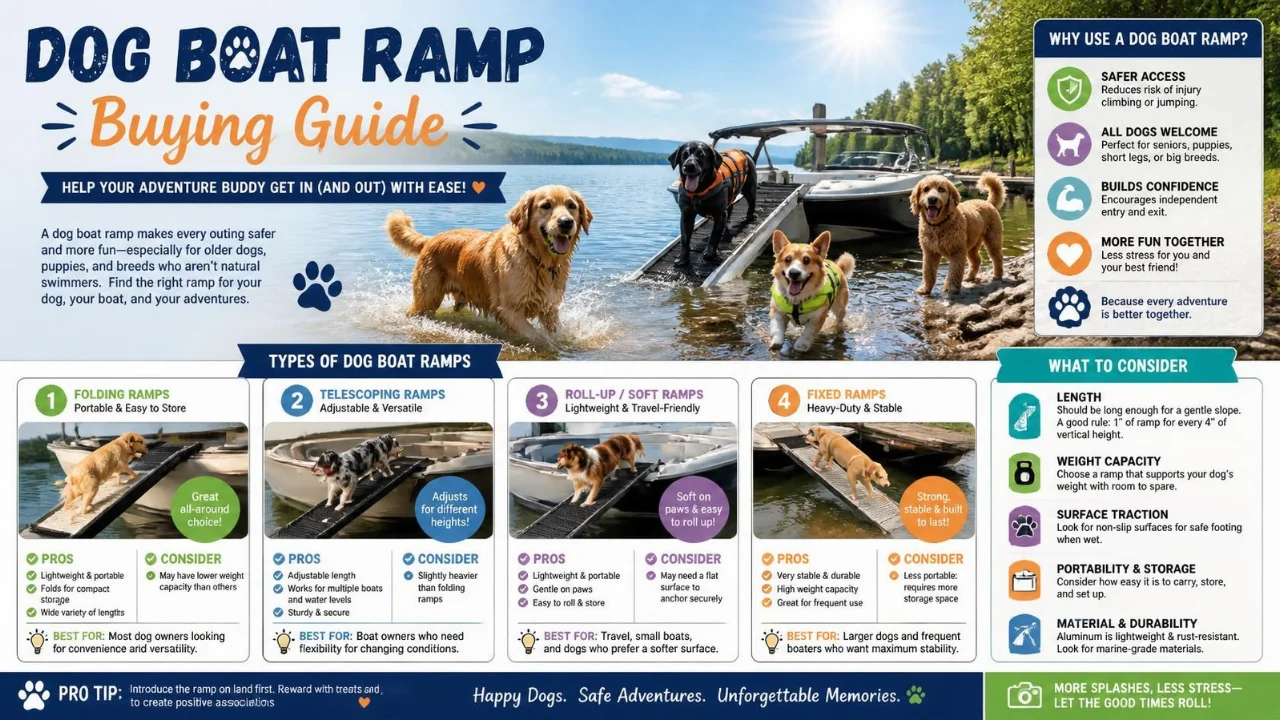
A dog boat ramp gives your dog a controlled route between the water and your boat. It can reduce scrambling, slipping, and awkward lifting after a swim. The right design depends on your dog, boat, water conditions, and available storage.
Most water ramps use an inflatable platform, submerged mesh entry, rigid ladder, or folding frame. Wet-paw traction matters more than appearance. Secure attachment matters as much when waves or wakes start moving the boat.
Quick answer: Choose a ramp with strong wet-paw traction, a submerged entry point, secure tie-downs, and enough capacity for your dog. Inflatable platforms suit many recreational boats because they store compactly. Folding or rigid designs can make more sense when space, hunting use, or permanent installation matters.
Dog Water Ramp Features at a Glance
| Feature | What to Look For | Why It Matters |
| Weight capacity | Comfortably above your dog’s weight | Helps the platform remain stable |
| Wet traction | EVA foam, grip fabric, or textured surface | Reduces paw slipping |
| Water entry | Submerged mesh, steps, or low entry | Gives the dog a starting foothold |
| Attachment | Multiple D-rings, hooks, or secure straps | Limits movement beside the boat |
| Width | Enough room to turn and climb comfortably | Helps nervous and larger dogs |
| Storage | Folding or inflatable construction | Saves limited boat space |
| Visibility | Contrasting or bright surfaces | Makes the exit easier to locate |
| Materials | Marine-suitable PVC, metal, or reinforced fabric | Better suited to repeated water exposure |
Why a Dog Boat Ramp Needs a Different Ramp on a Boat
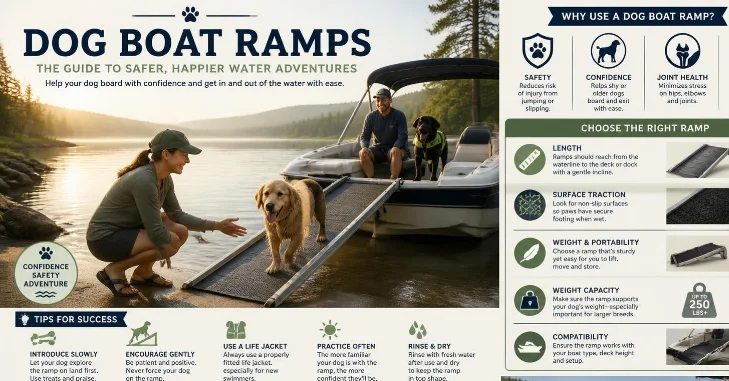
A dog boat ramp, unlike a normal vehicle ramp, rests on solid ground at both ends. A water ramp works beside a moving hull and must handle changing water levels. That difference makes ordinary car ramps a poor substitute for many boats.
The lower section also needs to reach the dog while swimming. A submerged mesh section or low floating step gives the front paws somewhere to land. The dog can then push upward instead of jumping onto a high platform.
Current products show how specialized these designs have become. Dog-DOK, for example, uses a weighted mesh entry and a full EVA traction surface. Its large model supports dogs up to 230 pounds.
The Three Main Types Compared
Choosing by construction is easier than choosing by brand first. Each style solves a different storage and boarding problem. Start with your boat and dog before comparing individual models.
| Type | Best Use | Main Advantages | Main Drawbacks |
| Inflatable floating platform | Pontoons, recreational boats, docks | Wide surface, compact storage, low water entry | Requires inflation and puncture care |
| Folding fabric or frame ramp | Fishing and hunting boats | Light, quick to deploy, compact | Usually narrower and less platform-like |
| Rigid or mounted ramp | Frequent or permanent use | Firm underfoot, little setup | Bulky and harder to store |
Inflatable Floating Platforms
Inflatable platforms offer a broad landing area rather than a narrow ladder. Many use drop-stitch PVC to become firm after inflation. They can then deflate into a much smaller package for storage.
The Dog-DOK illustrates this approach with a 60-by-40-inch large platform. It includes four tie-down points, ropes, a hand pump, and a carry bag. Its submerged mesh section helps dogs establish their first foothold.
This style works well for recreational boating and swimming stops. It can also work beside docks and pools when properly secured. Petistra’s dog pool guide covers additional considerations for dogs using water at home.
Folding Boat Ramps
A folding design trades platform size for easier handling. Banded’s ASD model, for example, attaches to boat side walls and uses grip fabric steps. The listed ramp weighs 6.5 pounds and folds from 28 inches to 14 inches.
That smaller footprint can suit fishing boats with limited storage. It may also appeal to owners who don’t want to inflate equipment before swimming. Check the attachment method carefully because boat sides vary widely.
Rigid or Permanently Mounted Designs
Rigid ramps can provide a firm surface with little flex. That predictability may help dogs that dislike the movement of floating equipment. Storage becomes the main disadvantage on smaller boats.
Mounted equipment also needs to suit your hull and boarding location. Never assume a universal mounting system will fit every boat. Measure the available space before ordering anything.
Dog Boat Ramp Safety: 7 Features Worth Checking
Safety depends on several features working together. A high weight rating alone doesn’t guarantee an easy climb. Check the complete boarding path from the water to the deck.
1. A Low or Submerged First Step
Dogs swimming beside a boat cannot place their paws on a surface far above them. They need a reachable first point of contact. Weighted mesh, submerged steps, or a low floating section can provide it.
Watch where the lower section sits after you tie down the ramp. It should remain reachable without forcing the dog under the hull. Test this beside the dock before relying on it farther from shore.
2. Grip Across the Climbing Surface
Wet paws need texture from the first step to the top. Smooth plastic becomes difficult when water covers it. Look for EVA foam, textured fabric, or another surface designed for wet traction.
Full-surface coverage can be especially useful for uncertain dogs. Dog-DOK lists EVA traction across its deck, not just on a narrow center strip.
Keep your dog’s nails maintained as well. Long nails can affect footing and can damage softer surfaces. Petistra’s guide to cutting dog nails safely explains how to keep them at a practical length.
3. Enough Capacity for Stable Use
Don’t buy based on capacity alone. The platform should stay stable while your dog climbs, not just support static weight. Movement places different demands on a floating surface.
Give yourself comfortable capacity above your dog’s current weight. This becomes more important with large dogs and flexible platforms. Always follow the manufacturer’s published limit rather than an unsupported rule of thumb.
4. Multiple Secure Attachment Points
A ramp drifting away during a climb defeats its purpose. Multiple tie points can limit twisting and sideways movement. They also give you more options for different boat layouts.
Check ropes, straps, hooks, and D-rings before every outing. Replace damaged hardware rather than waiting for it to fail. Saltwater users should also follow the manufacturer’s cleaning instructions after exposure.
5. Enough Width for Your Dog
A narrow ladder can feel intimidating to a large or hesitant dog. A wider platform provides more room for paw placement. It can also make training easier because small mistakes aren’t immediately punished.
Measure your dog rather than relying on breed labels alone. Think about shoulder width and turning space. A broad-chested dog may need more usable surface than a lighter dog of similar length.
6. Storage That Works on Your Boat
A huge platform has little value if you cannot carry it. Inflatable designs save compartment space after deflation. Folding ramps trade some surface area for fast storage.
Check packed dimensions as carefully as deployed dimensions. Pumps, ropes, repair supplies, and bags also need space. A compact system is easier to keep aboard for every trip.
7. A Route Your Dog Can See
Dogs need to locate the exit while swimming. A contrasting surface can make the boarding point easier to identify. Position also matters because glare and waves can obscure a low platform.
Teach one consistent exit location whenever possible. Call your dog to that spot instead of letting it approach randomly. Familiarity reduces confusion when the water becomes busier.
How to Train Your Dog to Use the Ramp
Buying the equipment doesn’t mean your dog understands it. Train on land or in shallow water before using it beside a boat. Keep early sessions short and predictable.
- Introduce the surface on land. Let your dog sniff and walk across it without water pressure.
- Reward contact with the ramp. Treat calm steps and voluntary approaches rather than pulling the dog forward.
- Move to shallow water. Let your dog practice entering and leaving where standing is still possible.
- Secure the ramp beside a dock. Practice the complete climb while you remain within reach.
- Attach it to the boat. Start in calm water before adding waves, wakes, or distractions.
- Teach a consistent cue. Use the same word when directing your dog toward the exit.
- Repeat before longer trips. Several short successes are better than one exhausting session.
Don’t drag a frightened dog onto the platform. Fear can make the next attempt harder and less predictable. Return to an easier stage if your dog freezes or repeatedly avoids the surface.
Senior dogs may need extra time with new equipment. They can also tire faster during repeated practice. Petistra’s dog stroller guide covers other mobility considerations for older dogs away from the water.
What About a Life Jacket?
A boarding ramp and a canine flotation device solve different problems. The ramp provides an exit route from the water. A properly fitted flotation device can help support the dog while swimming.
Don’t treat either product as a replacement for supervision. Dogs can become tired, disoriented, or separated from the boat. Stay close enough to intervene during every swimming session.
A top handle can help you guide a dog toward the boarding point. Avoid relying on the handle for routine full-body lifting unless the manufacturer specifically permits it. The ramp should do most of the boarding work.
Common Buying Mistakes
The first mistake is choosing only by maximum weight. Traction, width, entry depth, and attachment can matter more during an actual climb. A technically strong ramp can still be awkward for your particular dog.
The second mistake is waiting until launch day for training. Boats add noise, movement, unfamiliar surfaces, and excitement. Learning the equipment beforehand removes one problem from that environment.
The third mistake is ignoring claws and chewing habits. Inflatable equipment still needs protection from sharp objects and destructive behavior. Petistra’s guide to dog toys for chewers explains why material choice matters for dogs that bite equipment.
Our Verdict: Which Type Should You Choose?
For most recreational boaters, a wide inflatable platform with a submerged entry and full wet-paw traction is the most versatile starting point. It provides more landing room than narrow ladder designs. It also packs smaller than many rigid alternatives.
A folding ramp makes more sense when storage space is extremely limited. It can also suit hunting or fishing boats where quick deployment matters. Confirm that its hooks or attachment system match your boat before buying.
Rigid systems suit owners who value firmness over portability. They make the most sense when the ramp can remain installed or stored easily. Your boat layout should guide this choice, not marketing claims.
Before Your First Trip
Inflate or assemble the equipment at home before launch day. Check every valve, strap, rope, hook, and attachment point. Then practice enough that your dog knows where the route begins.
Bring any pump or repair equipment supplied with an inflatable model. Keep the ramp clear of fishing hooks and sharp deck hardware. Rinse and dry it according to its manufacturer’s instructions after use.
Water equipment works best as one part of a broader routine. Supervision, calm training, suitable flotation equipment, and controlled swimming still matter. Petistra’s dog pool buying guide has more advice for supervised water play.
The Next Step
Measure your dog and the available boarding space before comparing models. Then prioritize traction, reachable water entry, secure attachment, and realistic storage. Those four checks will quickly eliminate many unsuitable choices.
Practice with the equipment before your first full boating day. Your dog should learn that the ramp is the normal route back aboard. A familiar exit is more useful than an impressive specification sheet.
Frequently Asked Questions
What is a dog boat ramp used for?
A dog boat ramp creates a lower, grippier route between the water and the boat. It helps a swimming dog climb aboard without making a high jump. Designs may use floating platforms, submerged mesh, steps, or folding frames.
Can I use a regular dog ramp on a boat?
Most vehicle ramps weren’t designed to float or sit partly underwater. Their surfaces and attachment systems may also perform differently when wet. Choose equipment specifically approved by its manufacturer for your intended marine use.
Are inflatable dog ramps stable?
Well-designed inflatable platforms can become firm when inflated to their specified pressure. Stability still depends on size, attachment, water movement, and correct setup. Always follow the manufacturer’s pressure and capacity instructions.
How big should the ramp be?
The ramp should comfortably support your dog’s weight and body width. Your dog also needs enough surface to establish all four paws during the climb. Larger or hesitant dogs often benefit from wider platforms.
Can senior dogs use boat ramps?
Many senior dogs can use a gradual, grippy ramp more easily than making a high jump. Individual mobility problems can change what is appropriate. Ask your veterinarian about swimming if your dog has significant joint, heart, or mobility concerns.
Should dogs wear life jackets around boats?
A canine flotation device can add buoyancy and visibility around water. Fit and intended use vary between products. A life jacket doesn’t replace close supervision or a reliable exit route.