

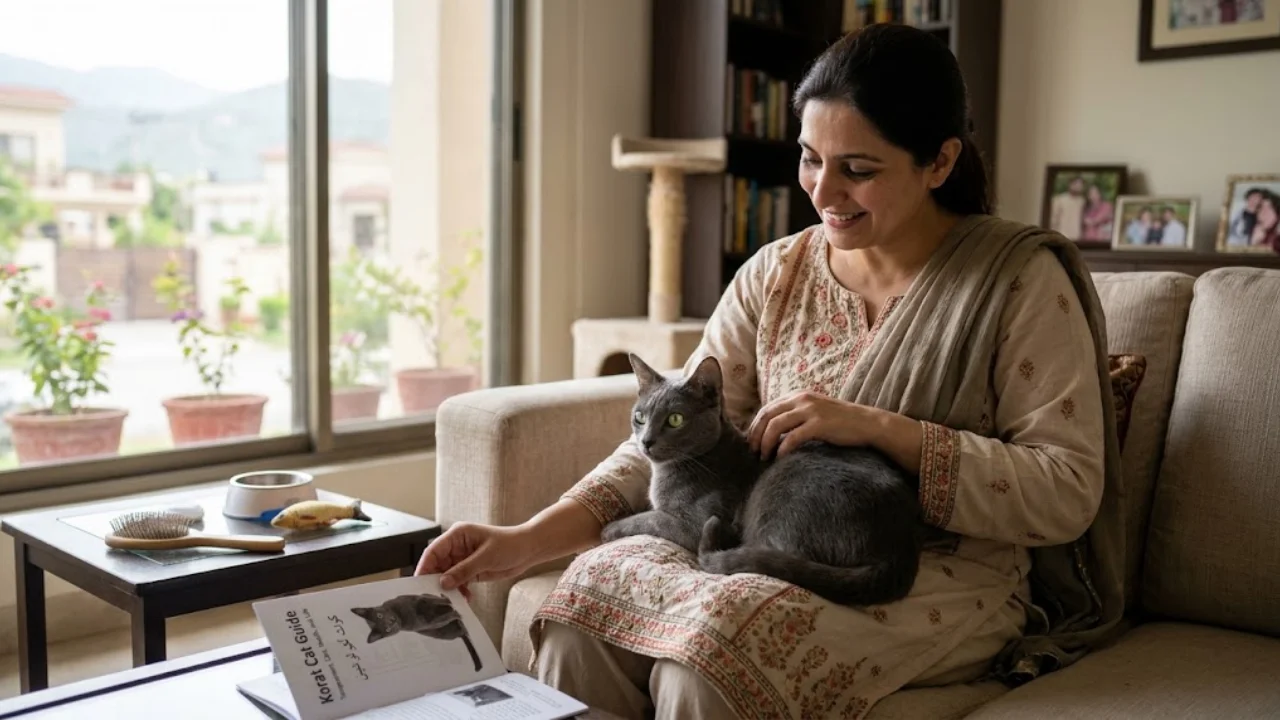
The Korat cat is a rare Thai breed known for its silver-blue coat, green eyes, and strong attachment to people. These muscular cats are intelligent, playful, affectionate, and more social than their reserved appearance suggests. They suit owners who want an involved companion rather than an independent pet.
Quick answer: This ancient Thai breed is a small-to-medium, muscular cat with a silver-tipped blue coat and luminous green eyes. It usually needs little grooming but plenty of interaction and mental stimulation. Potential owners should also ask breeders about genetic screening for GM1 and GM2 gangliosidosis.
Korat Cat Quick Facts
| Trait | What U.S. Owners Should Know |
|---|---|
| Origin | Thailand |
| Size | Small to medium |
| Typical weight | Females often 6–8 pounds; males can reach 10 pounds or more |
| Coat | Short, single, silver-tipped blue coat |
| Eyes | Large and luminous; mature color is usually green |
| Personality | Affectionate, intelligent, active, people-oriented |
| Grooming | Low maintenance |
| Lifespan | Often 15 years or longer |
| Main inherited concern | GM1 and GM2 gangliosidosis |
| Best home | Interactive household with regular companionship |
TICA describes females as generally weighing six to eight pounds, while males often weigh more. The organization says healthy members of the breed can live 15 years or longer. Some remain healthy and active into their twenties.
Key Takeaways
- This is an affectionate breed that tends to form strong bonds with its people.
- Its only accepted coat color is silver-tipped blue under CFA standards.
- The short single coat needs relatively little grooming.
- Mature green eye color can take several years to develop.
- Daily play and human interaction matter more than elaborate grooming.
- Prospective buyers should request proof of appropriate genetic health screening.
- A blue-gray shelter cat is not automatically a member of this pedigree breed.
What Does This Thai Breed Look Like?
The breed combines a compact body with more weight and muscle than its appearance suggests. Its head forms a distinctive heart shape, while large ears create an alert expression. Large, luminous eyes are another defining feature under the CFA standard. Its coat is short, glossy, fine, and close to the body. Each blue hair develops silver tipping, creating the characteristic shimmering appearance. CFA recognizes silver-tipped blue as the breed’s proper color. Young cats don’t always have the brilliant green eyes seen in adult photographs. Kittens may have yellow, amber, or amber-green eyes during development. Full adult eye color often develops between two and four years old.
Where Did the Korat Come From?
The breed originated in Thailand and has a long connection with Thai ideas about good fortune. CFA traces written references to the historic Cat-Book of Poems, produced during Thailand’s Ayudhya period. Thai tradition also associated these silver-blue cats with weddings and prosperity. The first documented pair reached the United States in 1959 through Jean Johnson. More imported cats later helped strengthen American bloodlines. Despite that history, the breed remains uncommon in the United States today.
Temperament: Affectionate, Smart, and Involved
A Korat often wants to participate in household life rather than watch it from another room. CFA describes the breed as highly intelligent, expressive, playful, and strongly bonded with its owners. Interactive toys and puzzle games can help satisfy that active mind. These cats may follow favorite people and actively ask for attention. Their voices vary considerably, so owners shouldn’t expect every individual to be either quiet or talkative. TICA notes that vocal behavior ranges from soft chirps to stronger calls. They can live with other pets, but introductions still need care. CFA notes that individuals may expect considerable attention when another animal enters the household. Slow introductions and separate resources can make those transitions easier.
Living With a Korat in a U.S. Home
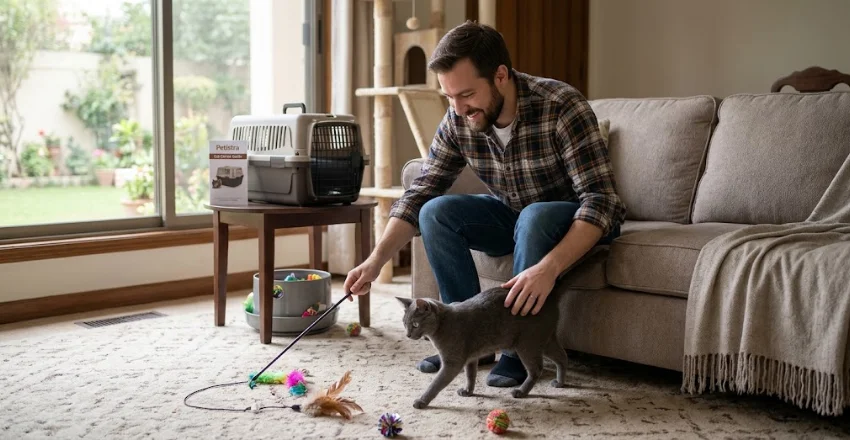
This breed usually fits people who spend meaningful time interacting with their pets. TICA says these cats need companionship and dislike being ignored for long periods. A household where somebody is often available can therefore be a comfortable match. Regular play should include activities that allow stalking, chasing, climbing, and problem-solving. Rotate toys instead of leaving every toy available continuously. That simple change can keep familiar objects interesting without constant purchases. Travel should also account for a cat’s individual temperament. A stable carrier gives a nervous pet a secure place during veterinary visits. Petistra’s cat carrier guide explains useful carrier designs for safer trips.
Grooming and Everyday Care
The short single coat makes grooming straightforward compared with many longer-haired breeds. TICA recommends occasional brushing to remove loose hairs and maintain coat condition. The lack of a heavy undercoat also reduces matting concerns. Low grooming needs do not mean zero routine care. Nail trimming, dental care, clean litter boxes, and routine veterinary examinations remain important. Owners should also monitor appetite, weight, drinking, and normal bathroom habits. Sudden appetite loss deserves attention regardless of breed. Cats can develop serious health problems when they stop eating for prolonged periods. Petistra’s guide on how long cats can go without food explains why waiting several days can be risky.
Health and Lifespan
TICA describes the breed as generally healthy and potentially long-lived. Its most recognized inherited concerns are GM1 and GM2 gangliosidosis. These disorders affect normal cellular processing and can cause serious neurological disease. DNA testing allows responsible breeding programs to identify relevant genetic status. TICA says screening has made these diseases far less common among responsibly bred cats. Buyers should ask breeders directly for health-testing documentation rather than relying on verbal assurances.
Breed genetics don’t replace ordinary preventive medicine. Vaccination, parasite prevention, dental care, and veterinary examinations still matter throughout life. Vomiting, breathing changes, weight loss, or persistent lethargy deserve veterinary assessment. Frequent vomiting should never be dismissed because a cat seems otherwise normal. Petistra’s guide to vomiting in cats covers common causes and warning signs. Its cat sneezing guide also explains when recurring respiratory symptoms merit veterinary attention.
Korat vs. Russian Blue: How Can You Tell Them Apart?
People often confuse these two blue-gray breeds because both can have green eyes and silvery coats. Their body shape, head structure, and coat texture provide stronger identification clues. CFA standards make those differences clearer than color alone.
| Feature | Thai Breed | Russian Blue |
|---|---|---|
| Head | Heart-shaped | Wedge-shaped |
| Coat | Fine, close-lying single coat | Dense, plush double coat |
| Body | Compact, muscular, semi-cobby | Longer and more refined |
| Ears | Large, high-set, rounded tips | Large, pointed, widely set |
| Mature eyes | Luminous green | Vivid green |
| Origin | Thailand | Historically associated with Russia |
A gray rescue cat should not be identified by appearance alone. Pedigree documentation provides much stronger evidence of breed ancestry. Coat color by itself occurs across many domestic cats.
Is This Breed Right for Your Family?
Consider your daily routine before focusing on the striking silver coat. This breed tends to suit people who enjoy frequent play, communication, and close feline companionship. A home expecting a distant, low-interaction cat may find the personality demanding. Families should also consider noise, children, other animals, and time spent away from home. Individual personality and early socialization matter alongside breed tendencies. Children should always learn respectful handling and allow any cat to leave an interaction.
Finding one may require patience because the breed remains uncommon in America. Don’t treat immediate availability as more important than breeder practices and health records. Ask about pedigree documentation, genetic screening, veterinary care, and the kitten’s socialization.
What to Ask Before Getting One
Use the breeder conversation to check health practices rather than focusing only on appearance. Reputable sellers should be comfortable discussing genetic testing and veterinary history. They should also answer detailed questions about how kittens are raised.
Ask about these points:
- GM1 and GM2 testing for breeding cats
- Registration and pedigree documentation
- Vaccination and veterinary records
- Socialization with people and household activity
- Spay or neuter requirements
- Return policies if circumstances change
- How long kittens remain with their mother
- Whether the breeder provides ongoing support
Avoid buying solely because a kitten is advertised as a rare blue breed. Photos cannot confirm pedigree or responsible breeding practices. Documentation matters more than color, eye shape, or an online seller’s description.
The Bottom Line
The Korat combines an unusual appearance with a highly social personality. Its grooming needs are light, but its need for interaction can be substantial. That tradeoff matters more than the breed’s distinctive color. Before bringing one home, decide whether your household can provide steady companionship and active play. Then prioritize documented health testing and responsible breeding practices over speed or appearance. The right preparation can support a long and rewarding relationship with this uncommon Thai companion.
Frequently Asked Questions
Is a Korat cat hypoallergenic?
No cat breed is reliably hypoallergenic for every person. This breed has a single coat and may shed less than some double-coated cats. People with allergies should spend time around individual cats before making a commitment.
Are these cats good with children?
They can live successfully with respectful children who understand feline boundaries. TICA describes them as playful yet gentle during interactions with children. Individual temperament and supervision still affect every household relationship.
How long do they live?
TICA says these cats commonly live 15 years or longer with appropriate care. Some individuals can remain healthy into their twenties. Genetics, preventive medicine, nutrition, environment, and individual health all influence lifespan.
Why are they sometimes confused with Russian Blues?
Both breeds have blue-gray coats and can develop striking green eyes. The Thai breed has a heart-shaped head and close single coat. Russian Blues have wedge-shaped heads and dense double coats.
Are they rare in the United States?
Yes, major breed resources describe them as uncommon, and availability can be limited. PetMD notes their small gene pool and continued rarity. Buyers may need patience when searching for responsible American breeders.