
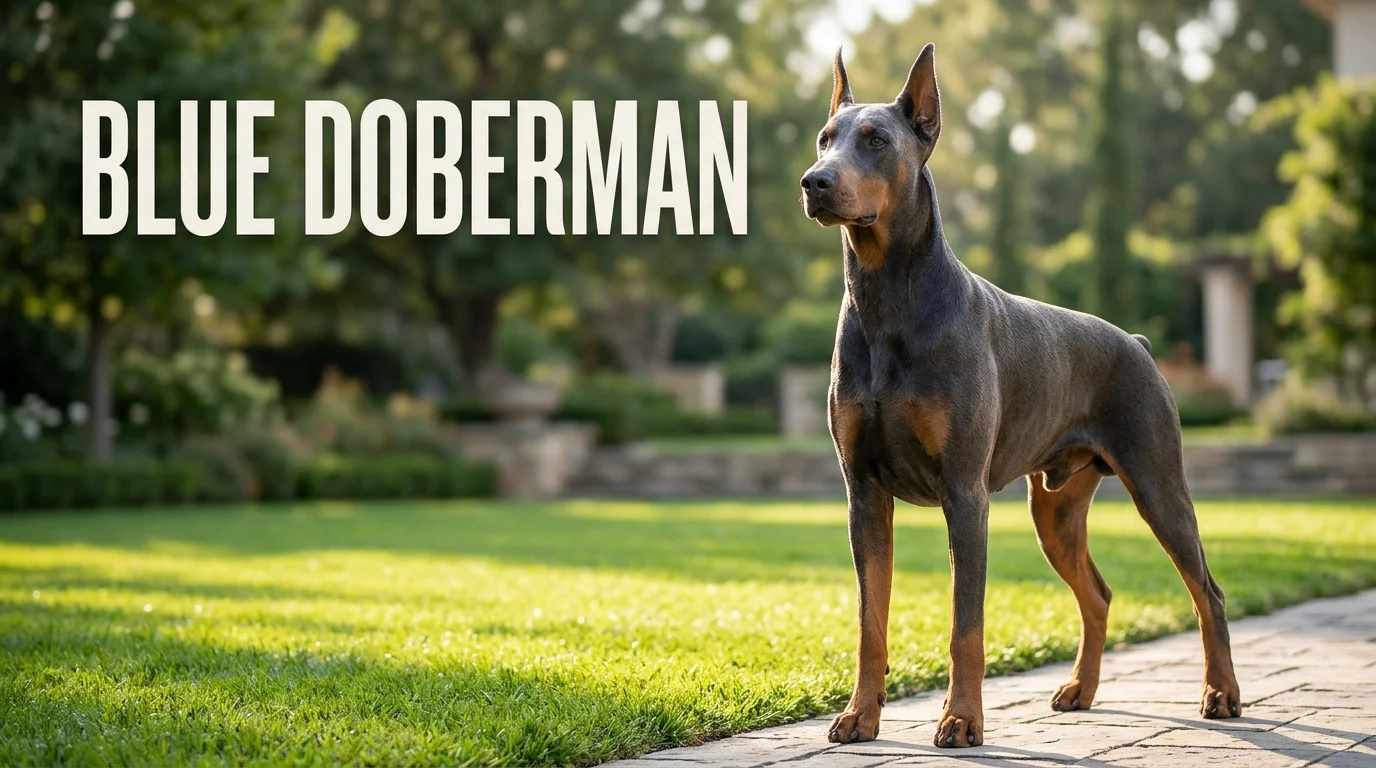
A blue Doberman is not a separate breed or a dog with genuinely blue fur. The coat is a diluted form of black, creating a gray or steel-blue appearance. U.S. owners should understand one important tradeoff before choosing this color: dilute coats can face additional skin and hair problems. Elsewhere on the site: Australian Shepherd Blue Merle.
Direct answer: The blue coat results from inherited color dilution that changes black pigment into gray or bluish gray. These dogs share the breed’s normal size, temperament, exercise needs, and intelligence, but they have an increased risk of color dilution alopecia and related coat problems.
Blue Doberman at a Glance
| Trait | What U.S. Owners Should Know |
|---|---|
| Breed | Doberman Pinscher |
| Coat appearance | Gray, steel gray, or bluish gray with rust markings |
| U.S. breed status | Blue and rust is an accepted AKC color |
| Cause of color | Recessive dilution genes affecting dark pigment |
| Male height | About 26–28 inches |
| Female height | About 24–26 inches |
| Typical weight | Roughly 60–100 pounds, depending on sex |
| Life expectancy | About 10–12 years |
| Temperament | Alert, loyal, intelligent, energetic |
| Main coat concern | Color dilution alopecia |
| Grooming | Light routine grooming, with added skin monitoring |
| Buyer priority | Health-tested parents and transparent breeder records |
The American Kennel Club recognizes blue and rust among the breed’s listed colors. Adult males generally stand 26 to 28 inches, while females stand 24 to 26 inches. AKC information lists the breed’s expected lifespan as about 10 to 12 years.
Key Takeaways
- The gray-blue appearance comes from dilution of black pigment.
- Blue and rust are accepted colors under the U.S. breed standard.
- Coat color does not create a different temperament or separate breed.
- Dilute dogs face a greater risk of color dilution alopecia.
- Skin problems may appear after puppyhood rather than at birth.
- Breeder health testing matters more than rarity or coat shade.
- Buyers should verify cardiac, vWD, thyroid, hip, and other screening records.
What Makes the Blue Coat Different?
The gray appearance develops because inherited dilution affects black pigment. The D locus is linked to this coat-color change. Dogs expressing dilution inherit recessive variants from both parents.
This does not turn the hair into a bright or navy blue. The result usually looks charcoal, slate gray, or steel gray. Rust-colored points remain visible around areas such as the muzzle, chest, legs, and eyebrows.
The Doberman Pinscher Club of America describes blue as a dilution of black. It also recognizes fawn as the corresponding dilution of red. These colors result from genetics rather than a different breed line.
Is Blue and Rust an Official U.S. Color?
Yes, blue and rust appear in the AKC’s color information for the breed. The DPCA standard also includes black, red, blue, and fawn among allowed colors. Therefore, a diluted coat is not automatically an unusual or unrecognized color in the United States.
Recognition does not mean every coat is equally easy to maintain. The parent club specifically discusses increased coat problems among dilute dogs. Prospective owners should separate breed-standard acceptance from questions about skin health.
That distinction matters when evaluating breeders. A seller may focus heavily on rarity, appearance, or unusual coloring. Health records should carry far more weight than a marketing claim about coat color.
Blue Doberman Health Risks Owners Should Understand
Color dilution alopecia, commonly shortened to CDA, is the main color-specific concern. It is an inherited condition associated with dilute pigmentation. Affected dogs can develop thinning hair, fragile hair shafts, scaling, and secondary skin infections.
Puppies can initially have normal-looking coats. VCA notes that clinical signs may start at six months or later. DPCA material describes onset that can occur between roughly six months and three years.
Hair loss often becomes most visible across the trunk or back. Remaining hair can appear rough, sparse, dry, or easy to break. Itching may become noticeable when a secondary infection develops.
An older veterinary study examined 57 blue or fawn dogs from this breed. Forty-two showed hair loss considered typical of color dilution alopecia. That study supports taking the risk seriously, but it should not predict an individual puppy’s outcome.
Does Every Dilute Dog Develop Alopecia?
No. Dilute pigmentation creates susceptibility, but it does not guarantee that every individual develops the disorder. Some dogs maintain better coats throughout life.
That uncertainty makes puppy appearance a poor guarantee. A young animal may have a smooth, full coat before later thinning appears. Buyers should ask about older relatives with the same dilution, not only inspect the puppy.
Veterinary evaluation also matters because hair loss can have many causes. Parasites, fungal disease, hormonal disorders, allergies, and infections can produce overlapping signs. A veterinarian may need diagnostic testing before attributing hair loss to CDA.
What Does Color Dilution Alopecia Treatment Involve?
No simple cure currently restores genetically affected follicles. Treatment instead focuses on skin comfort and secondary problems. Veterinary guidance may include medicated shampoos, topical products, or antibiotics when infection occurs.
Owners should avoid experimenting with supplements or medications without veterinary guidance. A dermatologist may help if hair loss becomes extensive or recurring. An early exam can also help rule out unrelated skin diseases.
Routine grooming should remain gentle because fragile hairs can break easily. Petistra’s dog nail clippers guide also explains why choosing the right equipment matters during home grooming. Safe handling can make routine care less stressful for an active working dog.
Temperament and Personality
Coat dilution does not create a separate personality type. These dogs retain the alert, loyal, athletic temperament associated with the breed. The AKC describes the breed as alert, loyal, and fearless.
They often need close interaction with their household. Daily training, exercise, and mental work help channel their intelligence. An under-stimulated working dog can create its own entertainment, which may include unwanted behavior.
Start reward-based training early and stay consistent. Petistra’s guide explaining how dogs understand spoken words can help owners use clearer verbal cues. Training becomes easier when every household member uses the same signals.
Exercise and Daily Care
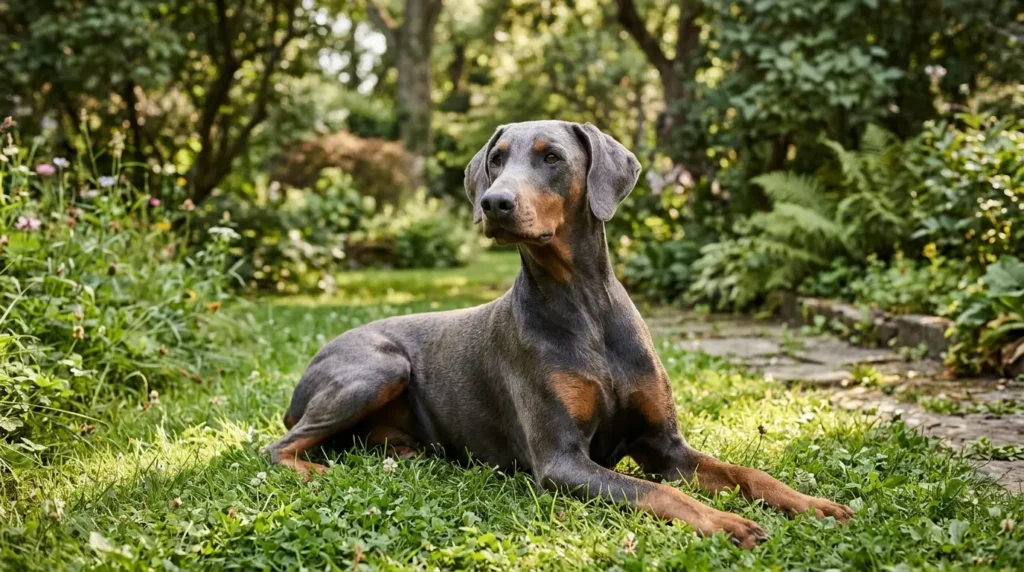
A healthy adult usually needs substantial daily activity. Walks alone may not satisfy a young, energetic dog. Training games, structured play, scent work, and other mental challenges can complement physical exercise.
Exercise needs should match age and health. Growing puppies should not be pushed through demanding repetitive workouts designed for conditioned adults. Older dogs may also need lower-impact activity as health changes.
The short coat requires less brushing than many long-haired breeds. Dilute-coated individuals deserve closer skin inspection during grooming. Look for thinning patches, scaling, bumps, redness, or changes in coat texture.
Health Testing Matters Beyond Coat Color
CDA should not distract buyers from larger breed-wide health concerns. Responsible breeding programs screen for problems that can affect longevity and quality of life. Cardiac disease deserves particular attention in this breed.
DPCA guidance discusses cardiac screening, von Willebrand disease testing, thyroid evaluation, and hip assessment. Eye examinations also appear among recommended screening considerations. Buyers should ask for documentation rather than accepting statements that the parents were simply “vet checked.”
Cardiac screening differs from a one-time DNA test. DPCA material recommends ongoing cardiac evaluation for breeding dogs. That distinction is worth discussing directly with any breeder you consider.
What to Ask a Breeder Before Buying
A responsible seller should be willing to discuss health results and family history. Avoid making color the first or only selection criterion. An unusual shade cannot compensate for weak health screening or unstable temperament.
Ask for evidence covering the following areas.
- Cardiac screening, including appropriate heart evaluations.
- von Willebrand disease status.
- Hip evaluation through OFA or another recognized program.
- Thyroid screening.
- Eye examination records.
- Health and longevity information from close relatives.
- Coat condition of older dilute relatives.
- Written health guarantees and return policies.
DPCA specifically advises buyers to verify breeder claims and health information. It also stresses that routine vaccinations or a basic veterinary examination do not replace genetic and orthopedic screening. That advice is particularly useful when a seller charges extra for an unusual coat.
Should You Pay More for a Rare Color?
A higher price does not prove better health or better breeding. Color can influence demand, but responsible breeding involves far more than producing a specific shade. Health, temperament, structure, and family history deserve greater weight.
Be cautious when advertising centers on words such as rare, exclusive, or exotic. Ask what health testing supports the litter instead. A breeder should be able to discuss strengths and risks without turning coat color into the entire sales argument.
Petistra’s black Labradoodle guide follows a similar principle with another color-focused search. Appearance can attract buyers, but color alone does not define behavior or health quality. Evaluating the whole dog leads to better decisions.
Is This Color a Good Choice for Your Family?
The right household should want the breed first and the color second. Owners need time for training, activity, socialization, and preventative veterinary care. They should also be comfortable monitoring possible skin and coat changes.
A person wanting a low-maintenance or low-energy pet may find this breed demanding. Experienced owners often value its intelligence, responsiveness, and close bond with people. Those qualities require consistent involvement, not occasional attention.
If you like the appearance, consider both puppies and adult rescue dogs. An adult may offer more information about established coat condition and temperament. Whatever route you choose, health history should remain more important than shade.
Frequently Asked Questions
Is a blue Doberman a separate breed?
No, it is a color variation of the same recognized breed. The gray-blue appearance results from dilution of black pigment. Temperament, structure, and general care needs remain tied to the breed rather than the coat shade.
Is the blue coat recognized by the AKC?
Blue and rust appears in the AKC’s breed color information. The national breed club also includes blue among its allowed colors. Recognition does not eliminate the potential for dilution-related coat problems.
Why does the coat look gray instead of blue?
Dog color terminology does not always describe literal human color perception. Dilution lightens black pigment into a gray or slate appearance. Some coats show a stronger bluish cast under particular lighting.
Can color dilution alopecia be prevented?
There is no owner routine that can remove an inherited predisposition after birth. Good skin care may help manage secondary problems but cannot change the dog’s genetics. Breeding decisions and transparent health histories therefore matter.
Are these dogs harder to groom?
The short coat itself is simple to maintain. Problems arise when a dilute dog develops fragile hair, scaling, or infection. Gentle grooming and regular skin checks are sensible for affected or higher-risk individuals.
The Bottom Line for U.S. Owners
The unusual steel-gray coat can be striking, but color should remain one part of your decision. A healthy companion needs sound temperament, responsible breeding, appropriate training, and lifelong veterinary care. Coat genetics deserve extra attention because dilution brings a documented skin risk.
Before committing to a puppy, verify health testing and ask about older dilute relatives. Review cardiac, bleeding-disorder, thyroid, hip, eye, and family health records. Then choose the individual dog whose health and temperament fit your household.
For broader breed comparisons, Petistra’s pocket Beagle guide shows how marketing labels can distract buyers from health and temperament. The same buyer rule applies here: evidence matters more than a memorable label. Good records and responsible breeding provide more useful information than rarity.
—–