
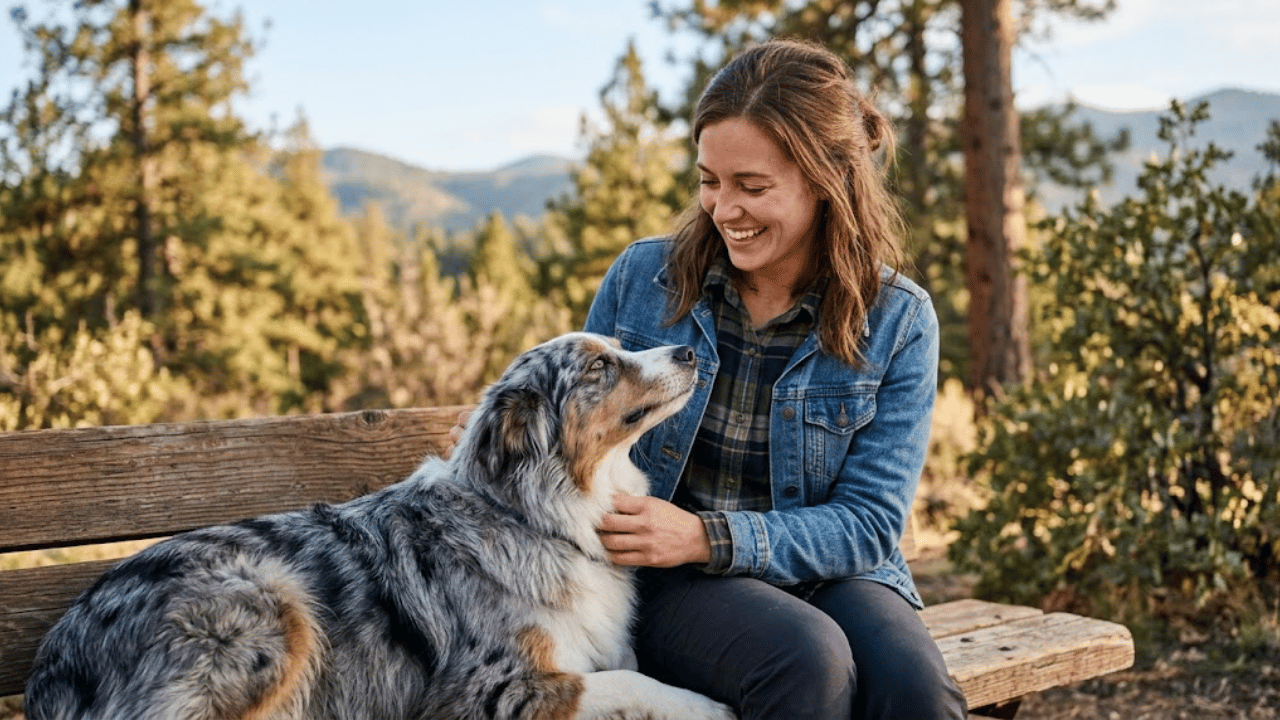
An Australian Shepherd blue merle combines the breed’s intelligence and working drive with a marbled gray-and-black coat. Blue merle is a recognized coat pattern, not a separate breed or special size. For U.S. owners, temperament, health testing, exercise needs, and responsible breeding matter far more than coat color. We cover this in more depth in Blue Doberman Guide for U.S. Owners.
Direct answer: A blue merle Aussie is a standard Australian Shepherd with black pigment broken into gray, silver, and black patches. The pattern may appear with white or copper markings. Healthy single-merle dogs can live normal lives, but breeding two merles together can increase serious hearing and vision risks in puppies.
Blue Merle Aussie at a Glance
| Trait | What U.S. Owners Should Know |
|---|---|
| Breed | Australian Shepherd |
| Coat pattern | Gray or silver background with black patches |
| Other markings | White and copper may be present |
| Adult height | Females 18–21 inches; males 20–23 inches |
| Typical weight | Females about 40–55 pounds; males about 50–65 pounds |
| Coat | Medium-length, weather-resistant double coat |
| Temperament | Intelligent, active, trainable, often reserved with strangers |
| Exercise needs | High |
| Grooming | Regular brushing, with heavier seasonal shedding |
| Main color-related concern | Double-merle breeding |
| Family fit | Best for active homes prepared for training and daily activity |
Key Takeaways
- Blue merle describes a coat pattern, not a separate breed.
- Each merle pattern looks different because pigment distribution varies.
- Blue eyes, brown eyes, or mixed-color eyes can occur.
- Coat color does not determine a dog’s personality or trainability.
- Single-merle dogs are not automatically unhealthy because of their color.
- Merle-to-merle breeding can produce double-merle puppies with greater sensory risks.
- Buyers should verify health records instead of paying mainly for color.
- Daily exercise and mental work are essential for most Aussies.
What Does Blue Merle Mean?
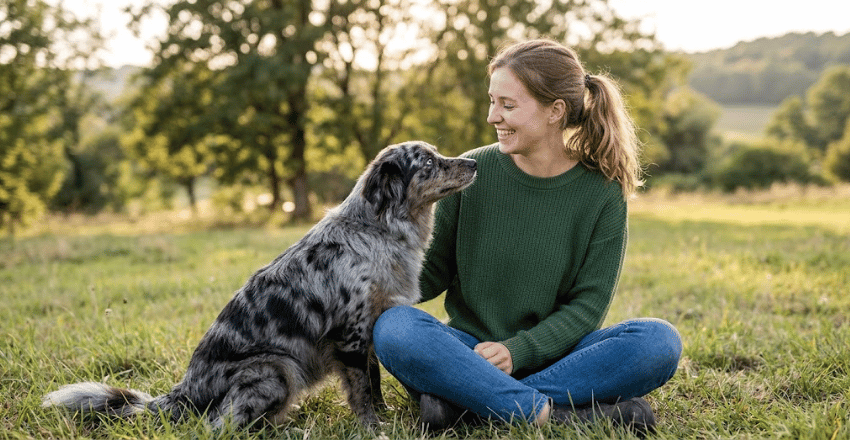
Blue merle describes black pigment broken into irregular areas across a lighter gray background. Some coats look pale silver, while others appear darker and heavily patched. White markings and copper points can create several visually different combinations within the same recognized color.
The word “blue” can confuse first-time owners because the coat is not bright blue. Black and gray hairs create a cool, bluish appearance. The United States Australian Shepherd Association recognizes blue merle alongside black, red, and red merle.
Eye color also varies widely in the breed. A merle dog may have brown, blue, amber, or mixed-color eyes. One eye can also differ from the other without automatically indicating a health problem.
Australian Shepherd Blue Merle Genetics Explained
Merle is a genetic pattern affecting how pigment appears in parts of the coat. A typical merle dog usually inherits one merle variant and one non-merle variant. This produces the familiar mottled or marbled appearance associated with the pattern.
A standard single-merle dog does not become unhealthy simply because its coat is merled. Problems become more concerning when a puppy inherits merle variants from both parents. These dogs are commonly called double merles and may have much more white pigment.
Double-merle dogs face an increased risk of congenital hearing and eye abnormalities. Responsible breeders therefore avoid deliberately pairing two merle dogs. Genetic testing can also help when a dog’s visible pattern doesn’t clearly indicate merle status.
Size and Physical Appearance
Coat color does not change normal breed size. Adult females generally stand 18 to 21 inches at the shoulder. Males usually measure about 20 to 23 inches and tend to weigh more.
Females often weigh roughly 40 to 55 pounds, while males commonly reach 50 to 65 pounds. Individual dogs can fall outside those ranges because genetics, body condition, and breeding lines vary. A puppy’s parents offer better clues about size than its color.
The breed has an athletic build designed for movement and sustained work. Its medium coat can be straight or slightly wavy. The double coat also changes in density with climate and seasonal shedding.
Temperament: Does Merle Color Change Personality?
Blue merle coloring does not create a special temperament. Aussies are generally intelligent, energetic, responsive, and strongly oriented toward their people. Many also retain noticeable herding instincts around animals, children, bicycles, or moving objects.
Recent research examining coat color and behavior found no broad behavioral pattern tied to merle coloring. Personality depends more on genetics beyond color, early socialization, training, environment, and individual experience. Buyers should therefore avoid sellers who promise a certain personality based on coat appearance.
These dogs often learn quickly, including habits their owners did not intend to teach. Consistent positive-reinforcement training helps direct that intelligence toward useful behaviors. Early socialization can also help a naturally reserved dog respond calmly to unfamiliar people and situations.
Exercise and Mental Stimulation
This breed was developed for demanding work, not a quiet indoor routine. Most adults need substantial daily physical activity and regular mental challenges. A solo walk may not satisfy a young, energetic working dog.
Useful activities include structured walks, hiking, fetch, obedience practice, scent games, agility, and herding activities. Training sessions can be short because intelligent dogs often learn better through frequent focused practice. Rotating activities also reduces boredom without requiring constant high-impact exercise.
Owners should balance activity with age and physical development. Growing puppies should not be pushed through repetitive, strenuous exercise designed for adult dogs. Your veterinarian can help set safer activity levels for an individual puppy.
Grooming the Blue Merle Coat
The patterned coat needs the same basic maintenance as other Aussie colors. Regular brushing removes loose undercoat and helps prevent knots behind the ears, legs, and feathering. Seasonal shedding may require more frequent brushing to control loose hair.
Bathing should depend on dirt, odor, and lifestyle rather than a rigid schedule. Outdoor dogs may need more frequent cleaning than indoor companions. Use a dog-safe shampoo and dry the undercoat thoroughly after bathing.
Nails also need routine attention because excessive length can affect comfort and movement. Petistra’s Dog Nail Clippers guide can help owners choose tools based on nail thickness. The site’s Digitigrade Animals guide also explains how canine paws and toe-based movement work.
Health Issues Owners Should Understand
The merle pattern should not distract buyers from health conditions found across the breed. Responsible breeding programs screen for concerns such as hip problems and inherited eye disease. Buyers should ask which tests were completed and request verifiable results.
Australian Shepherds may also be affected by certain inherited conditions unrelated to coat pattern. Appearance alone can’t guarantee lifelong health. Health screening improves decision-making but cannot predict every future medical problem.
Regular veterinary examinations remain important after adoption. Owners should seek veterinary care for changes in vision, hearing, movement, seizures, persistent skin problems, or unusual behavior. Petistra provides educational guidance, but a veterinarian makes individual medical decisions.
Why Double-Merle Breeding Matters
When two merle parents are bred, puppies can inherit a merle variant from each parent. Those double-merle puppies may have extensive white areas and increased sensory abnormalities. Hearing loss and serious eye defects are among the best-known concerns.
This risk is a breeding issue, not proof that every merle dog is unhealthy. A normally pigmented single-merle companion may have no color-related medical problem. Buyers should separate responsible single-merle breeding from careless merle-to-merle pairings.
Ask a breeder directly about both parents’ colors and genetic testing. A responsible seller should explain the pairing without becoming defensive or vague. Avoid sellers who prioritize rare-looking color over health, temperament, and documented screening.
Choosing a Puppy or Adult Dog in the United States
Start by deciding whether the breed fits your lifestyle before choosing a color. An energetic herding dog can become difficult in a home without enough training or activity. Only consider color after you’ve assessed health, temperament, and household fit.
Ask to see health documentation for both parents when buying from a breeder. Confirm registered names and independently review available testing records. A generic statement that the parents are “healthy” is not the same as documented screening.
Use this checklist before paying a deposit:
- Confirm the puppy’s parents and their coat colors.
- Ask whether genetic testing was used for merle status.
- Request breed-appropriate health screening records.
- When practical, meet the mother and observe her temperament.
- Ask how puppies are socialized before leaving.
- Review the breeder’s return policy and written contract.
- Avoid pressure to pay extra solely for blue eyes or unusual markings.
- Walk away if health records or parent information cannot be verified.
Rescue can be another strong option for owners who prefer an adult dog. Adult size, energy level, and much of the dog’s temperament are already easier to assess. A foster-based rescue may also provide useful information about how the dog behaves in a home.
For comparison, Petistra’s Pocket Beagle guide uses a similar evidence-first approach to breeder claims. The site’s Black Labradoodle guide also explains why coat appearance should not overshadow temperament and care needs. That same principle matters even more when shopping for a visually distinctive Aussie.
Is This Dog Right for Your Home?
This breed can thrive with owners who enjoy training, outdoor activity, and close daily interaction. It may suit active families, dog-sport enthusiasts, hikers, and people who enjoy teaching new skills. A large yard can help, but it doesn’t replace exercise or engagement.
It may be a poor fit for households that want a low-energy dog that requires little training. Bored Aussies can invent their own activities, including barking, chasing, chewing, or controlling movement around the home. Consistent routines make life easier for both the dog and its family.
Choose a dog whose health and temperament fit your household, not the most dramatic coat. Blue eyes and unusual patches are appealing, but they last alongside years of exercise, grooming, and training needs. A well-matched companion is more valuable than a fashionable color.
Frequently Asked Questions
Is an Australian Shepherd blue merle a separate breed?
No. It is an Australian Shepherd with a recognized merle coat pattern. It shares the same size, exercise needs, temperament, and care requirements as the breed.
Are blue merle Aussies rare?
The pattern is distinctive, but it is an established and recognized color within the breed. Availability varies by responsible breeding program and region. Rarity claims should never replace health documentation when evaluating a puppy.
Do all blue merle Aussies have blue eyes?
No. They may have blue, brown, amber, marbled, or other eye colors. Eye color varies naturally and shouldn’t be the main measure of puppy quality.
Are blue merle dogs more aggressive?
Current evidence does not support coat color as a reliable predictor of general aggression. Training, socialization, breeding choices, environment, and individual temperament matter more. Evaluate the dog itself rather than making assumptions based on pigmentation.
Are blue merle Aussies deaf?
A single-merle dog is not automatically deaf because of its coat. Sensory problems become a greater concern in double-merle dogs. Buyers should ask breeders about parent colors, genetics, and relevant screening.
How much exercise does an Aussie need?
Most adults need significant daily physical activity plus mental work. The exact amount depends on age, health, working background, and individual energy. Training games can be as important as adding more running.
How often should you brush the coat?
A thorough brushing at least weekly is a practical starting point for many adults. Shedding seasons may require more frequent grooming. Dogs spending substantial time outdoors may also need extra coat checks.
The Bottom Line for U.S. Owners
The striking coat may catch your eye, but it shouldn’t drive your buying decision. Focus first on stable temperament, documented health screening, responsible merle genetics, and realistic exercise needs. Those factors will shape daily life far more than the placement of gray or black patches.
If you are considering a puppy, save the breeder checklist before contacting sellers. Compare every claim with documentation and ask direct questions about the parents. Then involve your veterinarian early so your new dog begins life with an appropriate preventive-care plan.