

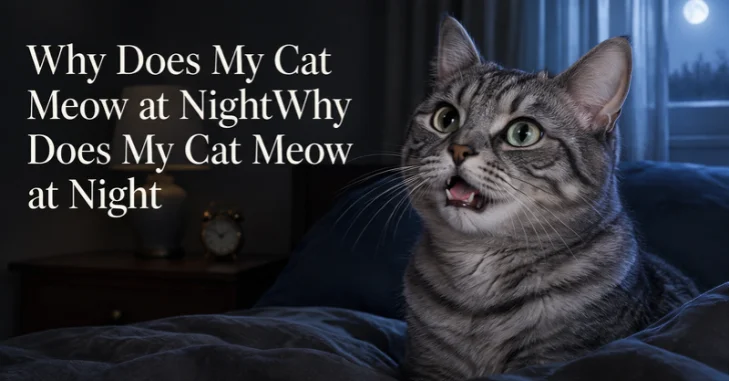
If you’re asking why does my cat meow at night, your cat is probably trying to communicate something. Hunger, boredom, attention, stress, hormones, and normal activity patterns can all trigger nighttime calling. New or intense vocalizing can also signal pain or illness, especially in an older cat.
Cats are naturally active around dawn and dusk, so some nighttime noise can be normal. A hungry or bored cat may also learn that meowing gets your attention. Sudden nighttime yowling, especially with other changes, deserves a veterinary check rather than a behavior fix alone.
Nighttime Cat Meowing at a Glance
| Possible cause | Clues you may notice | What to do first |
|---|---|---|
| Natural activity cycle | Zoomies, play, early-morning activity | Add evening play before bedtime |
| Hunger | Calling near the kitchen or feeder | Review meal timing and portions |
| Boredom | Restless pacing or toy-seeking | Add active play and enrichment |
| Learned attention | Stops after food or attention | Reward quiet behavior instead |
| Stress | Hiding, pacing, routine changes | Find and reduce the stressor |
| Heat or mating behavior | Loud yowling, rolling, escape attempts | Discuss spaying or neutering |
| Medical problem | Weight, thirst, appetite, or behavior changes | Schedule a veterinary examination |
Why Does My Cat Meow at Night?
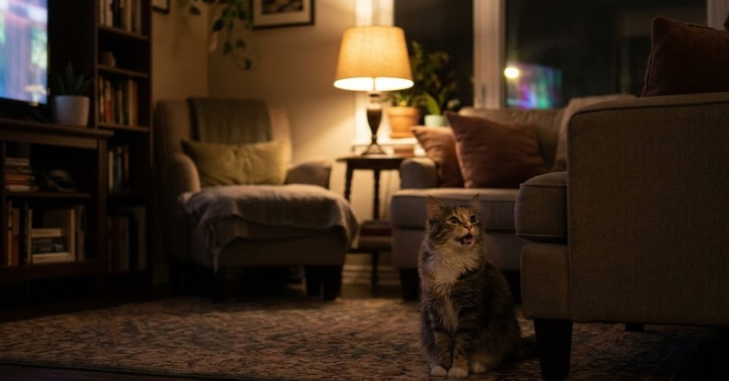
Why Does My Cat Meow at Night Cats are not strictly nocturnal. They are generally more active around dawn and dusk, a pattern called crepuscular activity. That schedule can conflict with your household when everyone else wants to sleep.
Veterinary behavior guidance notes that daytime sleeping can add to nighttime activity. A quiet indoor cat may spend much of your workday resting. Your return home can then signal the start of food, play, and social activity.
This does not mean every nighttime meow should be ignored. A change from your cat’s normal behavior matters more than the clock alone. Petistra’s guide to excessive cat meowing explains why age and sudden behavioral changes provide useful clues.
1. Your Cat Is Following a Natural Activity Cycle
Your cat may feel ready to hunt and explore when your house becomes quiet. Dawn and dusk are natural activity periods for domestic cats. Young cats can be especially energetic during these hours.
That energy sometimes appears as running, jumping, scratching, or vocalizing outside your bedroom. A cat that sleeps for much of the afternoon may have plenty of energy left. The behavior can be annoying without being abnormal.
Try moving the most active play session closer to bedtime. Use a wand, ball, or another toy that encourages stalking and chasing. Follow play with your cat’s normal evening meal to create a predictable wind-down routine.
2. Hunger May Be Waking Your Cat
An early dinner can leave some cats asking for food before you wake. This is more likely when breakfast always follows early-morning meowing. Your cat can quickly connect noise with the arrival of food.
Review your cat’s total daily food before simply adding another meal. Overfeeding can create a different health problem. Your veterinarian can help you choose suitable portions for your cat’s age, size, and condition.
You can also divide the existing daily amount into smaller scheduled meals. A timed feeder may help if early breakfast has become a habit. It removes you from the reward and makes meal timing more predictable.
3. Boredom Can Turn Into Nighttime Calling
Indoor cats need chances to chase, climb, investigate, and solve simple problems. Without enough activity, a rested cat may create its own entertainment after dark. Meowing can become part of that routine.
Build several short play opportunities into the day rather than relying on one long session. Rotate toys so familiar objects do not become stale. Window perches, scratching areas, and food puzzles can also add variety.
Interactive hunting-style play is especially useful before bedtime. Petistra’s laser pointer safety guide explains how light-based play should end with something physical to catch. Wand toys and soft prey toys also provide a clear finish.
4. Your Cat May Have Learned That Meowing Works
Cats are good at noticing which behaviors produce a response. If nighttime calling brings food, petting, conversation, or an open door, that response can reinforce it. Even occasional rewards can keep the pattern going.
First make sure your cat has water, a clean litter box, food as scheduled, and no obvious distress. Then avoid rewarding unnecessary demands with immediate attention. Give affection and interaction during quiet periods instead.
Punishment is not a useful substitute. Shouting or spraying water can increase fear and stress without solving the reason for the behavior. Consistent routines are usually easier for cats to understand.
5. Stress or Household Changes Can Increase Meowing
Cats can react strongly to changes that people consider minor. A new pet, houseguest, schedule, room arrangement, or outdoor animal can affect behavior. Some cats respond by becoming more vocal after dark.
Look for patterns around windows, doors, hallways, or particular rooms. A neighborhood cat outside may trigger calling or pacing near a window. Changes in litter-box use, hiding, grooming, or appetite can provide additional clues.
Reduce the trigger when possible and keep daily routines stable. Offer quiet hiding places and elevated resting areas. Learning to read posture can also help you tell excitement from fear or tension.
6. Hormones Can Cause Loud Nighttime Yowling
An unspayed female can become extremely vocal during a heat cycle. She may also roll, rub against objects, raise her hindquarters, or try to escape. Intact males may become restless when they detect a female nearby.
Petistra’s guide to cats in heat covers the common behavioral signs in more detail. Hormonal yowling often sounds more intense than an ordinary conversational meow. The pattern may also repeat as reproductive cycles return.
Ask your veterinarian about spaying or neutering if your cat is intact. These procedures prevent mating-related cycles and have other health implications worth discussing. They will not automatically erase a separate learned attention habit.
7. Pain or Illness Can Cause Nighttime Vocalization
Medical causes become more important when the behavior begins suddenly. Changes in appetite, weight, thirst, litter-box habits, movement, or grooming deserve attention. A cat that appears confused or distressed should not be treated as merely demanding.
Older cats need particular care because several age-related conditions can affect nighttime behavior. Cornell’s Feline Health Center links nighttime vocalization with conditions including hyperthyroidism, hypertension, pain, and cognitive dysfunction. Cognitive changes can also disrupt normal sleep-wake patterns.
Watch for wandering, staring at walls, getting stuck in familiar spaces, or appearing disoriented. Those behaviors can occur with cognitive dysfunction, but other medical problems can look similar. A veterinarian needs to rule out physical causes before you assume aging alone is responsible.
How to Stop Cat Meowing at Night Without Ignoring a Problem
The safest approach is to fix the cause rather than silence the sound. Start by checking basic needs and looking for signs of illness. Then adjust the daily routine if your cat otherwise seems healthy.
Try this bedtime plan:
- Schedule active play during the evening.
- Let your cat stalk, chase, and catch a safe toy.
- Serve the final planned meal after play.
- Clean the litter box before bedtime.
- Refresh water and check your cat’s sleeping area.
- Close blinds if outdoor animals cause excitement.
- Reward calm, quiet behavior with attention.
- Avoid offering extra food solely because your cat calls.
Keep the routine consistent for several nights. Behavior that has been rewarded for months may not disappear immediately. Changing several things every night makes it harder to identify what helps.
When Should You Call a Veterinarian?
Book an appointment when nighttime vocalizing is new, increasing, or paired with another behavioral change. Older cats should receive extra attention when new yowling appears. Cornell notes that several medical problems can produce nighttime calling or confusion in senior cats.
Contact your veterinarian promptly if you notice any of these signs.
- Weight loss despite a strong appetite.
- Increased thirst or urination.
- Reduced appetite.
- Vomiting or diarrhea.
- Difficulty jumping or walking.
- Hiding or sensitivity to touch.
- Disorientation or wandering.
- Sudden vision problems.
- Straining or crying in the litter box.
- A major change in the sound or frequency of vocalizing.
Straining to urinate requires urgent attention, particularly in a male cat. Urinary obstruction can become life-threatening. Do not wait for a nighttime behavior plan to solve a possible medical emergency.
What Your Cat’s Age Can Tell You
Kittens and young adults are more likely to wake you because of energy, play, food, or attention. Hormonal behavior also becomes relevant when a young cat remains intact. A predictable routine can resolve many nonmedical causes.
Middle-aged cats can still develop learned habits or stress-related vocalizing. New behavior should still be taken seriously, especially when another physical change appears. Your cat’s previous normal behavior is an important comparison.
Senior cats deserve a lower threshold for veterinary evaluation. Cognitive dysfunction, thyroid disease, hypertension, pain, hearing changes, and other conditions become more relevant with age. Cornell reports that cognitive dysfunction commonly includes altered sleep patterns and unexplained nighttime vocalization.
Help Your Cat Settle Into a Better Nighttime Routine
Nighttime noise usually becomes easier to solve once you identify what happens immediately before it. Track the time, location, triggers, and what makes the calling stop. Those notes can separate a routine problem from a change that needs veterinary attention.
For a young, healthy cat, start with more evening activity, predictable meals, and consistent responses. For sudden changes or senior-cat yowling, start with your veterinarian instead. You can also explore more feline behavior and care advice across Petistra.
Frequently Asked Questions
Why does my cat meow at night all of a sudden?
A sudden change can follow hunger, stress, a household change, pain, or illness. Check whether eating, drinking, litter-box use, sleep, or movement has also changed. New vocalizing in an older cat is a good reason to call your veterinarian.
Should I ignore my cat when it meows at night?
Do not automatically ignore every meow. First check water, food schedules, the litter box, safety, and possible signs of pain. Once genuine needs are covered, avoid rewarding repeated attention-seeking calls.
Why does my older cat yowl during the night?
Older cats may vocalize because of pain, sensory decline, thyroid disease, high blood pressure, or cognitive changes. Confusion may become easier to notice when the home is dark and quiet. A veterinary examination is the right first step for new senior-cat yowling.
Will feeding my cat later help?
A later scheduled meal may help a healthy cat that becomes hungry overnight. The food should come from the cat’s normal daily allowance. A timed feeder can also prevent your cat from learning that waking you produces breakfast.
Can a cat meow at night because it is lonely?
Some cats seek social contact when the household becomes quiet. Boredom and a lack of daytime interaction can contribute to the same pattern. Increase daytime enrichment before assuming your cat needs attention every time it calls.