

Red, watery, or crusty eyes can make any cat owner worry. Choosing eye drops for cats depends on what is causing the problem. A veterinarian should examine painful, cloudy, swollen, or persistently irritated eyes before treatment begins.
Direct answer: Cat eye medicine may include lubricants, antibiotics, antivirals, anti-inflammatory drugs, or other prescription treatments. The correct choice depends on the underlying eye problem. Avoid using leftover pet medication or human redness-relief products unless your veterinarian specifically recommends them for your cat.
Eye Treatment at a Glance
| Situation | What may be used | What owners should know |
|---|---|---|
| Dryness or mild surface irritation | Veterinary lubricant or artificial tears | Ask your veterinarian which formula is suitable. |
| Bacterial infection | Prescription antibiotic medication | Diagnosis matters because not every red eye is bacterial. |
| Feline herpesvirus eye disease | Antiviral treatment in selected cases | Oral or topical medication may be prescribed. |
| Allergic inflammation | Selected anti-inflammatory or antihistamine treatment | Veterinary guidance is needed before use. |
| Corneal injury or ulcer | Treatment chosen after an eye examination | Some medications can worsen an ulcer. |
| Debris around the eyelids | Warm, damp cloth for gentle cleaning | Cleaning does not replace medical treatment. |
Key Takeaways
- Red eyes have several possible causes, so treatment should match the diagnosis.
- Human redness-relief products should not be used without veterinary approval.
- Squinting, cloudiness, severe pain, injury, or unequal pupils need prompt veterinary attention.
- Keep the applicator tip away from the eye, eyelids, fur, and other surfaces.
- If several medicines are prescribed, your veterinarian can explain their order and timing.
- Never reuse an old prescription simply because your cat has similar symptoms again.
Which Eye Drops for Cats Are Commonly Used?
Veterinarians choose ophthalmic medicine according to the eye examination and diagnosis. One product cannot safely treat every case of redness or discharge. The same outward symptom can result from infection, trauma, inflammation, or tear-film problems.
Lubricating products add moisture to the eye’s surface. VCA Animal Hospitals notes that ocular lubricants can help replace tears in cats and other pets. Some veterinary lubricants contain ingredients such as sodium hyaluronate for added surface moisture.
Antibiotic medicines may be prescribed for certain bacterial infections. These medications do not treat every cause of conjunctivitis. Viral disease, ulcers, foreign material, glaucoma, and other conditions require different approaches.
Antiviral medicines may be considered when feline herpesvirus affects the eyes. Feline herpesvirus can cause recurring eye and respiratory symptoms in some cats. Your veterinarian may choose topical treatment, oral medicine, or supportive care based on severity.
Anti-inflammatory medicines also require caution. Some products contain corticosteroids, which veterinarians use for selected inflammatory conditions. These drugs may be inappropriate when a corneal ulcer or certain infections are present.
Why a Red Eye Needs the Right Diagnosis
Conjunctivitis means inflammation of the tissue lining the eyelids and parts of the eye. According to VCA Animal Hospitals, signs can include redness, swelling, tearing, discharge, and squinting. One or both eyes may be affected.
Several different problems can create those signs. Possible causes include infection, irritation, foreign material, eyelid abnormalities, corneal injury, glaucoma, and inflammation inside the eye. That range makes home diagnosis unreliable.
A veterinarian may inspect the cornea and surrounding tissues closely. Fluorescein dye can reveal scratches or ulcers that are difficult to see normally. Eye pressure or tear production may also be measured when the symptoms warrant testing.
Respiratory illness can overlap with eye symptoms too. Cats with viral upper-respiratory disease may develop sneezing and watery eyes together. Petistra’s guide to a cat sneezing a lot explains several respiratory warning signs worth watching.
Can You Use Human Eye Medicine on a Cat?
Do not use human eye drops on your cat, and do not choose a human product based only on a matching symptom. Some human ophthalmic medicines are used in veterinary medicine, but that decision belongs to a veterinarian. The active ingredient and the diagnosis both matter, so your veterinarian must decide.
Products marketed to reduce human eye redness are especially poor candidates for unsupervised use. A product that feels soothing to a person may not address a cat’s condition. It can also delay treatment of a painful or vision-threatening problem.
Veterinarians sometimes prescribe human-labeled medicines for animals as an off-label use. VCA explains that several ophthalmic products are used this way under professional direction. Off-label veterinary use is different from selecting medication yourself.
What About Saline or Artificial Tears?
Your veterinarian may suggest sterile ophthalmic saline for flushing debris in specific situations. Veterinary lubricants can also help with dryness when a clinician recommends them. Neither option should be treated as a cure for unexplained redness, pain, or discharge.
Avoid homemade mixtures inside an irritated eye unless your veterinarian directs you. A contaminated solution can introduce additional bacteria. Concentration and sterility also matter when liquid contacts the cornea.
A warm, damp cloth is safer for cleaning dried discharge from surrounding fur. Wipe gently without rubbing the eyeball. Use a fresh, clean section of cloth for each pass.
Warning Signs That Need Veterinary Care
Eye problems can change quickly, and cats often hide discomfort. Prompt evaluation is safer when pain or vision may be affected. A minor-looking problem can sometimes involve deeper structures.
Contact a veterinarian promptly if any of these signs appear.
- Repeated squinting or keeping the eye closed.
- A cloudy, blue, or hazy-looking cornea.
- Yellow, green, bloody, or heavy discharge.
- marked swelling or intense redness.
- A visible scratch, puncture, or foreign object.
- unequal pupils or an oddly shaped pupil.
- sudden trouble navigating or suspected vision loss.
- an eye that appears enlarged, bulging, or sunken.
- persistent pawing or rubbing at the face.
- symptoms that worsen after medication is applied.
Changes in vision also deserve professional assessment. Petistra’s guide to how cats see humans discusses normal feline vision and signs that may indicate a problem. Cloudiness, discharge, squinting, or unusual pupils should not be dismissed as normal aging.
How to Apply Cat Eye Medication Safely
Giving medicine becomes easier when everything is ready before you handle your cat. Read the prescription label first and confirm which eye needs treatment. Wash your hands before opening the bottle.
- Prepare the area. Choose a quiet room and place the medicine within easy reach.
- Clean surrounding discharge. Use a soft cloth dampened with lukewarm water when your veterinarian permits cleaning.
- Position your cat securely. Keep the body supported and avoid squeezing the chest or neck.
- Steady the head. Angle the nose slightly upward while keeping movements gentle.
- Open the eyelids. Use your fingers to create enough space for the medication.
- Hold the applicator above the eye. Do not let the tip touch the cornea, eyelids, fur, or fingers.
- Give the prescribed amount. Apply only the number of drops listed on the veterinary instructions.
- Allow blinking. Blinking helps spread liquid over the eye’s surface.
- Reward your cat. A treat or calm praise can make future doses easier.
Some cats cooperate better when wrapped loosely in a towel. Petistra’s guide on how to hold a cat safely can help you use supportive restraint. Stop if your cat becomes highly distressed or you cannot apply the medicine safely.
The applicator tip should remain clean throughout treatment. Veterinary guidance advises avoiding contact between the dispenser and the eye or surrounding surfaces. Contact can contaminate the bottle and complicate treatment.
Drops Versus Eye Ointment
Liquid medication is usually quick to administer. It spreads after the cat blinks, although it may not remain on the surface as long. Some cats tolerate a quick liquid application better than thicker medicine. Ointments stay against the eye longer and may require fewer applications in some treatment plans. They can briefly blur vision after application.
Your veterinarian will choose the format that suits the condition and medication. When both forms are prescribed, order matters. Veterinary guidance commonly recommends using liquid medicine before ointment. Your veterinarian should provide the exact spacing and sequence for your cat.
What If Your Cat Fights the Medication?
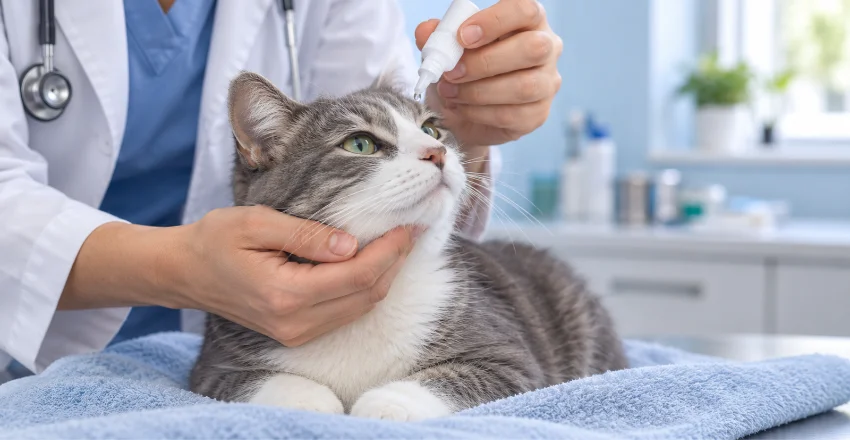
Medication should not become a wrestling match. Fear can make future doses harder and increase the chance of accidentally touching the eye. A calm setup is safer for both you and your pet. Try giving treatment when your cat is relaxed. A second person can provide gentle body support while you control the applicator. Keep each session short and offer a valued reward afterward.
Call your veterinary clinic if repeated attempts fail. A technician may demonstrate a better handling position for your cat. The veterinarian may also discuss whether another treatment format is appropriate.
Can Old Prescription Medicine Be Reused?
Do not automatically reuse medicine from a previous eye problem. The new condition may look similar while having a different cause. An old bottle may also be expired or contaminated. This is especially important with medications containing steroids. Steroids can be valuable for certain diagnosed inflammatory diseases.
They may be harmful when an untreated corneal ulcer or particular infection is present. Bring the old bottle to your veterinary appointment instead. The veterinarian can identify its active ingredient and determine whether it remains appropriate. That approach is safer than restarting treatment based on appearance alone.
Frequently Asked Questions
Can I use human eye drops for cats?
No. Do not put human eye drops, including redness-relief products such as Visine, in your cat’s eyes on your own. Some human-labeled medicines are prescribed for animals, but only a veterinarian can decide whether one suits your cat and condition. Call your veterinarian first and let them choose the medicine.
What is the safest treatment for mild eye irritation?
There is no single treatment that fits every irritated eye. Your veterinarian may recommend a lubricant or sterile ophthalmic rinse after considering the symptoms. Persistent redness, discharge, pain, or squinting needs an examination.
How quickly should cat eye medicine work?
The timeline depends on the cause and prescribed treatment. Some cats with straightforward conjunctivitis improve within several days, while other conditions need longer care. Follow the full prescribed course unless your veterinarian changes the plan.
Why is my cat drooling after eye medication?
Some ophthalmic medicines can drain through the tear ducts toward the mouth. A bitter taste may trigger temporary drooling in certain cats. Contact your veterinarian if drooling is severe or accompanies swelling, breathing trouble, or worsening distress.
Should I stop treatment once the eye looks normal?
Do not stop prescription medicine early unless your veterinarian instructs you to do so. Visible improvement does not always mean the underlying problem has fully resolved. Follow the prescribed duration and attend any recommended recheck.
The Safest Next Step for Your Cat
Eye symptoms deserve more caution than routine home treatment. The safest product is the one chosen for the diagnosed condition, not the most convenient bottle available. Early examination can also protect comfort and vision when something more serious is developing.
If your cat has persistent redness, discharge, swelling, cloudiness, or squinting, contact your veterinarian. Bring any medicines you have already used and explain when the symptoms started. That information helps the clinician choose appropriate treatment without unnecessary trial and error.