

Yes, Chihuahuas shed, including both smooth-coat and long-coat varieties. Their shedding is usually moderate and manageable because these dogs are so small. You may notice more loose hair during seasonal coat changes, especially in spring and fall.
Quick answer: Chihuahuas shed throughout the year, although the amount varies by coat type and individual dog. Many shed more heavily during seasonal changes. Weekly brushing usually controls loose hair for smooth coats, while long coats often need brushing two or three times each week.
| Shedding factor | What owners can expect |
|---|---|
| Overall shedding | Low to moderate amounts of visible hair |
| Smooth coat | Short hairs that may stick to clothing and furniture |
| Long coat | Longer, easier-to-see loose hairs and occasional tangles |
| Heavier periods | Often spring and fall |
| Smooth-coat brushing | About once weekly |
| Long-coat brushing | About two or three times weekly |
| Hypoallergenic? | No |
| Concerning signs | Bald patches, inflamed skin, itching, or sudden heavy hair loss |
Do Chihuahuas Shed a Lot?
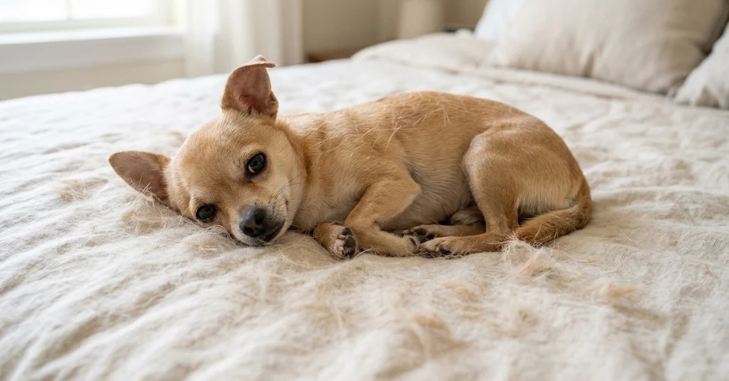
Do Chihuahuas Shed do not produce the huge piles of fur associated with large double-coated breeds. Their small body size limits the total amount of hair available to shed. Still, short hairs can become noticeable on dark clothes, bedding, and upholstered furniture.
Purina describes both coat varieties as medium shedders, with heavier shedding occurring during parts of the year. PetMD also describes the breed as an average shedder with fairly simple coat care. The American Kennel Club rates its shedding needs toward the lower end of its scale.
Individual dogs can differ considerably. Genetics, coat density, indoor temperature, nutrition, health, and grooming habits can change what you see at home. A dog with a fuller undercoat may leave more hair than another dog of the same breed.
Smooth Coat vs. Long Coat Shedding
A smooth-coated Chihuahua has short, close-fitting hair that is easy to maintain. Those small hairs can work into fabric and may be harder to remove from certain upholstery. Brushing once a week is usually enough to collect loose coat before it reaches your furniture.
Long-coated dogs have softer feathering around areas such as the ears, neck, legs, and tail. Their longer hairs are more visible when they fall, but they can also be easier to gather. PetMD recommends brushing a long coat about two or three times per week.
Long hair does not automatically mean dramatically heavier shedding. Coat density and the presence of undercoat can matter more than visible hair length. Regular grooming also makes a large difference in how much loose hair reaches your floors.
| Coat type | Typical shedding | Brushing routine | Main grooming issue |
|---|---|---|---|
| Smooth coat | Moderate | About once weekly | Short loose hairs on fabrics |
| Long coat | Moderate | Two or three times weekly | Loose hair, tangles, and mats |
When Does Chihuahua Shedding Get Heavier?
Some dogs lose more coat when temperatures and daylight patterns change. Spring often brings shedding as heavier winter growth is replaced. Fall can bring another increase as the coat adjusts for cooler weather.
Indoor living may make seasonal changes less obvious. Heating, air conditioning, and artificial lighting create a more consistent environment throughout the year. As a result, some pets shed smaller amounts more continuously.
Temporary increases are not automatically a health problem. The important difference is whether the skin remains healthy and the coat stays evenly covered. Bald areas, sores, or intense itching deserve more attention.
How to Reduce Loose Hair Around Your Home
You cannot safely stop normal shedding because replacing old hair is part of healthy coat growth. Your goal should be collecting loose hair before it spreads across the house. A simple routine is usually enough for such a small dog.
For a smooth coat, use a soft-bristle brush or rubber grooming mitt about once weekly. Work gently from the neck toward the tail without pressing hard against the skin. During heavier shedding, an extra short brushing session can help.
For longer coats, use a brush and comb that can reach through feathered areas without pulling. Pay particular attention behind the ears, around the legs, and under the chest. These locations can tangle when loose hair remains trapped.
Bathing can remove dirt and loosen dead hair, but frequent washing is unnecessary for most healthy dogs. Choose a dog-safe shampoo and rinse the coat thoroughly. Human shampoo can disrupt the skin because canine skin has different needs.
If you are building a home grooming kit, Petistra’s dog clippers guide explains which tools fit different coat types. Full-body clipping is usually unnecessary for a healthy, smooth coat. Routine brushing is more useful for controlling ordinary shedding.
Should You Shave a Chihuahua to Stop Shedding?
Shaving is not a good solution for routine hair loss. Cutting hair shorter does not stop follicles from releasing old hairs. It only changes the length of the strands that eventually fall.
A healthy coat also provides protection from sunlight, minor skin injuries, and changing temperatures. This matters for such a small breed because these dogs can become cold quickly. Any major coat removal should have a specific grooming or veterinary reason.
If mats develop in a long coat, work carefully rather than cutting blindly with scissors. Tight mats can sit close to delicate skin. A professional groomer can handle severe matting more safely.
Diet, Skin Health, and Shedding
A nutritionally complete diet supports normal skin and coat growth. Protein, essential fats, vitamins, and minerals all contribute to healthy hair production. Supplements should not replace a balanced diet unless your veterinarian recommends them.
Sudden coat changes can sometimes accompany allergies, parasites, skin infections, hormonal disorders, or other medical problems. Nutrition is only one possible factor. Treating unexplained shedding with random oils or supplements can delay proper diagnosis.
Watch the skin while you brush. Redness, scabs, strong odors, excessive flakes, or repeated scratching can point to something beyond ordinary coat turnover. Schedule a veterinary visit when these signs persist.
Are Chihuahuas Hypoallergenic?
No dog is completely free of allergens, and this breed is not considered hypoallergenic. People with dog allergies usually react to proteins found in dander, saliva, and urine rather than hair alone. Shed hair can still transport dander through the home.
Small size may mean less total coat material than a large dog produces. That does not guarantee an allergic person will tolerate the dog. Individual sensitivity and the individual animal both influence reactions.
Anyone with significant allergies should spend time around the specific dog before adoption when possible. An allergist can also provide personalized medical guidance. Cleaning, vacuuming, washing bedding, and keeping pets out of bedrooms may reduce exposure.
When Is Shedding a Reason to Call the Vet?
Normal shedding should leave the coat looking generally even and the skin comfortable. A temporary increase without skin changes may simply reflect seasonal coat turnover. Sudden or patchy hair loss requires a different response.
Several signs mean it is time to contact your veterinarian. Watch for the following.
- Bald or thinning patches.
- Persistent scratching, licking, or biting.
- Red, inflamed, crusty, or painful skin.
- Strong skin odor.
- Significant dandruff or scaling.
- Hair coming out in unusual clumps.
- Changes in thirst, appetite, weight, or energy.
- A dramatic change from your dog’s normal shedding pattern.
These signs can have several causes, so a visual guess is not enough for diagnosis. Your veterinarian may examine the skin, check for parasites, or recommend additional testing. Earlier evaluation can also prevent a minor skin problem from becoming harder to treat.
For other everyday warning signs, Petistra’s guide to why dogs roll in the grass explains how repetitive rolling can sometimes signal itching. Pet owners can also browse Petistra’s broader health and care guidance when behavior changes accompany coat problems. Veterinary care should remain the priority when symptoms persist.
A Simple Weekly Grooming Routine
Keeping the coat under control does not require a complicated salon schedule. Consistency matters more than long grooming sessions. Many owners can complete routine brushing in several minutes.
- Check the skin for redness, bumps, flakes, or parasites.
- Brush the coat gently in the direction of hair growth.
- Comb feathered areas if your dog has a long coat.
- Check the ears for visible debris or irritation.
- Inspect the nails and trim them when needed.
- Reward calm behavior so future grooming becomes easier.
Nail maintenance can fit naturally into the same routine. Petistra’s dog nail clippers guide explains how to choose a tool based on nail thickness. Small dogs often have thin nails, but you should still inspect each nail before trimming.
If you are comparing grooming needs across small breeds, Petistra’s Yorkie haircut guide shows how a continuously growing silky coat differs from a shedding coat.
Keeping Your Home Cleaner During Shedding Season
Brush your dog somewhere that is easy to clean. A washable mat, bathroom floor, porch, or grooming table can keep loose hair concentrated in one place. Dispose of collected hair after every session.
Vacuum upholstered furniture and high-traffic areas regularly during heavier shedding. Wash dog blankets and removable bed covers before loose hair becomes deeply embedded. A reusable lint roller can handle clothing and small fabric surfaces between cleanings.
Good housekeeping and regular brushing work better together than either method alone. Removing loose hair directly from the coat means less hair enters your home. Cleaning then takes care of what brushing misses.
The Bottom Line
Expect some hair if you share your home with this tiny breed. The amount is usually manageable with short, regular grooming sessions. Smooth and long coats both shed, although their maintenance needs differ.
Brush consistently, watch the skin, and avoid treating shaving as a solution. A healthy coat should remain evenly covered without persistent irritation. Contact your veterinarian if hair loss becomes sudden, patchy, itchy, or otherwise unusual.
Frequently Asked Questions
Do Chihuahuas Shed Year-Round?
Yes, Chihuahuas shed year-round, and many lose small amounts continuously. Seasonal changes can produce more noticeable shedding in some dogs. Indoor temperature and coat density can affect the pattern.
Do Long-Haired Chihuahuas Shed More Than Short-Haired Ones?
Not necessarily. Longer hairs are easier to see, which can make the amount look greater. Coat density and undercoat can matter more than hair length alone.
How Often Should I Brush My Chihuahua?
A smooth coat generally benefits from brushing about once weekly. A long coat may need brushing two or three times each week. Increase brushing temporarily when you notice more loose hair.
Can I Stop My Chihuahua From Shedding?
You cannot completely stop healthy, natural shedding. Brushing, suitable bathing, good nutrition, and regular cleaning can reduce loose hair around your home. Sudden excessive hair loss should be assessed by a veterinarian.
Are These Dogs Good for People With Allergies?
They are not considered hypoallergenic. Dog allergens mainly come from proteins in dander, saliva, and urine. Spend time around the individual animal before bringing one home if allergies are a concern.