
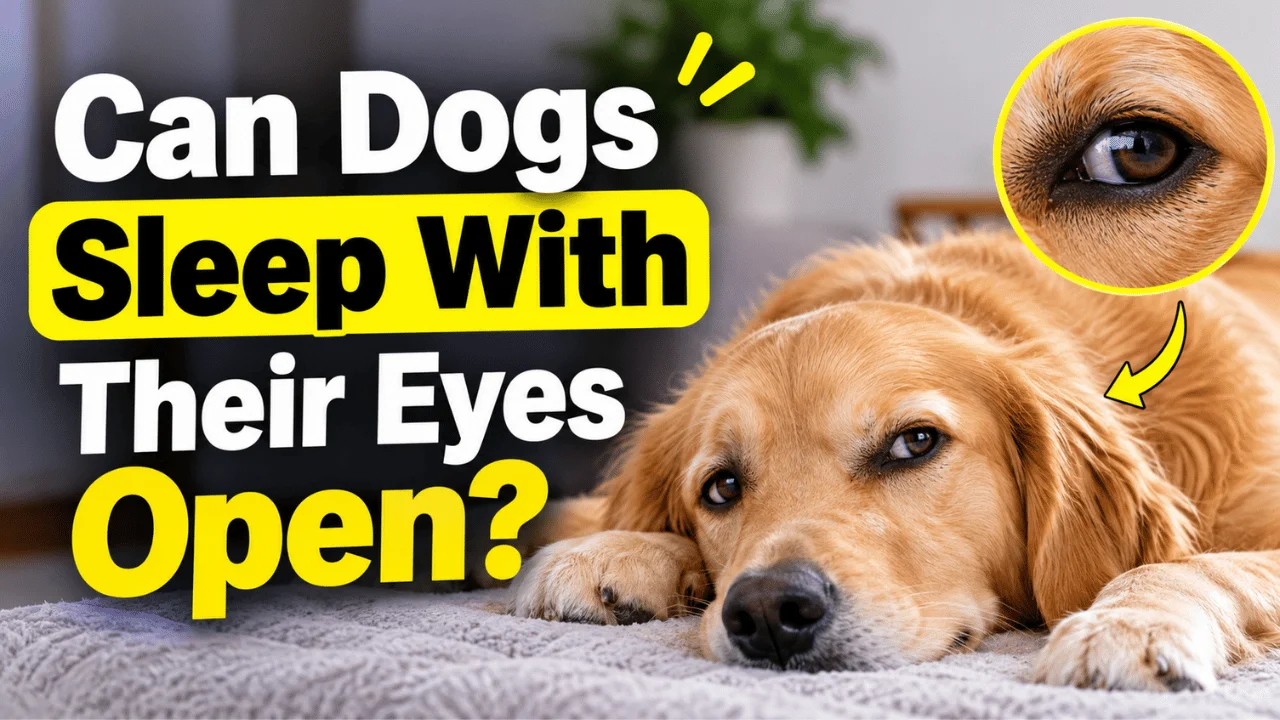
Yes, some dogs do sleep with their eyes open. So can dogs sleep with their eyes open? The answer is surprisingly simple. Some dogs sleep with one or both eyes partly open. This behavior is often harmless, especially during light sleep or dreaming.
A half-open eye can look unsettling at first. You might also see eye movement, twitching, or a pale membrane. These signs often reflect normal canine sleep rather than illness.
Dogs can sleep with their eyes partly open during light sleep or REM sleep. Their third eyelid may also become visible and resemble an open eye. Occasional episodes are usually harmless. Persistent eye exposure, redness, discharge, pain, or unusual behavior after waking deserves veterinary attention.
Quick Guide to What You Are Seeing
| What you notice | Likely explanation | What to do |
|---|---|---|
| Eyelids slightly open | Light sleep | Let your pet rest |
| Eye moving beneath lids | REM sleep or dreaming | Usually normal |
| Pink or pale tissue covers eye | Third eyelid | Usually normal during sleep |
| Small twitches or paw movements | Dreaming | Avoid suddenly waking them |
| Eye remains exposed every sleep | Possible eyelid problem | Ask your veterinarian |
| Redness, discharge, or squinting | Eye irritation or disease | Arrange a veterinary exam |
| Stiff movements and poor response | Possible seizure | Seek veterinary advice promptly |
Key Takeaways
- Partly open eyelids can occur during normal canine sleep.
- REM sleep may cause eye movement, paw twitching, and quiet vocalizations.
- The visible tissue may be the protective third eyelid.
- Short-faced breeds can have difficulty closing their eyelids completely.
- Redness, pain, discharge, or persistent exposure deserves veterinary attention.
- Abnormal movements followed by confusion may require urgent assessment.
Why Can Dogs Sleep With Their Eyes Open?
No single explanation fits every sleeping pet. Light sleep is one common reason for partly open eyelids. A relaxed animal may look asleep but still be easy to wake.
Dreaming can create a similar appearance during REM sleep. The eyes may move rapidly while other muscles twitch. Your pet might also whine, breathe differently, or move their paws.
Anatomy also matters for certain breeds. Dogs with prominent eyes may not completely close their eyelids. Repeated exposure can increase the risk of corneal dryness or irritation.
The Third Eyelid Can Look Like an Open Eye
Dogs have a protective structure called the nictitating membrane, commonly called the third eyelid. It sits near the inner corner of the eye. You may notice it more clearly while your pet sleeps.
The membrane can appear pink, white, or slightly yellow. Seeing it can make the eye appear rolled backward. That appearance often worries owners even when the animal is resting normally.
The third eyelid helps protect the eye surface. It also contributes to normal eye moisture and tear function. Its visibility during sleep alone usually does not indicate disease.
Pet parents interested in canine eye protection can also read Petistra’s guide to dog sunglasses and eye protection. That guide explains when protective eyewear is practical. It also covers situations involving eye disease and recovery.
REM Sleep Can Make Your Dog Look Awake
Dogs experience both quiet sleep and rapid eye movement sleep. REM is associated with active brain patterns and dreaming. Their eyes can move even while the rest of the body remains relaxed.
You may see gentle paw movements during this stage. Small facial twitches and brief sounds can also occur. These behaviors are usually normal during sleep.
Avoid touching a deeply sleeping pet without warning. A startled animal may react defensively before recognizing you. Calling their name softly is safer when you need to wake them.
Sleep behavior is only one part of canine communication. Petistra’s guide explaining why dogs lick people covers other easily misunderstood behaviors. Reading the entire body posture often gives better information than one isolated action.
Is It More Common in Certain Breeds?

Dogs with flatter faces and prominent eyes deserve extra attention. Pugs, Boston Terriers, and similar breeds may have eyelids that don’t meet completely. That anatomy may leave part of the cornea uncovered during sleep.
A small occasional gap does not automatically indicate disease. The concern increases when the eye surface stays exposed repeatedly. Dryness, redness, or discomfort may develop when normal protection is reduced.
Your veterinarian can examine eyelid closure and the cornea. They can also assess tear production when needed. Early evaluation can prevent a minor exposure problem from becoming painful.
How to Tell Normal Dreaming From a Possible Seizure
Normal dreaming can include twitching and brief leg movements. The movements are generally small and intermittent. You can usually wake a sleeping pet without prolonged confusion afterward.
Seizures can look different from ordinary sleep activity. Movements may become stronger, more rigid, or more repetitive. The animal may also be difficult to rouse during the event.
Behavior after the episode provides another useful clue. Confusion, trouble walking, or unusual behavior deserves veterinary attention. Recording a short video can help your veterinarian understand what happened.
Never place your hands near a pet’s mouth during suspected seizure activity. Move nearby hazards instead and observe the duration. Contact a veterinarian if you are unsure about what you witnessed.
When Sleeping With Open Eyes May Signal a Problem
Occasional partial opening is usually different from constant eye exposure. Watch whether the eyelids close normally at other times. Also check whether both eyes appear comfortable after waking.
Redness deserves attention because it can indicate irritation or inflammation. Discharge, cloudiness, swelling, or repeated squinting also warrant veterinary care. Rubbing the face or pawing at an eye can indicate discomfort.
Sudden changes matter more than a lifelong harmless habit. A dog that always slept normally and suddenly cannot close one eye needs assessment. Eye problems can worsen quickly, so early evaluation is sensible.
Petista’s dog health and nighttime routine guide also covers healthy overnight expectations. Changes in several nighttime habits can provide useful context. Share those changes with your veterinarian when discussing new symptoms.
What Should You Do When You Notice It?
First, observe your pet without waking them immediately. Watch breathing, body position, and how much of the eye is visible. Normal sleepers usually appear loose and comfortable.
Next, watch what happens after waking. A healthy pet should quickly return to their usual behavior. Persistent imbalance, disorientation, or distress is not typical sleep behavior.
Take a photo or video when the behavior looks unusual. This provides your veterinarian with more information than a description alone. PetMD also recommends video documentation for concerning sleep events.
Do not apply human eye drops without veterinary advice. Products designed for people may not address the actual problem. A veterinarian should recommend treatment when dryness or eyelid disease is suspected.
Should You Wake a Dog Sleeping With Open Eyes?
Usually, there is no reason to interrupt peaceful sleep. Rest remains important even when the sleeping expression looks strange. Watching quietly is safer than touching a sleeping animal.
If you need to wake them, start with your voice. Say your pet’s name from a short distance. Give them time to become alert before approaching closely.
This approach is especially useful around children. Children should learn not to touch sleeping pets unexpectedly. A surprised animal can react before fully understanding the situation.
When Should You Call a Veterinarian?
Book a veterinary visit if the eyes remain partly open during nearly every sleep period. The same applies when complete eyelid closure seems impossible. These patterns can expose the cornea for extended periods.
Seek care when redness, discharge, cloudiness, swelling, or repeated squinting appears. Painful eye conditions can progress quickly. Waiting several days may allow irritation to worsen.
Contact your veterinarian promptly after suspected seizure activity. Difficulty walking, collapse, or prolonged confusion also deserves professional assessment. An emergency clinic may be appropriate when symptoms are severe.
Frequently Asked Questions
Can Dogs Sleep With Their Eyes Open Every Night?
Some pets may regularly sleep with slightly open eyelids without obvious problems. Constant exposure deserves more attention than occasional partial opening. Your veterinarian can check whether the cornea remains properly protected.
Why Does My Dog’s Eye Look White While Sleeping?
You may be seeing the third eyelid or a rotated eyeball. Both can become more noticeable during sleep. A normal appearance should disappear after your pet wakes.
Why Are My Dog’s Eyes Moving While Asleep?
Rapid eye movement is associated with the dreaming stage of sleep. Small twitches and quiet sounds may happen at the same time. These signs are usually normal when waking behavior remains normal.
Do Dogs Dream When Their Eyes Are Partly Open?
Partly open eyelids can occur during REM sleep. Researchers and veterinarians associate REM activity with canine dreaming. Eye movement alone does not tell us what the dream contains.
Should I Close My Dog’s Eyelids Myself?
Do not repeatedly manipulate your pet’s eyelids while they sleep. Observe whether the eyes close normally at other times. Ask your veterinarian for guidance if exposure happens consistently.
The Bottom Line
Seeing a sleeping pet with exposed eyes can be startling. In many cases, light sleep, REM activity, or the third eyelid explains the appearance. Comfortable eyes and normal behavior after waking are reassuring signs.
Persistent exposure changes the situation. Redness, discharge, pain, cloudiness, or abnormal behavior deserves veterinary assessment. A short video can help your veterinarian evaluate the episode.
Pay attention to patterns, not one strange-looking nap. Your pet’s normal baseline provides the best comparison. When the pattern changes, professional advice is the safest next step.