


How long has it been going on? That one question sorts out a cat sneezing a lot faster than any list of causes does. A few days of it usually points to a virus. Weeks of it point somewhere else entirely, and the list behind it barely overlaps. For a closer look at this, see Why Is My Cat Throwing Up.
Short answer: sneezing that starts suddenly and clears within about 10 days is usually an upper respiratory infection, most often feline herpesvirus or calicivirus. Supportive care is normally enough. Sneezing that runs past three weeks needs a diagnosis rather than another round of antibiotics. Discharge from one nostril only raises the urgency. You might also like Rodent Ulcer Cat.
Acute Versus Chronic: The Split That Changes Everything
Most pages on this topic hand you one long cause list and let you guess. Vets don’t work that way. They start with duration, because it narrows the field before anyone touches the cat.
| Acute (under 2 weeks) | Chronic (past 3 weeks) | |
| Usual cause | Herpesvirus or calicivirus, sometimes with a bacterial follow-on | Rhinosinusitis, dental disease, foreign body, polyp, fungus, tumor |
| Typical discharge | Both nostrils, clear at first, then thicker | Often one nostril, thick, sometimes streaked with blood |
| Company it keeps | Runny eyes, mild fever, a day or two off food | Weight loss, noisy breathing, pawing at the face, facial swelling |
| What helps | Rest, humidity, warmed food, fluids | Imaging first, then treatment aimed at the finding |
| Realistic outlook | Most cats improve within 7 to 10 days | Often managed rather than cured |
Key takeaways
- Under two weeks, both nostrils running: think virus, and watch appetite.
- Past three weeks: stop guessing and ask for imaging.
- One nostril only: that asymmetry is a clue, not a coincidence.
- Blood in the discharge moves the appointment forward.
- A senior cat with new one-sided signs needs a fast workup.
A Few Days of It: The Upper Respiratory Infection
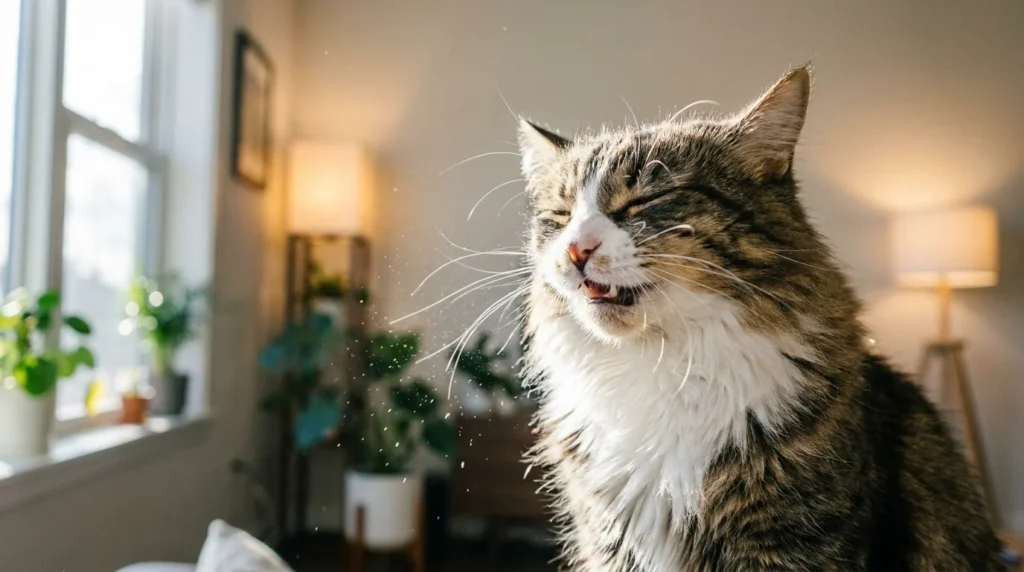
Short bouts almost always trace back to a cat upper respiratory infection. Feline herpesvirus and calicivirus cause most of them. Both spread through sneezed droplets, shared bowls, and grooming, so yes, a sneezing cat is contagious to the other cats at home. Dogs and people are not at risk from these two viruses.
Expect watery eyes, a runny nose, some squinting, and a cat who sleeps more than usual. Mouth ulcers and limping point toward calicivirus. Kittens and cats recently out of a shelter get hit hardest.
Most cats turn the corner in a week to ten days. Bacteria can move into the damaged tissue and turn clear discharge yellow. That is when antibiotics genuinely earn their place. Our cat and dog care articles in the pets hub cover the same ground for other symptoms.
Cat Sneezing a Lot for Weeks: Six Causes Behind the Chronic Cases
This is where most pages go quiet, and it is the part that matters after a month of it. Six things account for the bulk of chronic feline sneezing.
Chronic rhinosinusitis. The most common one, and the most frustrating. An earlier viral infection can permanently damage the nasal turbinates, the fine scrolls of bone and lining that filter air. Once those are scarred, the nose never drains properly, and the sneezing becomes part of the cat’s life. The original virus may have cleared years ago.
Dental disease. The roots of the upper premolars and canines sit directly beneath the nasal cavity. An abscessed root can erode that thin plate of bone and open a path between mouth and nose. The nose then runs on that side, and no antibiotic fixes it until the tooth comes out.
A foreign body. Grass blades are the classic offender. A cat inhales one, or coughs it back into the nasopharynx, and the sneezing starts abruptly. Seeds and litter granules do the same.
Nasal polyps. These benign growths usually start in the middle ear, then grow forward. Young cats get them more often than old ones. Noisy breathing and a changed voice often show up alongside the sneezing.
Fungal infection. Cryptococcus is the main one in cats. It can produce a firm swelling over the bridge of the nose, along with stubborn one-sided discharge.
Nasal tumors. In an older cat, a slowly worsening one-sided nasal problem is a tumor until proven otherwise. Lymphoma and adenocarcinoma lead the list. Bleeding, facial asymmetry, and weight loss darken the picture.
One Nostril or Two? The Detail Vets Lean On

Here is the discriminator almost no consumer article explains. Watch which side runs.
Discharge from both nostrils suggests something affecting the whole nasal cavity: a virus, inflammation, an allergy, an infection spread across both sides. That fits the acute picture and the post-viral chronic picture too.
Discharge from one nostril only suggests something sitting in one place. A grass blade lodged on the left. An abscessed root under the right upper premolar. A polyp, or a mass growing from one side. Persistent one-sided discharge is your strongest reason to push for imaging or rhinoscopy instead of a fourth course of antibiotics.
Watch for a few days first. A cat with a bilateral infection can look one-sided on any given morning. Report a pattern that holds for a week, and name the side.
Clear, Yellow, Green or Bloody: Reading the Discharge
Color is not a diagnosis on its own. It does narrow things down.
| What you see | What it usually suggests | How urgent |
| Clear and watery, both sides | Early viral infection, dust or scent irritation, allergy | Monitor for 7 to 10 days |
| Thick yellow or green mucus | Bacteria on top of viral damage | Book an appointment this week |
| One-sided and thick | Foreign body, tooth root, polyp, fungal infection, mass | Ask for imaging, not more antibiotics |
| Streaked or frankly bloody | Erosion of the nasal lining, fungal disease, or a tumor | Same week, sooner if it is heavy |
| Foul-smelling from one side | Dental root infection communicating with the nose | Dental x-rays needed |
Blood is the finding owners worry about most, and that worry is reasonable. One pink streak after a hard sneezing fit is common. Repeated bleeding, or blood from one nostril in a cat over ten, needs looking at properly.
Feline Herpesvirus Never Really Leaves
This explains the cat who seemed cured and then started again. Herpesvirus does not get cleared from the body. It retreats into nerve tissue and waits.
The Cornell Feline Health Center reports that feline herpesvirus causes a lifelong infection in up to 80% of exposed cats. Up to 45% of those cats shed the virus again from time to time, usually when stressed. Those two figures explain why flare-ups have such obvious triggers. Boarding, a house move, a new cat, surgery, or a change in the household routine can all restart the sneezing within days.
You cannot cure it. You can lower the frequency by keeping stress down, feeding well, and treating flares early. Some cats settle on lysine or an antiviral, though the evidence for lysine is mixed and your vet should make that call.
What a Vet Does to Find the Cause
If the sneezing is new and mild, expect an exam and a wait-and-see plan. The workup changes once the problem has lasted weeks. Elsewhere on the site: How Do Cats See Humans.
- An exam of the face, mouth, and lymph nodes, plus airflow at each nostril.
- Bloodwork and viral testing, mainly to rule things out.
- Skull x-rays or, far better, a CT scan under anesthesia to see the turbinates and tooth roots.
- Dental x-rays and probing, since root disease hides below the gumline.
- Rhinoscopy, a camera passed into the nasal cavity, which can also retrieve a foreign body.
- Biopsy and culture of anything abnormal.
Owners often ask why each antibiotic course works for a week and then stops. Usually the drug was treating a secondary infection sitting on top of the real problem. Clear the bacteria and the discharge improves. Leave the damaged turbinates, the polyp, or the tooth in place, and it comes straight back.
What Helps at Home While You Wait
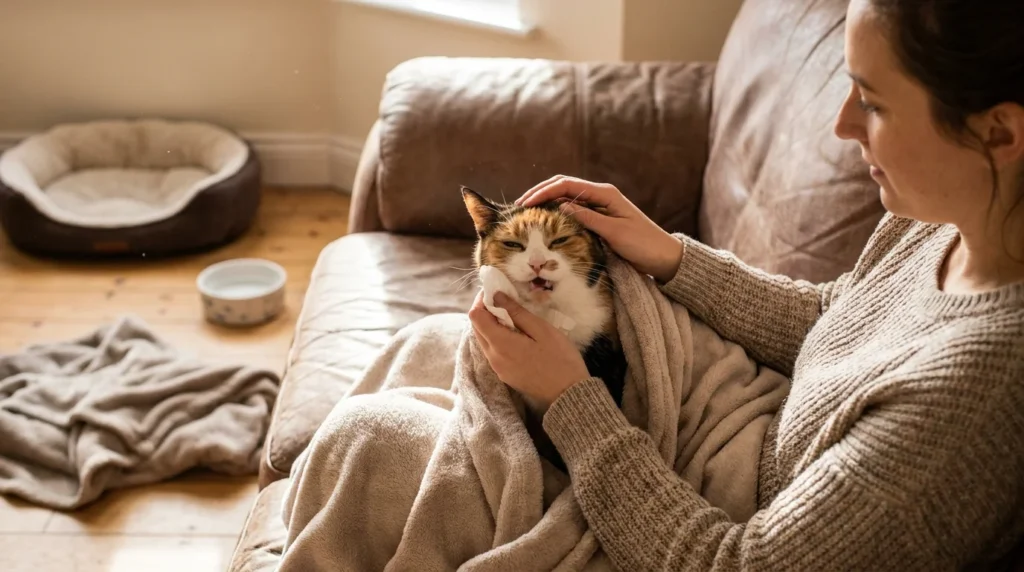
Home care buys comfort and keeps a sick cat eating. It does not fix anything structural.
- Add humidity. Shut your cat in the bathroom with you while the shower runs, ten minutes at a time.
- Clean the face gently. A cloth dampened with warm water, wiped downward, keeps crusts from sealing the nostrils shut.
- Warm the food. Cats eat by smell. A blocked nose kills appetite fast, and food warmed to around 100°F smells far stronger.
- Switch to wet food. Stronger aroma, more moisture, easier to swallow with a sore throat.
- Cut the irritants. Drop scented litter, air fresheners, candles, and smoke while symptoms last.
- Separate new arrivals. Keep an actively sneezing cat away from kittens and elderly housemates.
Never give a cat human decongestants or pain relief. Several are lethal to cats even in small doses. Browse the newest pet health posts on our blog for more feline and canine care writing.
When to Call the Vet Today
Some signs should not wait for a slot next week.
- Your cat has stopped eating for more than 24 hours.
- Breathing is labored, open-mouthed, or noisy at rest.
- The gums look pale, gray, or bluish.
- There is steady bleeding from the nose.
- One side of the face looks swollen, or the eye is bulging.
- A kitten under 16 weeks is sneezing and lethargic.
Cats hide illness well, so a cat who has gone quiet and stopped grooming is telling you something.
Your Next Step
Write down three things today: the date the sneezing started, which nostril is running, and what the discharge looks like. Take that note to your vet. Those three details turn a vague complaint into something a clinician can act on.
Frequently Asked Questions
Ten days is a fair line for a bright cat with clear discharge from both nostrils. Go sooner if your cat stops eating, if the discharge turns colored, or if only one side is running.
They can, though less often than in people. Allergic cats usually itch or over-groom rather than sneezing alone. Dust, smoke, and scented litter irritate the nose directly, and that is more common than true allergy.
Age changes the odds. A senior cat with a new one-sided nasal problem carries a higher risk of a tumor, so the threshold for imaging should be lower. Do not spend three months on antibiotic trials with a 14-year-old.
Frequently, yes, especially with herpesvirus or scarred turbinates. Recurrence is not a sign the treatment failed. It means the underlying damage or the latent virus is still there.
Feline herpesvirus and calicivirus do not infect people. Rare exceptions exist, including Bordetella, so wash your hands after handling discharge.