

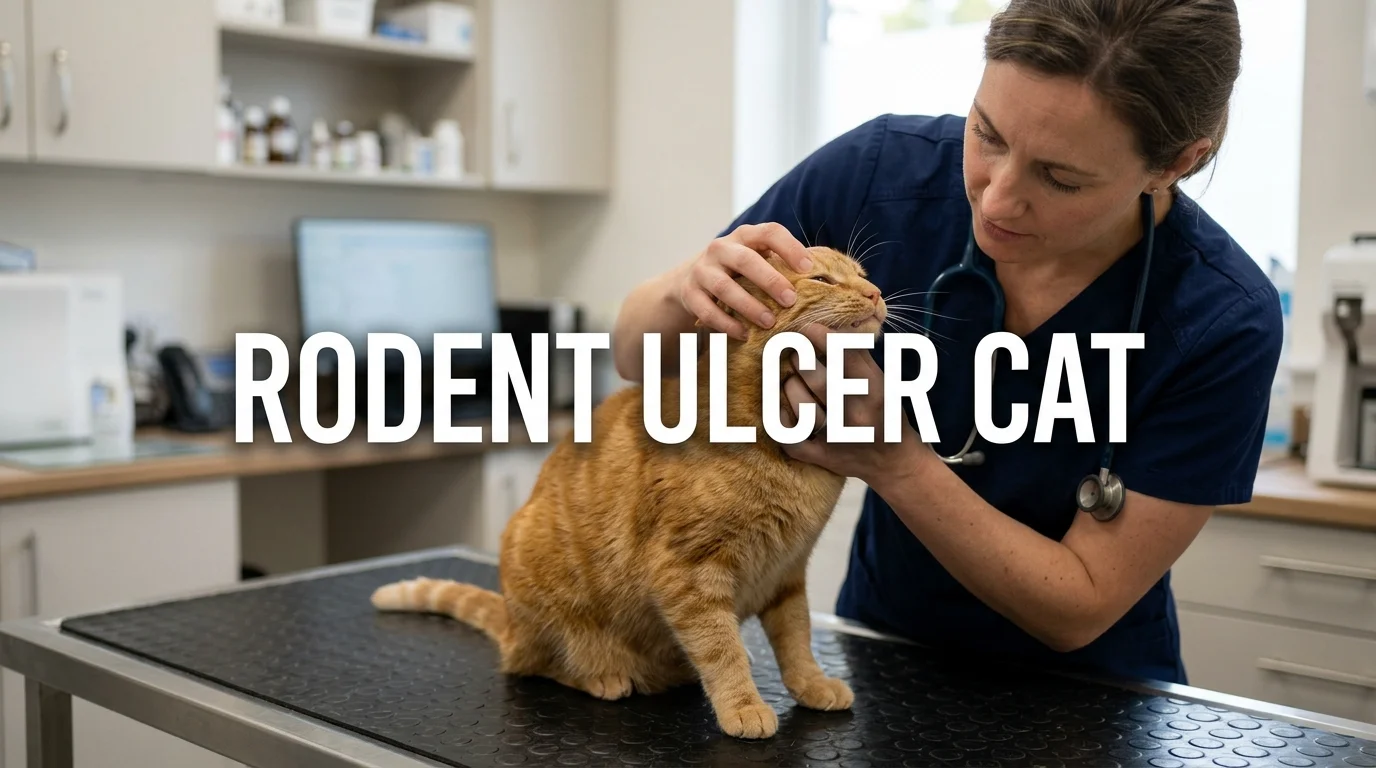
A rodent ulcer cat owners notice usually appears as a red, raw-looking sore on the upper lip. Despite its alarming name, rodents do not cause these ulcers. Vets call the condition an indolent or eosinophilic ulcer.
These sores belong to the feline eosinophilic granuloma complex, often shortened to EGC. Allergies are a common underlying trigger, including reactions to fleas, food, or environmental allergens. Treatment works best when your veterinarian treats the lesion and identifies the trigger.
Rodent ulcer in cats at a glance
| Question | Short answer |
|---|---|
| Medical name | Indolent ulcer or eosinophilic ulcer |
| Common location | Upper lip, on one or both sides |
| Typical appearance | Red, well-defined, eroded or ulcerated area |
| Caused by rodents? | No |
| Common underlying trigger | Allergic hypersensitivity |
| Possible triggers | Fleas, food, insects, or environmental allergens |
| Is it contagious? | The ulcer itself is not contagious |
| Is it painful? | Many appear minimally painful, although severity varies |
| Diagnosis | Veterinary examination, with additional testing when needed |
| Treatment | Control inflammation and address the underlying trigger |
| Can it return? | Yes, especially when the trigger remains |
Short answer
A rodent ulcer is an inflammatory lesion that usually develops on a cat’s upper lip. It is unrelated to rodent bites. Allergies frequently contribute, so veterinary care focuses on reducing inflammation and finding triggers such as fleas, food, or environmental allergens.
Key takeaways
- Rodents do not cause these characteristic feline lip sores.
- The veterinary terms are indolent ulcer and eosinophilic ulcer.
- These lesions form one part of the feline eosinophilic granuloma complex.
- Allergic reactions are among the most common underlying causes.
- Flea control can matter even when you never see fleas.
- Persistent, unusual, or worsening sores need veterinary examination.
- Treating the visible ulcer without managing its trigger can allow recurrence.
What is a rodent ulcer in a cat?
A feline rodent ulcer is a well-defined inflammatory lesion, usually found on the upper lip. It can affect one side or both sides of the mouth. The surface may look red, eroded, swollen, shiny, or raw.
The old name came from a mistaken belief that rodents caused these sores. Veterinary sources now classify them as indolent or eosinophilic ulcers. They are one clinical form of eosinophilic granuloma complex.
EGC also includes eosinophilic plaques and eosinophilic granulomas. These conditions can look different despite sharing inflammatory features. More than one type can sometimes occur in the same animal.
What does a rodent ulcer look like?
The classic lesion develops along the upper lip. It often has a clear border and an eroded center. Hair around the affected area may become thin or disappear.
Some lesions remain small and easy to overlook. Others become larger and noticeably distort the lip. Appearance alone cannot establish every diagnosis because infections and tumors can sometimes resemble inflammatory sores.
Take a clear photograph when you first notice the lesion. Photograph it again under similar lighting every few days. That record can help your veterinarian judge whether the area is growing or responding to treatment.
What causes rodent ulcer in cats?
Allergic hypersensitivity is the leading underlying explanation for many eosinophilic skin diseases. The immune system reacts excessively to a trigger and sends inflammatory cells into affected tissues. Eosinophils are among the cells associated with this reaction.
Possible triggers include flea bites, food reactions, insect bites, and environmental allergens. Some cats have more than one trigger at the same time. In other cases, veterinarians cannot identify a specific cause.
This distinction matters because suppressing inflammation may temporarily clear the visible lesion. The sore can return when the original trigger remains. Long-term management therefore focuses on both the lesion and its cause.
Flea allergy
A flea-allergic animal can react strongly to flea bites. Owners may never see an obvious infestation because cats remove fleas while grooming. Consistent veterinarian-recommended parasite prevention can therefore become part of the diagnostic and treatment plan.
Parasite-related skin problems can resemble other inflammatory conditions. Petistra’s guide to mange in cats explains why identifying the specific cause matters before treatment. Using a dog parasite product on a feline patient can also be dangerous.
Food allergy
Food can also trigger allergic skin disease. Diagnosing a food reaction requires more than switching brands for several days. Veterinarians may recommend a controlled elimination diet followed for the prescribed period.
During that trial, extra foods can undermine the result. Treats, flavored medications, table scraps, and another pet’s food may all matter. Follow your veterinarian’s feeding instructions closely if a diet trial is recommended.
Environmental and insect allergies
Environmental allergens may also contribute to feline allergic skin disease. Possible triggers vary with the animal and its surroundings. Seasonal patterns sometimes provide useful clues for the veterinary workup.
Insects other than fleas can also provoke hypersensitivity reactions. Keeping notes about outdoor exposure and seasonal flare-ups may help. A simple symptom diary can reveal patterns that are difficult to remember months later.
Is a rodent ulcer dangerous?
Many indolent ulcers are treatable, but you shouldn’t ignore an unexplained lip lesion. Secondary infection can complicate damaged skin and change its appearance. Persistent lesions also deserve investigation because not every lip sore is EGC.
Veterinarians may recommend further testing when the lesion looks unusual or fails to respond as expected. When needed, a biopsy can help distinguish inflammatory disease from other conditions. This is especially useful when the diagnosis remains uncertain.
Seek veterinary care sooner if your cat stops eating or seems generally unwell. Cats should not go prolonged periods without food. Petistra’s guide to how long cats can go without food explains why appetite changes deserve prompt attention.
How veterinarians diagnose a rodent ulcer cat owners find
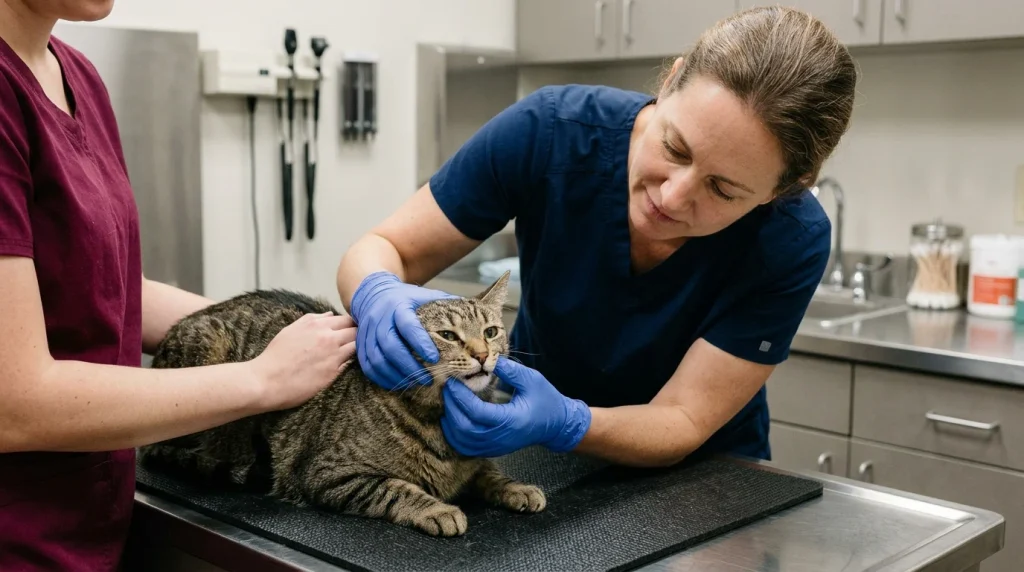
Diagnosis begins with the lesion’s appearance, location, history, and a physical examination. Your veterinarian will also look for other skin abnormalities. Evidence of fleas, infection, itching, or additional EGC lesions can shape the next steps.
Testing depends on the individual case. Cytology can help evaluate cells and possible secondary infection. A biopsy may be recommended for persistent, atypical, severe, or treatment-resistant lesions.
The underlying trigger often requires separate investigation. Your veterinarian may review parasite prevention, diet, seasonality, and other allergy signs. Finding that trigger can reduce the chance of repeated flare-ups.
How are feline rodent ulcers treated?
Treatment depends on the severity and suspected underlying cause. Veterinarians commonly need to control inflammation while investigating allergy triggers. Secondary bacterial infection may require separate treatment when present.
Veterinarians may prescribe anti-inflammatory medication based on the patient’s needs. Never give leftover steroids or human medication without veterinary direction. Drug choice and dosing depend on health history and other risk factors.
Parasite control may be recommended when flea or insect hypersensitivity is possible. A diet trial may follow when food allergy remains a concern. Environmental allergy management can require a longer-term plan when other causes have been excluded.
What should you do at home?
Do not pick, scrub, or repeatedly disinfect the ulcer. Irritating products can damage inflamed tissue and make assessment harder. Keep the area clean only as your veterinarian instructs.
Avoid human creams unless your veterinarian specifically approves them. Cats lick their lips and can swallow anything placed there. Products considered harmless on human skin may be unsuitable when ingested by pets.
Watch eating, drinking, grooming, and behavior while the lesion heals. Record changes with dated photographs and short notes. Contact your clinic if the sore grows, bleeds, becomes infected, or fails to improve.
Can a rodent ulcer heal on its own?
Some eosinophilic lesions can regress, but waiting for that outcome carries disadvantages. The underlying allergic trigger may remain active even when the visible lesion improves. Recurrence can follow when the cause remains unmanaged.
A disappearing sore also does not prove what caused it. Several diseases can produce lesions around the mouth. Veterinary assessment gives you a safer basis for deciding whether further treatment is needed.
If your cat also develops intense scratching, have your veterinarian examine the broader skin problem. Parasites and allergic skin disease can look similar. Petistra’s guide to ear mites in cats shows why visible symptoms alone can mislead owners.
How to reduce the chance of another flare
Start with consistent parasite prevention recommended for your cat and region. Missing doses can complicate an allergy investigation. Every pet in the household may need an appropriate prevention plan.
Follow any prescribed food trial exactly. Changing several variables at once makes the trigger harder to identify. A controlled approach gives your veterinarian more useful information.
Keep a simple record of flare dates, foods, medications, parasite treatments, and environmental changes. Add photographs when skin lesions appear. That timeline can expose recurring patterns and make follow-up visits more productive.
When should you call a veterinarian?
Schedule an examination when you notice a new ulcer or unexplained sore on your cat’s lip. Prompt evaluation is especially useful when the lesion is enlarging. Early assessment can also identify infection or another condition that needs treatment.
Seek faster care if your cat cannot eat comfortably, becomes lethargic, or develops facial swelling. Bleeding, discharge, a bad odor, or rapid progression also deserve attention. Those changes may signal complications or a different problem.
A recurring ulcer deserves another veterinary review rather than repeated treatment from an old prescription. Recurrence often means the underlying trigger still needs attention. Long-term control depends on understanding why the inflammation keeps returning.
Frequently asked questions
What causes rodent ulcer in cats?
Allergic hypersensitivity is a common underlying cause. Fleas, food, insects, and environmental allergens can contribute. Sometimes no specific trigger can be identified despite investigation.
Are rodent ulcers caused by mice or rats?
No, despite the historical name. Rodent bites and eating rodents do not cause these characteristic lesions. The term remains common even though veterinary medicine uses indolent or eosinophilic ulcer.
Is a feline rodent ulcer contagious?
The ulcer itself is not considered contagious. It represents an inflammatory reaction rather than an infection passed between animals. An underlying parasite problem could still affect other pets depending on the parasite involved.
Can I treat a cat’s rodent ulcer at home?
Home treatment should not replace a veterinary diagnosis. Similar-looking lesions can have different causes and require different care. Avoid human medicines, creams, and harsh disinfectants unless your veterinarian specifically recommends them.
How long does a rodent ulcer take to heal?
Healing time varies with lesion severity, treatment, and the underlying trigger. Some cases respond quickly once appropriate therapy begins. Recheck persistent or worsening lesions instead of repeatedly treating them without reassessment.
Can rodent ulcers come back?
Yes, recurrence is possible when the underlying allergic trigger remains. That is why long-term management may include parasite prevention, dietary investigation, or allergy management. Treating only the visible sore may not prevent another episode.
Your next step
Take a clear photograph and arrange a veterinary examination for any unexplained lip ulcer. Bring details about food, parasite prevention, medications, and recent skin problems. Those details can help your veterinarian narrow the likely triggers.
Once treatment begins, monitor the lesion instead of judging progress from memory. Keep medications and prevention products on schedule. Recheck the area if it persists, worsens, or returns after treatment.