

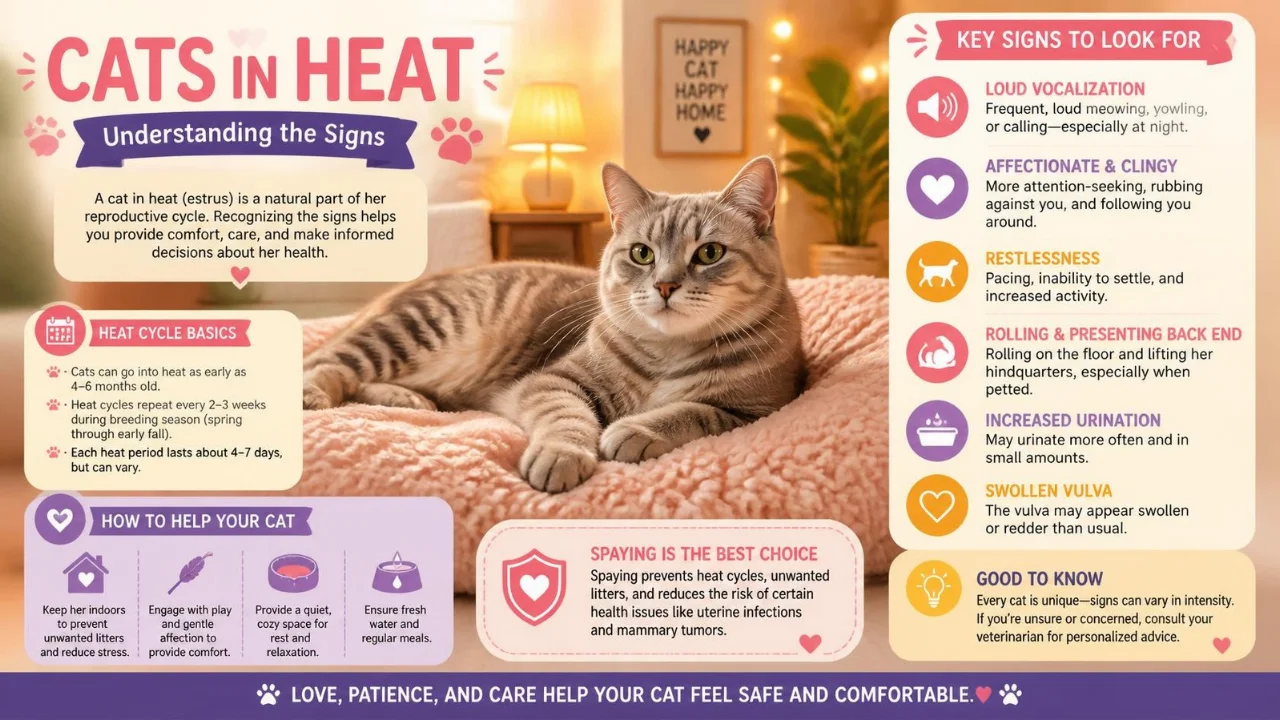
An unspayed female can change dramatically once cats in heat behavior begins. She may yowl, roll, rub against furniture, spray, or repeatedly seek a doorway. These behaviors usually reflect normal reproductive hormones, but certain symptoms still need veterinary attention.
| Quick fact | What U.S. cat owners should know |
|---|---|
| First heat | Often around 5–9 months, though timing varies |
| Typical heat length | Usually several days to about two weeks |
| Repeat cycles | Often every few weeks if mating does not occur |
| Common signs | Yowling, affection, rolling, restlessness, mating posture, spraying |
| Bleeding | Not considered a normal heat sign |
| Pregnancy risk | Possible during the first heat |
| Permanent prevention | Spaying prevents future heat cycles |
Quick answer: A female in heat is fertile and actively seeking a mate. Expect loud calling, rubbing, rolling, restlessness, raised hindquarters, and possible urine marking. Keep her securely indoors, provide calm activities, and ask your veterinarian about spaying. Bleeding, illness, or unusual discharge deserves veterinary attention.
Key takeaways
- Heat is a normal reproductive stage in an unspayed female.
- Most visible signs involve behavior rather than physical illness.
- A determined female may escape through doors, windows, or damaged screens.
- Pregnancy can occur during her first reproductive cycle.
- Spaying is the reliable long-term way to prevent future cycles.
- Vomiting, marked lethargy, abnormal discharge, or bleeding should not be dismissed as heat.
What Does It Mean When a Female Cat Is in Heat?
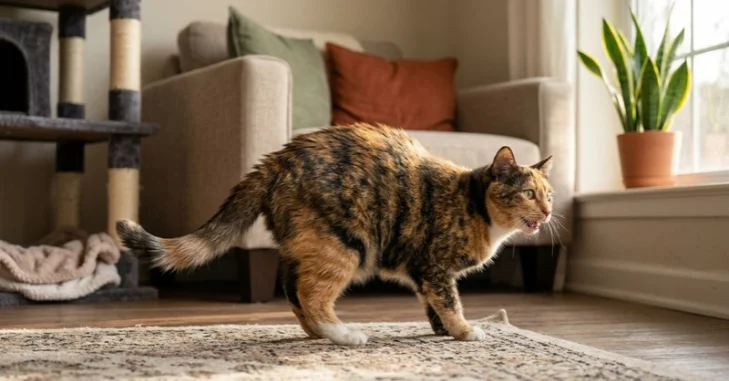
Cats in heat, also called estrus, are the reproductive period when a female becomes receptive to mating. Cats are seasonally polyestrous, meaning several cycles can occur during the breeding season. Indoor lighting can also contribute to cycling for much of the year.
Unlike human menstruation, feline estrus normally produces little or no visible bleeding. Most changes instead involve vocalization, body posture, affection, movement, and marking. Those patterns help owners distinguish reproductive behavior from many illnesses.
Many females reach sexual maturity near six months, although individuals vary considerably. Some kittens can begin cycling several months earlier than owners expect. That makes early spay planning worth discussing during routine kitten veterinary visits.
Petistra’s guide to an 8-week-old kitten can help owners plan early preventive care. Its kitten age chart also explains important developmental milestones. Neither replaces an individual examination with your veterinarian.
7 Common Signs of Cats in Heat
The signs can seem intense, especially during a first cycle. Several often appear together and then fade once estrus ends. A repeating pattern every few weeks makes hormones more likely.
- Loud yowling or caterwauling. Calls may sound longer, deeper, or more urgent than ordinary meows.
- Unusual affection. She may rub repeatedly against people, furniture, doorways, or other household objects.
- Rolling on the floor. Frequent rolling can accompany rubbing and persistent attention-seeking.
- Raised hindquarters. Stroking her back may trigger raised hips, tail movement, and hind-leg treading.
- Restlessness. She may pace, struggle to settle, or spend more time near doors and windows.
- Attempts to escape. Hormones can motivate an indoor female to seek intact males outside.
- Urine marking. Some females spray during estrus, although spraying can have other causes.
VCA describes affection, rolling, vocal behavior, raised hindquarters, and treading as classic estrus signs. Urine marking can also increase because scent communicates reproductive status.
Petistra’s guide to female cat spraying explains how hormonal marking differs from other causes. Its guide to excessive meowing covers other reasons a female may become unusually vocal. Those comparisons matter when the pattern does not fit a normal cycle.
How Long Does a Heat Cycle Last?
The active estrus stage commonly lasts about a week, but individual cycles vary. PetMD gives a typical range of three to fourteen days. VCA notes that some cycles can fall outside that range.
If mating does not occur, another cycle may begin after a relatively short break. VCA reports that females can return to heat within one to three weeks. This repeating pattern can continue through much of the breeding season.
| Cycle stage | What is happening |
|---|---|
| Proestrus | Hormones rise before full receptivity |
| Estrus | The female is receptive and can become pregnant |
| Interestrus | A break may follow if ovulation does not occur |
| Diestrus | Follows ovulation when pregnancy does not develop |
| Anestrus | Reproductive activity becomes temporarily inactive |
Cats are induced ovulators, so mating usually stimulates egg release. Pregnancy can therefore happen quickly during the receptive stage. A first heat does not protect a young female from becoming pregnant.
What Should You Do While Your Cat Is in Heat?
Your first priority is preventing an accidental mating or escape. Keep exterior doors closed and confirm every window screen fits securely. Supervise household entrances when deliveries or visitors create extra escape opportunities.
Do not allow unsupervised outdoor access during an active cycle. A determined female may travel farther than usual while seeking a mate. Intact males may also gather nearby after detecting her scent.
If transportation is necessary, use a secure carrier rather than carrying her outside. Petistra’s cat backpack safety guide covers secure transportation and escape precautions. Always check every zipper, clip, and opening before leaving home.
You can also make the indoor environment calmer during the cycle. Offer short play sessions, familiar resting areas, and predictable feeding times. Extra gentle attention may help females that become unusually affectionate.
Avoid unproven medications or hormonal products without veterinary guidance. Some reproductive drugs carry risks and require professional supervision. Spaying remains the dependable permanent option for preventing future estrus cycles.
Are Females in Heat in Pain?
Heat itself usually causes striking behavior rather than obvious physical pain. The calling, rolling, pacing, and posture can still look distressing to an owner. A sudden behavioral change deserves context rather than automatic assumptions.
Persistent crying can also occur with pain, fear, illness, or age-related problems. That is especially important when the animal is already spayed or lacks other estrus signs. New or unusual vocalization should be discussed with a veterinarian.
Appetite may fall somewhat during estrus, but a prolonged refusal to eat is different. Petistra’s guide about how long cats can go without food explains why extended food refusal needs attention. Do not attribute severe appetite loss solely to reproductive hormones.
Warning Signs That Need Veterinary Care
Normal heat behavior should not make a female appear seriously ill. Contact a veterinarian when symptoms move beyond the expected behavioral pattern. Prompt assessment can separate reproductive behavior from urinary, uterine, digestive, or other medical problems.
Watch for these warning signs:
- Bloody or pus-like vaginal discharge
- Repeated vomiting or diarrhea
- Marked weakness or lethargy
- A swollen or painful abdomen
- Complete or prolonged loss of appetite
- Straining to urinate
- Blood in the urine
- Collapse, fever, or rapidly worsening illness
Pyometra is one serious concern in intact females. This uterine infection can occur after reproductive cycles and may become life-threatening. Signs can include discharge, lethargy, poor appetite, fever, and abdominal enlargement.
Do not assume visible blood is a normal feline period. Vaginal bleeding is not expected during routine estrus. A veterinarian can determine whether blood comes from the reproductive tract, urinary system, or another source.
Spaying and Future Heat Cycles
Spaying prevents future reproductive cycles when the ovaries are removed. It also prevents pregnancy and eliminates the reproductive hormone pattern behind estrus. Your veterinarian can recommend timing based on age, health, and individual circumstances.
Many veterinarians recommend planning the procedure before the first cycle when practical. Exact timing can differ between patients and veterinary practices. Discuss the plan during kitten wellness visits rather than waiting for obvious mating behavior.
A female can sometimes be spayed while actively cycling. Surgery during estrus can involve additional blood flow to reproductive tissues. Your veterinarian can explain whether waiting or proceeding makes sense for your pet.
Frequently Asked Questions
Do cats in heat bleed?
Bleeding is not considered a normal sign of estrus in cats. Most reproductive changes are behavioral, including calling, rubbing, rolling, and mating posture. Contact your veterinarian if you notice blood or abnormal vaginal discharge.
Can an indoor female still go into heat?
Yes, an unspayed indoor female can cycle normally. Artificial indoor light may even support reproductive cycling beyond the usual outdoor breeding season. Keeping her indoors prevents mating but does not stop hormonal cycles.
Can a female become pregnant during her first heat?
Yes, pregnancy is possible during the first reproductive cycle. Sexual maturity can arrive before an owner considers a kitten fully grown. Secure confinement and timely veterinary planning therefore matter early.
Do male cats go into heat?
No, males do not experience estrus cycles. Intact males can still react strongly to the scent of a receptive female. They may vocalize, roam, fight, or mark territory while seeking her.
How can I calm a female during heat?
Keep her routine quiet, predictable, and securely indoors. Offer play, comfortable resting areas, and extra attention when she seeks it. These steps can ease management, but they do not stop the hormonal cycle.
Your Next Step
A normal heat cycle can be noisy and inconvenient without being a medical emergency. Secure doors and windows, watch for abnormal symptoms, and prevent contact with intact males. If you do not plan to breed responsibly, ask your veterinarian about an appropriate spay schedule.
For ongoing cat-care guidance, Petistra publishes practical information for everyday pet owners. Its health articles are educational and should support, not replace, professional veterinary advice. A veterinarian who examines your pet remains the right source for individual medical decisions.