

The Khao Manee is a rare Thai cat known for its pure white coat and brilliant eyes. Some have two matching eyes, while others have striking blue-and-gold or blue-and-green combinations. These social, intelligent cats suit owners who want an active companion rather than an independent pet.
The breed remains uncommon in the United States, so finding a responsibly bred kitten may take patience. Prospective owners should also understand the hearing concerns associated with white cats. Good breeder screening matters more than unusual eye color or claims about rarity.
Quick answer: This ancient Thai breed is a medium-sized, shorthaired white cat with an affectionate, curious personality. Adults are athletic, social, and often communicative. Grooming is simple, but responsible owners should ask about hearing testing because white cats, particularly those with blue eyes, can have congenital deafness.
Khao Manee facts at a glance
| Trait | What U.S. owners should know |
|---|---|
| Origin | Thailand |
| Size | Medium |
| Typical male weight | About 8–11 pounds |
| Typical female weight | About 6–8 pounds |
| Coat | Short, smooth, solid white |
| Eye colors | Blue, yellow, green, or odd-eyed |
| Typical lifespan | Around 10–12 years |
| Personality | Social, curious, intelligent, playful |
| Grooming | Low; weekly brushing is usually enough |
| Main breed-related concern | Congenital deafness associated with white coloring |
| Best home | Interactive household with daily companionship |
TICA describes males as typically weighing 8–11 pounds and females around 6–8 pounds. Both TICA and Royal Canin describe the breed as social, active, playful, and communicative. Life expectancy is generally listed around 10–12 years, although individual longevity varies.
Key takeaways
- This is an ancient natural breed from Thailand, not a recently created designer cat.
- The recognized coat is solid white, although young kittens may briefly show colored head markings.
- Odd eyes are striking but are not required for the breed.
- These cats typically need substantial human interaction and daily play.
- The short coat makes routine grooming simple.
- Hearing status should be verified rather than guessed from eye color.
- U.S. buyers should expect limited availability and should carefully verify breeders.
An ancient Thai cat with a relatively new U.S. presence
This breed has roots that reach far deeper than its modern American recognition. Historical accounts link Thailand’s white cats to the Tamra Maew, an ancient collection of Thai cat poems. CFA describes the animal as one of Thailand’s ancient feline treasures.
Despite that history, the breed remained largely unknown outside Thailand for centuries. TICA reports that the first known examples were imported into the United States in 1999. Western breeding programs then began developing from a relatively small population.
This combination of ancient origins and recent international expansion helps explain today’s rarity. It also makes pedigree documentation especially useful when purchasing a kitten. Buyers should prioritize traceable ancestry, health records, and transparent breeding practices.
What does this white Thai cat look like?
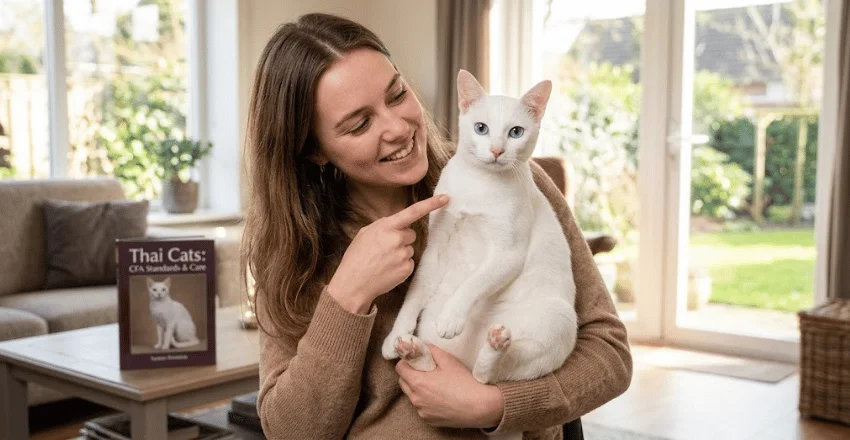
The coat should appear short, smooth, and bright white. CFA’s standard calls for a pure, glistening white body with pink nose leather and paw pads. The body is athletic and muscular without appearing heavy or bulky.
Eyes are one of the breed’s defining features. They may be blue, yellow, green, or different colors. Odd-eyed cats attract attention, but matching eye colors are also normal within breed standards.
Young kittens can occasionally have temporary head color. CFA notes that these markings may remain until around 18 months, then disappear. A colored kitten spot therefore does not always mean the adult coat will remain marked.
Temperament: social, clever, playful, and involved
People looking for a quiet cat that ignores household activity may find this breed demanding. TICA describes these cats as intelligent, active, curious, and eager to interact with people. They often want to participate in whatever their family is doing.
That personality can make them entertaining companions in busy households. Royal Canin notes that they often greet visitors and enjoy games with children. Individual personality still matters, so breed descriptions should never replace careful introductions or supervision.
They can also be fairly communicative. That doesn’t mean every individual will constantly vocalize, but owners should expect more interaction than from many reserved cats. Petistra’s guide to why cats meow so much can help distinguish normal communication from a sudden behavioral change.
Grooming and everyday care are fairly simple
The short coat usually needs brushing about once each week. Regular brushing removes loose hair and lets you check the skin, ears, and overall body condition. Bathing is rarely necessary unless the coat becomes unusually dirty.
Routine feline care remains important despite the low-maintenance coat. Trim nails as needed, maintain dental hygiene, and provide regular veterinary examinations. Feed a nutritionally complete diet appropriate for the cat’s age and health.
Daily enrichment deserves more attention than grooming. Interactive wand toys, climbing furniture, scratching surfaces, and food puzzles can keep an intelligent cat occupied. Several short play sessions often work better than leaving toys untouched all day.
Litter-box preferences also matter in an active household. Petistra’s best cat litter guide covers texture, dust, odor control, and acceptance. A clean, accessible box is more important than choosing the most heavily scented product.
Health and the hearing issue owners should understand
The most discussed breed-related concern is congenital deafness. The problem is associated with genetic pathways involved in white coloring and blue eyes in cats. A white cat with blue eyes has an increased risk, but eye color alone cannot confirm hearing ability.
Odd-eyed cats can sometimes have hearing loss in one ear. The affected ear may correspond to the blue-eyed side, but this pattern isn’t guaranteed. A proper hearing test gives far more useful information than visual inspection.
The Brainstem Auditory Evoked Response, commonly called a BAER test, can objectively assess hearing. Buyers can ask breeders whether breeding cats and kittens have undergone hearing evaluation. Responsible breeders should discuss results clearly instead of claiming that a particular eye color proves normal hearing.
A deaf cat can still enjoy a safe, rewarding life. Indoor living reduces risks from vehicles, predators, and hazards the cat cannot hear approaching. Owners can use visual signals, floor vibrations, and predictable routines for communication.
Is this breed good with children and other pets?
The breed’s social personality can work well in family homes. Royal Canin describes these cats as friendly, playful, and comfortable sharing attention among family members. Their curiosity can also make them receptive to household activity.
Successful relationships still depend on introductions and individual temperament. Children should learn gentle handling and recognize when the cat wants space. Dogs and other cats should meet gradually rather than being placed together immediately.
Starting those habits early can make life easier with a young kitten. Petistra’s 8-week-old kitten care guide covers settling in, feeding, play, veterinary care, and household routines. Those basics still matter even if the kitten comes from an experienced breeder.
Finding a kitten in the United States
Availability in the U.S. remains limited compared with mainstream breeds. CFA and TICA both provide breed information that can help buyers verify whether a breeder understands recognized standards. Registry participation alone still does not replace health screening or careful questioning.
Online price estimates vary dramatically. Some current U.S. breed guides cite several-thousand-dollar asking prices, with some estimates reaching much higher. No reliable audited national average exists, so treat online price ranges as planning figures rather than market guarantees.
Ask for veterinary records, pedigree information, hearing-test documentation, and clear purchase terms. Avoid sellers who rush payment, refuse video calls, or cannot show the kitten with its mother when appropriate. Rarity should never excuse missing health documentation.
A legitimate breeder should also ask you questions. Responsible placement involves matching kittens with homes that can meet their social and veterinary needs. Pressure to send an immediate deposit deserves caution.
Is this the right cat for your home?
This Thai breed fits people who enjoy an interactive companion. It works particularly well for families with time for daily play and regular social contact. Owners who travel frequently may need reliable companionship or pet-care arrangements.
The low-maintenance coat is a practical advantage. The larger commitment involves enrichment, social attention, veterinary care, and careful sourcing. Include hearing screening in the buying conversation from the start.
Choose based on temperament and responsible breeding, not eye color alone. Odd-colored eyes are memorable, but they do not determine whether a cat will fit your household. A healthy, well-socialized animal from transparent sources is the better priority.
Frequently asked questions
Are Khao Manee cats always deaf?
No. White coloring and blue eyes can increase the risk of congenital deafness, but they do not prove a cat cannot hear. BAER testing provides a far more dependable answer for an individual animal.
Some cats may hear normally in both ears, while others have one-sided or bilateral hearing loss. Ask breeders directly about hearing screening and documented results. Avoid claims based solely on eye appearance.
Do these cats always have two different eye colors?
No. Breed standards accept blue, green, yellow, and other recognized shades. Both eyes may match, or each eye may display a different color.
Odd eyes stand out and are often associated with the breed in photographs. They are not necessary for a cat to represent the breed correctly. Coat quality, structure, ancestry, and health also matter.
How long do they live?
TICA and Royal Canin give an average life expectancy of roughly 10–12 years. Individual cats may live shorter or longer depending on genetics, preventive care, weight, nutrition, and disease.
Routine veterinary care can identify problems before they become harder to manage. Dental care, vaccination, parasite control, safe housing, and appropriate nutrition also support long-term health.
Are they rare in the United States?
Yes. The breed only established a documented U.S. breeding presence around 1999 and remains uncommon compared with mainstream pedigreed cats. That limited population can mean fewer litters and longer waits.
Rarity makes careful verification especially important. Never treat a high price or unusual eye color as proof of pedigree. Confirm documentation, health practices, and breeder reputation before committing.
The bottom line
This rare white Thai cat combines striking looks with a highly social personality. It needs relatively little coat maintenance but benefits from daily interaction, play, and mental stimulation. Prospective owners should take hearing screening and responsible breeder selection seriously.
For a young cat, prepare the home before arrival instead of solving problems afterward. Set up food, water, scratching areas, safe vertical space, and several clean litter locations. You can also explore Petistra’s guide to how cats see humans for more insight into feline senses and behavior.