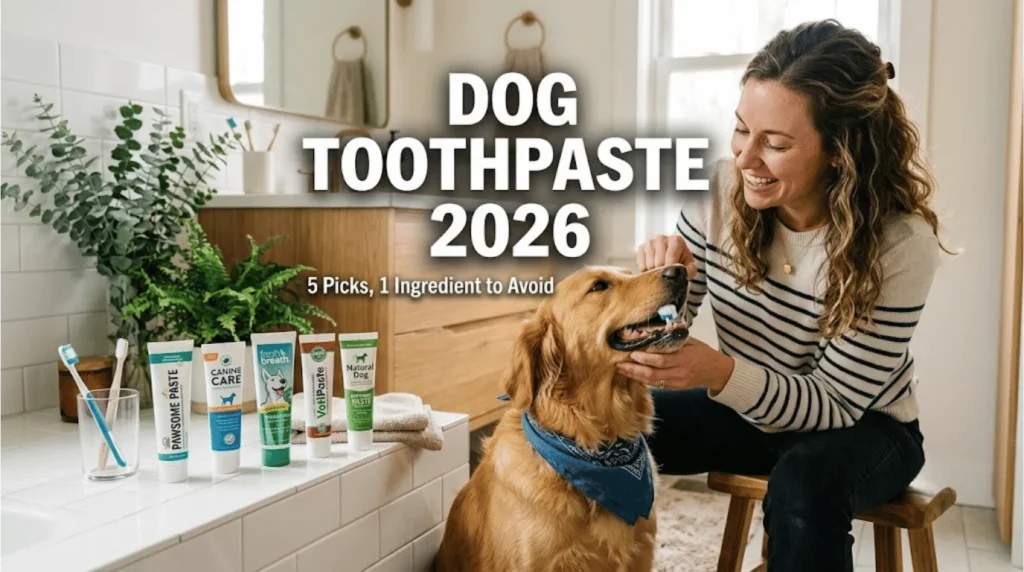


Can dogs eat lettuce? Yes. Plain, washed, chopped lettuce is safe for almost every pet, and it is also close to nutritionally empty, which is the part nobody says out loud. Treat it as a crunchy, low-calorie chew for an animal on a diet, not as a health food. For a closer look at this, see Why Do Dogs Eat Their Own Poop.
Lettuce varieties compared: what each leaf really gives
Not all salad leaves are the same, though the gap between them is smaller than most feeding guides suggest. The numbers below come from USDA FoodData Central, converted to percentages and calories per ounce.
| Variety | Water | Calories per ounce | What it really provides | Verdict |
| Romaine (cos) | 94.6% | about 5 | The most vitamin A and vitamin K of the common lettuces, plus the most fiber | The one to reach for |
| Green leaf | 95.0% | about 4 | Nearly as much vitamin A as romaine, a little less fiber | Fine, and easy to tear |
| Butterhead (Boston, Bibb) | 95.6% | about 4 | Soft leaves, modest vitamin A, very low fiber | Gentle on a touchy stomach |
| Iceberg | 95.6% | about 4 | A fraction of romaine’s vitamin A, and little else | Safe, but pure water and crunch |
| Arugula | 91.7% | about 7 | Five times the calcium of romaine, with a peppery bite many pets refuse | Fine in small amounts |
| Dressed salad, bagged kits, spring mix with add-ins | varies | varies | Onion, garlic, cheese, croutons, bacon, oil | Skip it |
Can Dogs Eat Lettuce? Key takeaways
- Plain lettuce is safe for dogs. It is also roughly 95% water and delivers little else.
- Romaine and green leaf carry meaningful vitamin A. Iceberg carries a fraction of it.
- The danger in a salad bowl is the dressing, not the leaf.
- Bagged greens have a genuine outbreak history, so rinse everything and watch recalls.
- Chop it small. Whole leaves choke small breeds and often come back up undigested.
- A pet that suddenly hunts for greens may be telling you its stomach hurts.
Nearly nothing, nutritionally, and that is fine
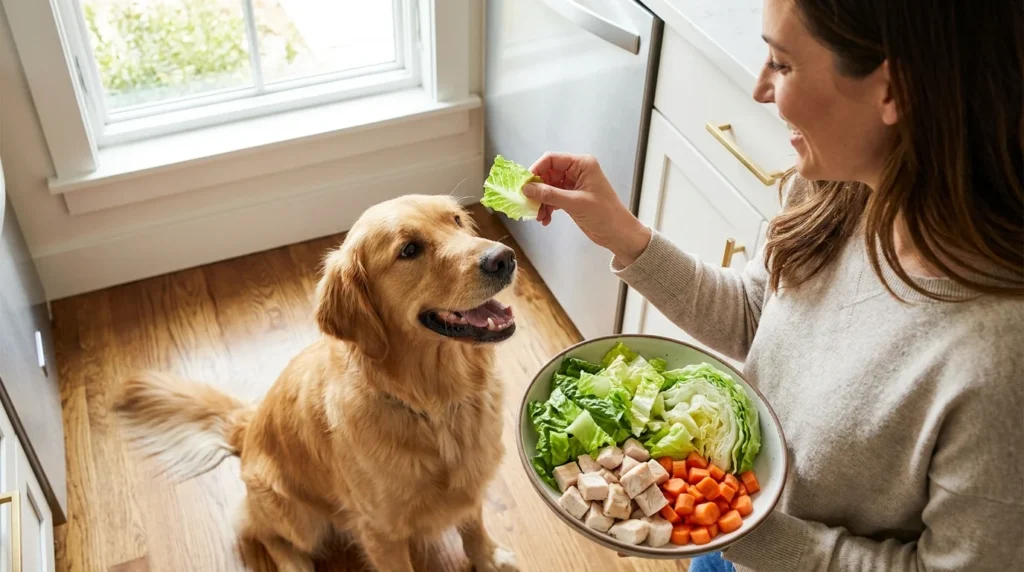
Here is the sentence page one will not write. Iceberg is 95.6% water, and a full ounce of it carries about four calories. There simply is not enough of anything in there to move a nutritional needle.
Romaine does better. According to USDA FoodData Central, romaine carries roughly 17 times the vitamin A of iceberg and about four times the vitamin K. That sounds impressive until you remember the portion. Your dog is chewing a few shredded leaves, not a whole head.
So why bother at all? Shredded greens are bulky, noisy to chew, and almost calorie-free. That makes them a decent stand-in when a hungry animal on a restricted ration wants something to do with its mouth. Real use, yes. Health benefit, no.
Where the food in the bowl already meets AAFCO standards, vegetables are entertainment rather than nutrition. Our pet food guides go further into what a complete daily ration has to cover.
The real risk is not the leaf. It is what is on it
Romaine straight off the cutting board is a non-event. A dressed Caesar salad is a completely different question, and it is the one that puts pets in front of an emergency vet.
Read a dressing label, and the problem jumps out. Caesar usually carries garlic. Ranch and onion dip carry onion powder, and drying concentrates both, so a spoonful of powder does more damage than the same spoonful of raw vegetable. Onion and garlic both attack a dog’s red blood cells.
- Onion, garlic, shallots and chives, including powders and dried flakes
- Creamy dressings such as ranch, blue cheese and Caesar, which run heavy in fat
- Bacon bits and croutons, which are salt and grease in equal measure
- Grapes or raisins tossed through a fancy mixed salad
- Walnuts or macadamia nuts scattered over the top
Fat is the other half of the problem. One rich mouthful can set off pancreatitis, and a Yorkie gets there on far less of it than a Labrador. Cleared a dressed bowl off the counter? Phone your vet instead of waiting to see what happens. Our animal health articles go through the warning signs to watch for.
Bagged greens carry a recall history, and it includes your dog
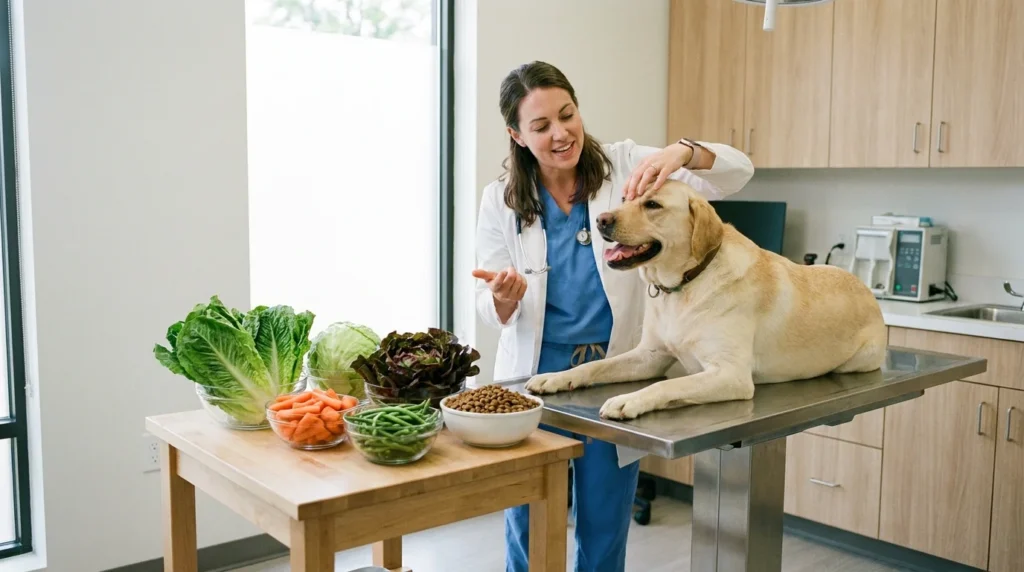
Rinsing is not fussiness. Leafy greens sit among the most frequently recalled foods in the American supply, and contaminated lettuce carries exactly the same bacteria for an animal as it does for you.
According to the FDA’s outbreak investigation, E. coli O157:H7 in romaine from the Yuma growing region caused 210 illnesses, 96 hospitalizations and 5 deaths, with the last illness onset in August 2018. Listeria has driven its own run of bagged salad recalls since.
Two habits follow. Rinse every leaf under running water before it goes near a bowl, even when the bag says pre-washed. And when a recall reaches the news, go and look in your refrigerator rather than assuming it only matters for people.
One more reason to care: a sick animal sheds these bacteria in its stool, which drags the rest of the household into it.
Big leaves, small throats
Lettuce is fibrous, and no dog chews the way you do. A whole romaine leaf handed over intact tends to go down folded, and it can reappear an hour later looking much as it did on the way in.
Chop it to roughly thumbnail size. That single habit takes the choking risk off the table for small breeds and most of the strain off the gut. Overdo the quantity, and you get gas, loose stool, or a pet that turns its nose up at dinner.
A sudden hunger for greens can be a message
Some dogs go hunting for salad. When yours starts stripping leaves off a houseplant or working through the lawn with real determination, the appetite itself is the interesting part. Nausea, acid reflux and a recent food change all show up this way. So does plain boredom.
One nibble means nothing. But a new, insistent habit that arrives alongside vomiting, a shifting waistline or a dull coat belongs in front of a vet, not a search engine. Do not read it as a missing nutrient your pet is trying to fix. That theory circulates widely, and there is no good evidence behind it.
How much, and how to serve it
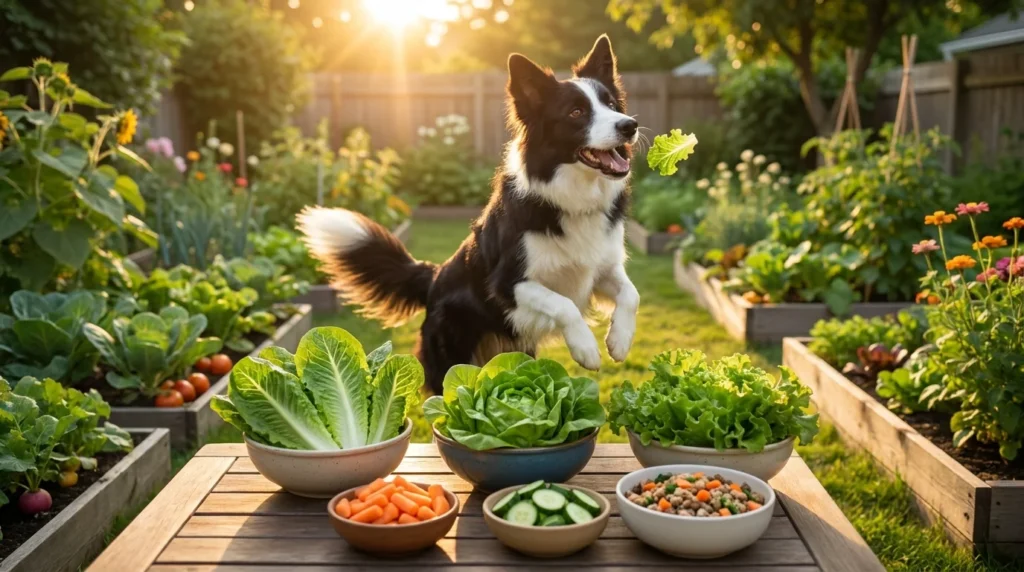
Treats of every kind should stay under 10% of what your dog eats in a day. Greens are so light that hitting that ceiling by volume is almost impossible, which is exactly why they work for an animal carrying extra weight.
- Rinse the leaves under running water and shake them dry.
- Strip out the thick central stem, then chop the rest small.
- Start with one tablespoon for a 10 lb dog, or a quarter cup for a 60 lb one.
- Serve it plain. No oil, no salt, no seasoning of any kind.
- Check the next stool before you offer more.
Frozen shredded romaine also makes a fair hot-weather chew. If you use greens as a reward, keep the pieces tiny and the pace quick, and our dog training articles explain why reward size matters more than reward type.
The bottom line
So, can dogs eat lettuce? Yes, and now you know how little it does for them. Hand over a few chopped romaine leaves without a second thought, then give the salad bowl beside them a much harder look. If your pet ate something dressed, or the greens habit is new and urgent, ring your vet today rather than tomorrow.
Can dogs eat lettuce? FAQ
Yes, in tiny, finely chopped amounts once they are eating solid food. A young gut upsets more easily, so a teaspoon is plenty.
No. It is close to pointless, which is a different complaint. Serve it if that is what is open in the refrigerator, but never choose it for nutrition.
Only undressed, and only once you have checked it for onion, garlic, or grapes. Set a portion aside before the dressing goes on, or skip the whole idea.
Yes. It brings more calcium than any true lettuce here, though the peppery taste puts a lot of pets off it entirely.
Those are a separate conversation. Both carry compounds that matter for animals with a history of kidney or bladder stones, so ask your vet before either becomes routine.
Daily is fine at snack size. If greens start displacing meals, the problem is bigger than lettuce.