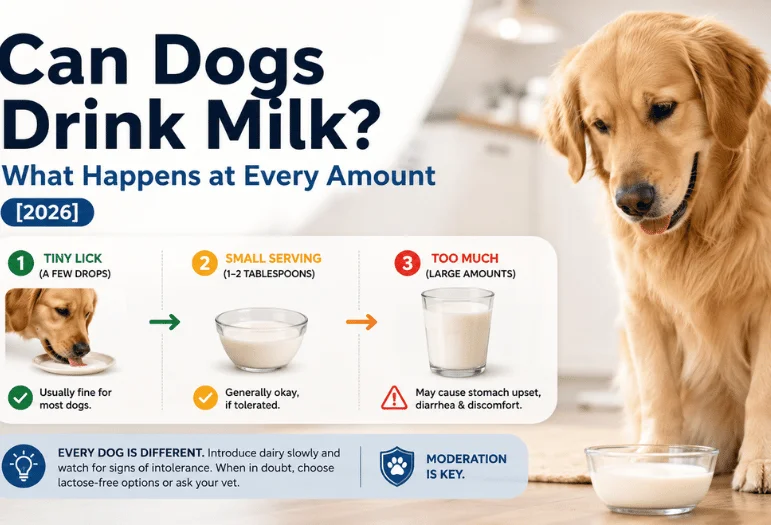


Can dogs have milk? A healthy adult dog may tolerate a small lick or splash, but milk shouldn’t become a routine drink. Many dogs cannot digest lactose well, so dairy products may cause gas, bloating, diarrhea, or vomiting. Water remains the safest daily choice, and puppies need canine formula rather than cow’s milk.
| Question | Practical answer |
| Is a small taste usually dangerous? | Plain, unflavored milk is not considered toxic, but it may cause digestive upset. |
| What is the main concern? | Many adult dogs have trouble digesting lactose. |
| What should dogs drink each day? | Fresh, clean water. |
| What should an orphaned puppy receive? | A commercial canine formula selected with veterinary guidance. |
| When should you call a veterinarian? | Call for repeated vomiting, severe diarrhea, pain, weakness, blood in the stool, or exposure to a product containing xylitol. |
Key takeaways
- A lick is less concerning than a full bowl.
- Stop giving your dog dairy if digestive symptoms develop.
- Check flavored and sugar-free products for dangerous ingredients.
- Don’t use cow’s milk as puppy formula or as a home treatment for constipation.
- Ask your veterinarian before giving dairy to a dog with health or weight problems.
Can Dogs Have Milk Safely?

Milk is not considered poisonous to dogs. Still, it offers few benefits to an adult dog that already eats a complete and balanced diet. It adds fat, natural sugar, and calories while creating a risk of digestive problems.
PetMD notes that the risks of giving milk usually outweigh the benefits for the average dog. The American Kennel Club also states that a few tablespoons of cow’s milk may be tolerated by some dogs as an occasional treat.
That amount is not safe for every dog. A small dog, a sensitive dog, or one with a history of stomach problems may react to much less.
Treats and extras should provide no more than 10% of a healthy dog’s daily calories. The remaining calories should come from complete food suited to the dog’s age, size, and life stage.
For details about how health articles are researched and reviewed, read Petistra’s editorial approach.
Why Dairy Upsets Some Dogs
Lactose is the natural sugar found in milk. The enzyme lactase breaks lactose into forms that the digestive system can absorb.
Puppies produce lactase while nursing. Lactase production can decline after weaning, leaving many adult dogs unable to process a large amount of lactose.
Undigested lactose draws water into the intestines and is fermented by gut bacteria. This process can cause loose stools, gas, bloating, and abdominal discomfort.
Common signs after drinking milk include:
- Excessive gas
- A swollen or bloated abdomen
- Loose stool or diarrhea
- Vomiting or nausea
- Reduced appetite
- Restlessness caused by abdominal discomfort
Lactose Intolerance and Dairy Allergies Are Different
Lactose intolerance is a digestive problem. A dairy allergy involves an immune response to proteins in dairy products.
An allergy may cause vomiting or diarrhea, but it can also affect the skin, paws, or ears. Itching, redness, and recurring skin irritation deserve veterinary attention.
Breathing problems, facial swelling, collapse, or sudden weakness require urgent veterinary care.
How Much Milk Is Too Much?
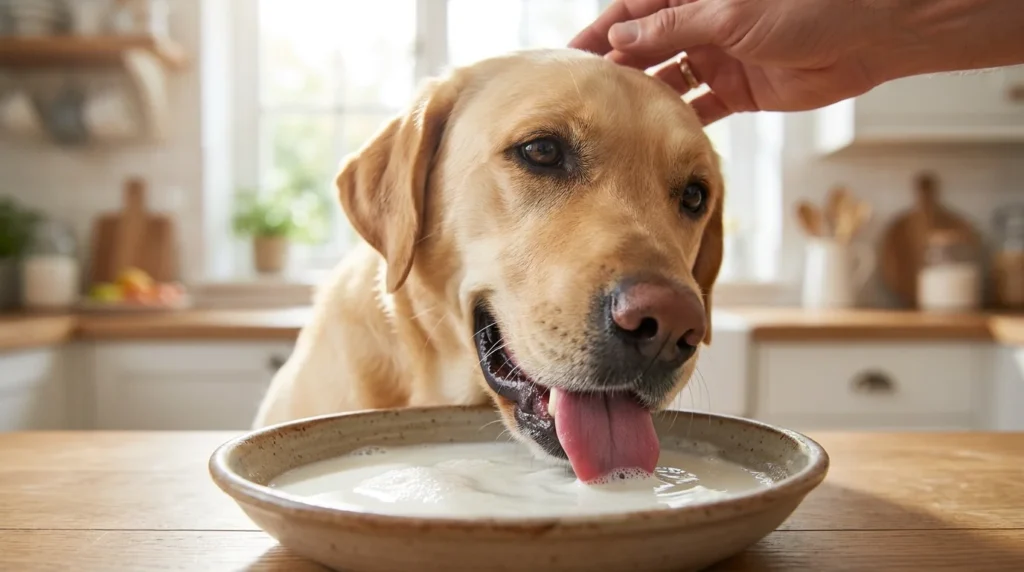
There is no single safe amount of milk for every dog. Body size, fat tolerance, digestive history, and the product’s ingredients all matter.
Use this exposure guide to decide what to do next:
| What happened | Likely concern | Sensible response |
| One lick of plain milk | Low concern for most healthy adult dogs | Offer water and watch for symptoms |
| A small splash or spoonful | Mild stomach upset is possible | Don’t give more; monitor your dog closely |
| Several tablespoons or a full bowl | Greater risk of vomiting, diarrhea, and excess calorie intake | Call your veterinarian if symptoms develop |
| Repeated servings over several days | Weight gain or an unbalanced diet | Stop the habit and review your dog’s treats |
| A flavored or sugar-free product was consumed | Possible exposure to toxic ingredients | Check the label and seek professional advice promptly |
| Any amount was given to a sick newborn puppy | Nutritional and aspiration concerns | Contact a veterinarian immediately |
This table is a general triage guide, not a dosing chart. A dog with pancreatitis, diabetes, obesity, food allergies, or a prescribed diet needs individual veterinary advice.
What to Do If Your Dog Drank Milk
Most dogs that steal a small amount of plain milk can be monitored at home. Follow these steps:
- Check the product and estimate the amount. Keep the container or photograph the label. Note whether the product was flavored, sweetened, or high in fat.
- Remove the remaining product. Give your dog access to fresh water, but don’t force food or fluids.
- Watch for digestive changes. Look for vomiting, diarrhea, gas, bloating, poor appetite, pain, or unusual tiredness.
- Call your veterinarian if symptoms become significant. Repeated vomiting, blood in the vomit or stool, dehydration, severe lethargy, or ongoing pain requires professional assessment.
Sugar-free products require extra caution. Xylitol can cause a rapid drop in a dog’s blood sugar and may lead to weakness, poor coordination, collapse, seizures, or liver injury.
Contact a veterinarian or animal poison service immediately if xylitol appears on the product’s ingredient list.
Petistra provides educational guidance rather than diagnosis or treatment. The site’s general-information disclaimer explains these limitations.
Are Goat’s Milk, Lactose-Free Milk, and Plant-Based Drinks Better?
Goat’s milk still contains lactose. Some dogs may digest it more easily than cow’s milk, but it can cause the same symptoms in a sensitive animal. It also adds fat and calories.
Lactose-free milk removes one digestive concern, but it doesn’t make the drink necessary or especially nutritious for dogs. Always check the label for added sugar, flavoring, gums, chocolate, caffeine, or artificial sweeteners.
Plant-based drinks are not automatically safe for dogs. Almond, oat, soy, and coconut beverages may contain extra calories, oils, flavorings, or sweeteners.
Some products may also contain xylitol, which is toxic to dogs. A beverage made for people should never replace fresh water.
Before offering an occasional liquid treat, ask your veterinarian whether a dog-specific product with a simple ingredient list is appropriate.
Can Puppies Drink Cow’s Milk?
Newborn puppies should nurse from their mother whenever possible. If nursing is not possible, they need a commercial puppy milk replacer that provides the correct balance of energy, protein, fat, calcium, and phosphorus.
Cow’s milk does not match the nutritional composition of a mother dog’s milk and is not a suitable substitute. The American Kennel Club recommends using a commercial canine formula and following its preparation instructions with veterinary guidance.
Bottle-feeding a newborn puppy also carries risks, including aspiration and incorrect feeding amounts.
Contact a veterinarian promptly if a puppy is weak, cold, crying constantly, refusing to suckle, or failing to gain weight.
Better Ways to Treat Your Dog

Food is only one way to reward good behavior. Many dogs value attention and activity as much as an edible treat.
Consider one of these alternatives:
- A piece of your dog’s regular kibble
- A veterinarian-approved, low-calorie treat
- A short sniffing walk
- A favorite toy
- Gentle play or praise
- An ice cube made from plain water
These choices avoid unnecessary lactose and make calorie control easier. Keep all treats and extras within the recommended 10% allowance.
For more pet-care information, visit the Petistra home page.
Make the Safest Choice for Your Dog
A stolen lick of plain milk is rarely a reason to panic. A full bowl, repeated servings, severe symptoms, or exposure to unsafe additives require more attention.
Choose water for daily hydration and keep human beverages out of reach. If your dog reacts badly or has an existing health condition, speak with your veterinarian.
You can also contact the Petistra team with suggestions for future educational topics.
Frequently Asked Questions
No. Even if a dog appears to tolerate dairy, milk is unnecessary as a daily drink. Regular servings add calories and may cause digestive problems without improving a balanced diet. Fresh water should always remain available.
Symptoms may develop within several hours. Watch for gas, diarrhea, vomiting, bloating, pain, or reduced appetite. Contact a veterinarian if the symptoms are severe, continue for several hours, or appear to be getting worse.
Don’t use milk as a constipation remedy. Causing loose stool is not the same as treating the reason a dog cannot pass stool.
Milk may worsen discomfort or contribute to dehydration. A veterinarian can recommend a safer treatment after considering your dog’s diet, activity level, medications, and the possibility of an obstruction.
Some cheeses contain less lactose than milk, but they may be high in fat and salt. Added garlic, onion, herbs, mold, or sweeteners can create further risks.
Ask your veterinarian before using cheese as a frequent training reward.
Seek urgent veterinary care if your dog experiences:
Collapse
Seizures
Breathing difficulties
Severe weakness
Repeated vomiting
Blood in the vomit or stool
A painful or swollen abdomen
Known xylitol exposure
Newborn puppies and dogs with chronic health conditions should be assessed sooner.