


One fillet can be a solid weekly treat or a trip to the emergency vet, and cooking is the whole difference. So can dogs eat salmon? Cooked through, boned and plain, yes. Raw or barely seared, especially fish pulled from a Pacific river, no. Most guides bury that second half in a single cautious line. The risk deserves better, because a parasite carried by wild Pacific fish kills nine out of ten untreated dogs inside a fortnight.
Every Form of This Fish, Ranked by Risk
Check the row that matches what is on your counter before anything reaches the bowl. These verdicts assume a healthy adult dog with no history of pancreatitis and no fish allergy.
| Can Dogs Eat Salmon? Form | Verdict | Why |
| Cooked to 145°F, boneless, unseasoned | Safe, once a week | Heat destroys the parasite and the omega-3 fats survive. |
| Raw or seared rare, wild Pacific caught | Dangerous | May carry the fluke behind salmon poisoning disease. |
| Raw, but frozen solid first | Lower risk, still not ideal | Freezing inactivates the fluke. Bacteria survive it. |
| Smoked or cured lox | Avoid | Salt cure, plus cold smoke that never cooks the flesh. |
| Canned in water, no salt added | Occasional, rinsed | Cooked in the can, though sodium swings by brand. |
| Skin, cooked and plain | Thin strips only | The fattiest part of the whole fish. |
| Bones, raw or cooked | Never | Pin bones lodge in the throat and the gut wall. |
Key takeaways
- Cooked, boneless, and plain is the only form to feed on purpose.
- Raw fish from Pacific coastal rivers can carry a parasite that kills most untreated dogs within two weeks.
- Signs usually surface around day six, and can wait as long as 33 days.
- Treatment is fast and effective, so the vet call is the whole game.
- One small serving a week, sized to your dog’s weight, is the ceiling.
Salmon Poisoning Disease Is Why Raw Gets a Hard No: Can Dogs Eat Salmon Safely?
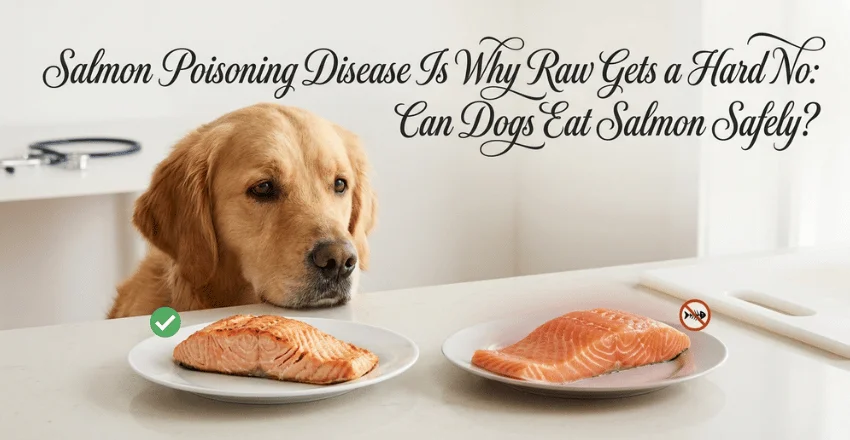
When asking, “Can dogs eat salmon?” the real concern with raw fish is salmon poisoning disease. Wild Pacific fish may carry a fluke called Nanophyetus salmincola, which can harbor Neorickettsia helminthoeca. After a dog eats infected fish, the fluke enters the gut, and the bacterium attacks the lymph nodes.
Here is the figure almost nobody prints. Guidance from the UC Davis School of Veterinary Medicine, reviewed in February 2026, states that without treatment, the disease is fatal in 90% of dogs within 2 weeks. Treated dogs usually turn the corner in about two days on doxycycline plus a dewormer called praziquantel.
Geography drives the risk more than any other factor. Its snail host lives in coastal streams running from northern California through Oregon and Washington into British Columbia. A raw fillet in Ohio raises an ordinary food safety question. The same fillet in Astoria raises a survival one.
Bacteria are a separate problem that raw feeding never solves. Raw fish follows the same first-day rules as a dog swallowing raw chicken. Note the time, keep what is left, and watch closely.
What to watch for, and when
Signs typically appear six or seven days after the meal. They can be delayed as long as 33 days, which is exactly why owners fail to connect the fish to the fever.
- Days 5 to 7: a high fever, then appetite falls off.
- Around days 7 to 10: vomiting and watery diarrhea, sometimes bloody.
- Days 8 to 14: swollen lymph nodes, weight loss, heavy dehydration.
Phone your vet the day the fever starts. Say the words “possible salmon poisoning” and mention the raw fish out loud. That phrase redirects the whole diagnostic path, because a fecal test for fluke eggs settles it quickly.
Cooked, Boneless and Plain: The Only Green Light
Heat is the fix, and it is a simple one. The US Food and Drug Administration sets the safe internal temperature for most seafood at 145°F. A probe thermometer in the thickest part is the only honest way to confirm you got there. Flaking it with a fork is guesswork.
Bake it, broil it, poach it or grill it. Skip the oil and skip the pan sauce.
Seasoning is where good intentions go wrong. Garlic and onion powder sit in nearly every rub and marinade, and both wreck canine red blood cells. Our breakdown of the toxic garlic dose by body weight shows how little it takes to hurt a small dog.
Raw and Frozen: What Freezing Fixes and What It Misses
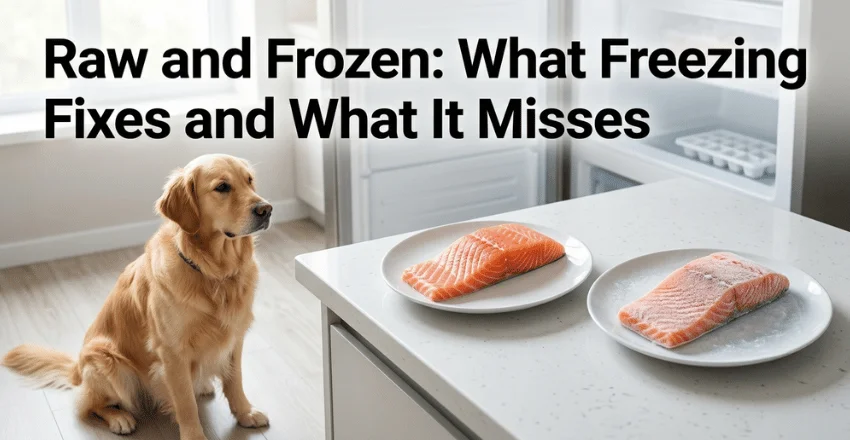
Freezing the fish solid does inactivate the fluke. That is why a commercial frozen raw diet is not the same gamble as a fillet from this morning’s catch.
It sterilizes nothing, though. Listeria and salmonella shrug off a home freezer, and they travel to the people handling the bowl. Households with a baby, an older relative, or anyone on chemotherapy should leave raw fish alone entirely.
Smoked, Cured and Canned: The Salt Problem
Cold smoked fish and lox never reach a cooking temperature at all. Salt preserves them instead, so they stack both risks: live parasites if the fish was never frozen, and a sodium load no dog needs.
Hot smoked fillets are genuinely cooked, but the brine stays heavy. A few flakes will not harm a healthy 50 lb dog. A weekly habit will, especially alongside every other salty scrap that hits the floor. The arithmetic we ran on sodium per pickle spear works the same way for a slice of lox.
Canned is the easy middle ground. Choose water rather than oil, and choose no salt added when the shelf offers it. Rinse it in a sieve, drain it well, and leave the soft canned bones in, since they crush between your fingers. There is more on this in Can Dogs Have Coconut.
Can Dogs Eat Salmon Skin and Bones?

Skin, yes, in small cooked strips. It holds more omega-3 fat than the flesh does. It also holds most of the grease, so a generous portion invites pancreatitis in a heavier dog.
Bones, never. Pin bones are thin, sharp, and easy to miss. Cooking turns them brittle enough to splinter, and raw ones still lodge sideways. Run a fingertip down the fillet against the grain first, then pull what you find with tweezers.
How Much Is a Sensible Portion?
Treats should stay under roughly 10% of daily calories. That leaves far less room than most owners assume.
| Dog weight | Cooked portion, once a week |
| Under 20 lbs | 1 oz |
| 21 to 30 lbs | 2 oz |
| 31 to 50 lbs | 3 oz |
| 51 to 90 lbs | 4 to 5 oz |
| Over 90 lbs | 6 oz |
Halve those amounts the first time you try it. Fish allergies are real, and an itchy dog three days later tells you more than any ingredient label will. For the rest of your dog’s diet, browse our pet food guides.
Frequently Asked Questions
No. Once a week is plenty. Daily servings unbalance a complete diet and push fat intake higher than most dogs need.
Sushi grade only means the fish was frozen to a standard set for humans eating it raw. That freezing does handle the fluke. Bacteria remain, so it is not a label to trust on your dog’s behalf.
For this parasite, yes. Farmed salmon raised in sea pens never meets the freshwater snail that starts the fluke’s life cycle. Cook it anyway.
Write down the time and where the fish came from. Ring your vet if it was wild caught anywhere on the Pacific coast, then take your dog’s temperature daily for a month.
Small cooked flakes are fine after weaning. Hold off under 12 weeks, while their gut and their diet balance are both still settling.