

Cooked and served plain, this orange root is one of the better vegetables you can share with a dog. Raw, it behaves like a completely different food. So can dogs eat sweet potatoes? Yes, once you cook them and match the portion to the dog.
Short answer: Dogs can eat cooked sweet potato flesh in small servings. Boiled, baked, or steamed with nothing added, it brings fiber, potassium, and beta carotene to the bowl. Raw pieces are hard and poorly digested. They are a genuine choking and obstruction risk. Keep any serving inside 10 percent of your dog’s daily calories.
Preparation methods, ranked from best to worst
Most articles treat this as one food with one answer. It isn’t. The preparation decides whether you hand over a healthy vegetable or an emergency. Here is every common version side by side, with a verdict for each.
| How it is prepared | Verdict | What it does to a dog |
| Boiled, plain, no salt | Best choice | Softest texture, easiest on the gut, nothing added |
| Baked or steamed, plain | Good | Heat breaks down the starch so a dog can digest it |
| Mashed with butter, cream or marshmallow | Avoid | The dairy, fat and sugar cause the upset, not the vegetable |
| Dehydrated chews | Occasional only | Drying pulls out the water and concentrates sugar and calories |
| Canned in syrup | Avoid | Packing syrup adds sugar your dog has no use for |
| Sweet potato fries, frozen or from a restaurant | Avoid | Oil, salt, and often garlic or onion powder in the coating |
| Raw chunks or peelings | Never | Hard, barely digestible, and the main blockage risk |
Key takeaways
- Cook it. Plain boiled or baked flesh is the only form to feed.
- Raw is the one owners get wrong, and it is the version that causes real damage.
- This vegetable is not a nightshade, so solanine warnings copied from white potato articles do not apply here.
- Portion by body weight: roughly one tablespoon per 10 pounds of dog, two or three times a week.
- Skip it, or ask your vet first, for diabetic and overweight dogs.
Why raw sweet potato is the one that lands dogs at the vet
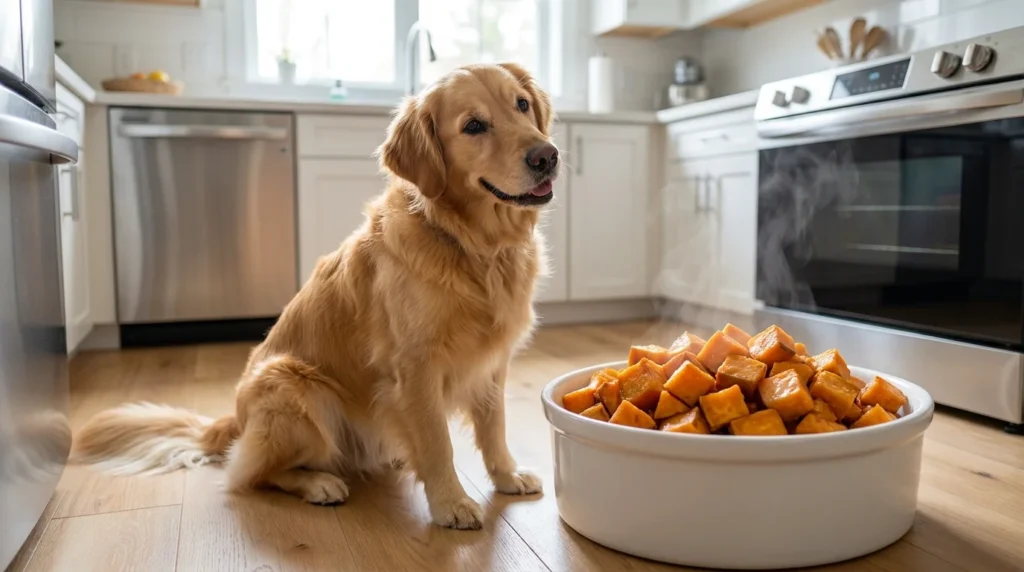
Raw starch sits in tight granules that a dog’s digestive system blocks at almost every stage. Cooking swells and bursts those granules, which is why heat matters more here than in a carrot or a green bean. Uncooked, most of that starch travels through undigested and ferments, which means gas, cramping, and loose stools.
The bigger problem is mechanical. A raw piece is dense and slick, and dogs rarely chew a treat they are excited about. They swallow it whole. A chunk that size can lodge in the esophagus or further down, and the same thing happens with a peeling left in a compost bin. We see the same pattern with the two pit risks in nectarines: a hard object goes down fast and then has nowhere to go.
Signs of a blockage
Call your vet the same day if you see any of these after your dog has eaten something hard:
- Repeated vomiting, especially bringing up water
- Straining to pass stool, or no stool at all for a day
- A hunched, tucked posture, or yelping when you touch the belly
- Refusing food from a dog who never refuses food
- Drooling, gagging, or pawing at the mouth right after eating
Do not wait it out. An obstruction gets harder to treat by the hour.
It is not a potato, so ignore the solanine warnings
Here is a mix-up that needs correcting. Search this topic, and you will find warnings about solanine and green sprouting skins, copied straight over from articles about white potatoes.
Those two plants are not related. The white potato is Solanum tuberosum, a member of the nightshade family, and solanine is the compound that makes a green or sprouting one risky. Sweet potatoes are Ipomoea batatas, and they belong to the morning glory family instead.
Raw sweet potatoes do not contain the same nightshade compounds or solanine concerns as some other vegetables.
However, the key considerations remain the same: their hard texture, natural sugar content, and any added seasonings or toppings. Focus on how the sweet potato is prepared rather than its botanical family.
How much is safe, by body weight
Treats and extras should stay under 10 percent of a dog’s daily calories, and cooked flesh runs roughly 15 calories per tablespoon. That gives you real portion math instead of a vague “in moderation.”
| Dog weight | Cooked, mashed serving | Rough calories | How often |
| 10 lb | 1 tablespoon | 15 | 2 to 3 times a week |
| 25 lb | 2 tablespoons | 30 | 2 to 3 times a week |
| 50 lb | 3 tablespoons | 45 | 2 to 3 times a week |
| 80 lb | 4 tablespoons | 55 | 2 to 3 times a week |
Why so little? Vitamin A is the reason nobody puts a number on it. One whole baked sweet potato carries 1,403 mcg RAE of vitamin A, or 156% of an adult human’s Daily Value, according to the NIH Office of Dietary Supplements. Your dog weighs a fraction of what you do. Vitamin A is fat soluble, so the surplus is stored in the liver rather than passing out in urine, and long-term excess is linked to bone and joint problems.
Check the label on your dog’s food too. If peas, potatoes and legumes already sit high in the ingredient list, a daily vegetable topper stacks on top of that. Our guide to how peas rank by safety in a dog’s bowl goes deeper on that ingredient question. It also covers the FDA’s ongoing look at grain-free diets and heart disease.
Can dogs eat sweet potatoes every day?

Two or three times a week is plenty. A daily habit pushes the sugar and calorie load higher than most owners realize, and it slowly displaces the complete food that balances your dog’s diet.
There is one exception. Some vets prescribe a small daily serving to firm up loose stools, in the same way canned pumpkin gets used. That is a short-term fix with a purpose behind it, not a standing menu item.
Skins, fries and the store-bought versions
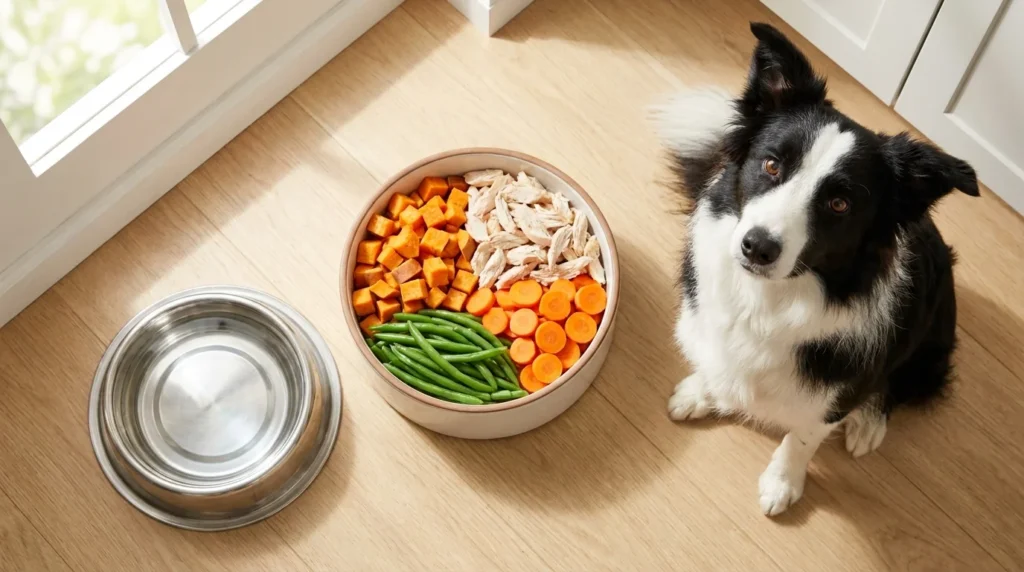
The skin is safe once it has been scrubbed and cooked through, and it holds a decent share of the fiber. It is also tough and stringy. Peel it for small dogs and for any dog who inhales food without chewing. For a closer look at this, see Are Strawberries Good for Dogs.
Restaurant and frozen fries are a different question. The oil and salt are bad enough, but the seasoning blend is what worries vets, because garlic and onion powder show up in most coatings. Both damage red blood cells, and the amount that does it is smaller than people expect. Our breakdown of the toxic garlic dose by body weight puts real numbers on that.
Dehydrated chews deserve a closer look as well. Drying removes the water and packs the sugar and calories into a few bites. One thick chew can carry more energy than three tablespoons of the fresh cooked version. They are also hard and dry, which brings back the choking issue. Supervise, and pick thin slices over dense sticks.
Dogs that should skip it
- Diabetic dogs. The starch converts to glucose quickly. Ask your vet before adding any, since insulin dosing is built around a fixed diet.
- Overweight dogs. Swap in plain green beans. They deliver the same crunch and bulk for a fraction of the sugar and calories, which makes them the better lower-sugar option.
- Dogs on a vitamin A supplement or a liver-rich diet. You may already be near the ceiling.
- Fast eaters and small breeds. Mash it rather than cubing it.
- The bottom line
- Cook it, keep it plain, and measure it against your dog’s weight rather than eyeballing a scoop. That covers almost every risk on this page. Raw is the line you should not cross, and the toppings on a holiday casserole are the second one.
- Start with one tablespoon per 10 pounds, watch the next couple of stools, and adjust from there. For more food safety guides written the same way, browse the rest of our pet food and nutrition articles.
Sweet potato FAQ: The questions owners ask most
No. It is hard to chew, poorly digested, and the most common cause of blockage cases vets see with this vegetable.
Wait until the adult teeth are in, then only under supervision. Cooked mash suits a puppy better.
Yes, provided it is washed and fully cooked. Peel it for anything under about 20 pounds.
No. Assume salt, oil, and seasoning in every batch. One stolen fry rarely causes harm, but a habit of them will.
No single vegetable does. The concern sits with diets built heavily on potatoes and legumes, which is a formulation question for your vet.
Scrub, cube, boil for about 20 minutes until soft, then mash and cool. No salt, no butter, no oil.