

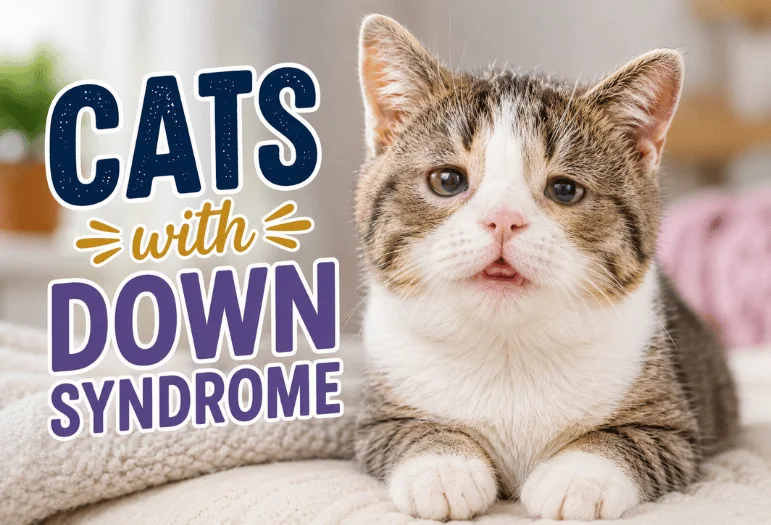
Cats cannot have Down syndrome. The condition is trisomy 21, a third copy of human chromosome 21, and no cat carries a triplicate of chromosome 21. Photos labeled as cats with Down syndrome almost always show a real, diagnosable condition that changes a face or a walk. Those conditions have proper names, and a few of them need a vet this week. Elsewhere on the site: Cat Dog Hybrid.
Chromosome arithmetic comes first here, because that is the part most articles fudge. Below, a table sets each claim against the fact so that you can scan the whole argument in seconds. After that, the useful half: what the wobbly, wide-eyed, flat-faced cat in the video probably has instead.
Myth versus fact, at a glance
| What people say | What is actually true |
| A kitten can be born with Down syndrome | An extra human chromosome 21 defines it. Felines have no chromosome 21, so the diagnosis cannot exist |
| A flat face and wide-set eyes prove it | Congenital skull and face malformations, which have several separate causes |
| A wobbly, head bobbing kitten has it | That pattern usually means cerebellar hypoplasia, present from birth and non-progressive.e |
| A male calico shows felines get our chromosome disorders | He is genuinely XXY, a real chromosome disorder. Not trisomy 21, and it leaves his face alone |
| The label is harmless | A nickname is not a diagnosis. Several look alike conditions are treatable, and the label delays care |
Key takeaways
- Felines carry 19 pairs of chromosomes. People carry 23 pairs, and pair 21 is the one that matters here.
- Cerebellar hypoplasia explains most of the famous wobbly internet kittens.
- It is not painful, not contagious, and it does not get worse with age.
- Five other conditions produce the same rough look, and two of them are emergencies.
- An odd face or an unsteady walk is a reason to book a neurological exam, not a reason to pick a human label.
Why cats with Down syndrome is a genetic impossibility
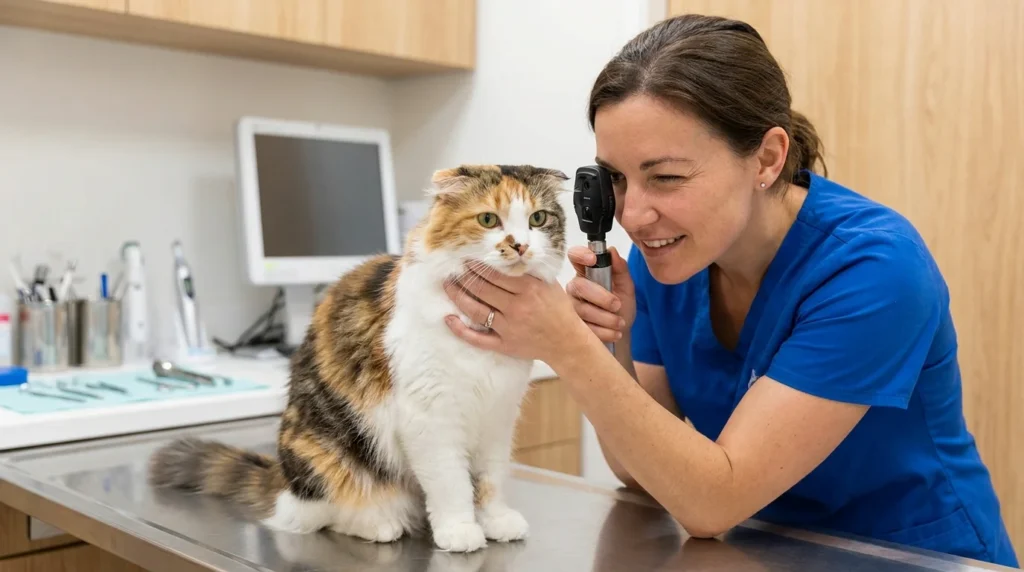
Start with the counts, because they settle it. A person carries 23 pairs of chromosomes, and Down syndrome means a third copy of pair 21. Feline DNA is packaged differently. Researchers assembling the domestic cat genome in a 2021 Journal of Heredity paper recovered 19 chromosome-length scaffolds. That matches the standard felid arrangement of 18 autosome pairs plus the sex chromosomes. Call it 19 pairs, or 38 chromosomes in total.
So there is no pair 21 in a kitten to gain a third copy. The trisomy that defines Down syndrome has nowhere to happen. None. Not in any breed, and not in any individual. For a closer look at this, see Fading Kitten Syndrome.
Notice how often you read that “cats have 19 chromosomes”. That is a copying error passed from page to page. Nineteen pairs, or 38 chromosomes, is the correct figure, and getting it right is what makes this argument checkable rather than something you take on faith.
What the famous “Down syndrome cats” online actually have
Owners of these animals deserve a real answer, not a shrug. Six conditions account for nearly every viral photo, and they separate cleanly once you know what to look at.
| Condition | What you notice | What sets it apart |
| Cerebellar hypoplasia | Wide stance, swaying walk, head bobbing, tremors when reaching for food | Obvious from the first steps, never progresses, no pain |
| Congenital face or skull malformation | Flat bridge, wide set eyes, small ears, uneven jaw | Structural only. Balance and behavior stay normal |
| Feline dysautonomia | Dilated pupils, dry nose and eyes, regurgitation, constipation | Comes on over weeks in a healthy animal. Urgent |
| Head trauma | New clumsiness, circling, seizures, a changed personality | A clear before and after, usually a fall or a car |
| Congenital hydrocephalus | Domed skull, soft spot on top, slow learning, drifting eyes | The head itself is enlarged, not just flattened |
| Infection reaching the developing brain | Any mix of the above, across a whole litter | Littermates share the signs, and the mother went unvaccinated |
Cerebellar hypoplasia, the wobbly kitten
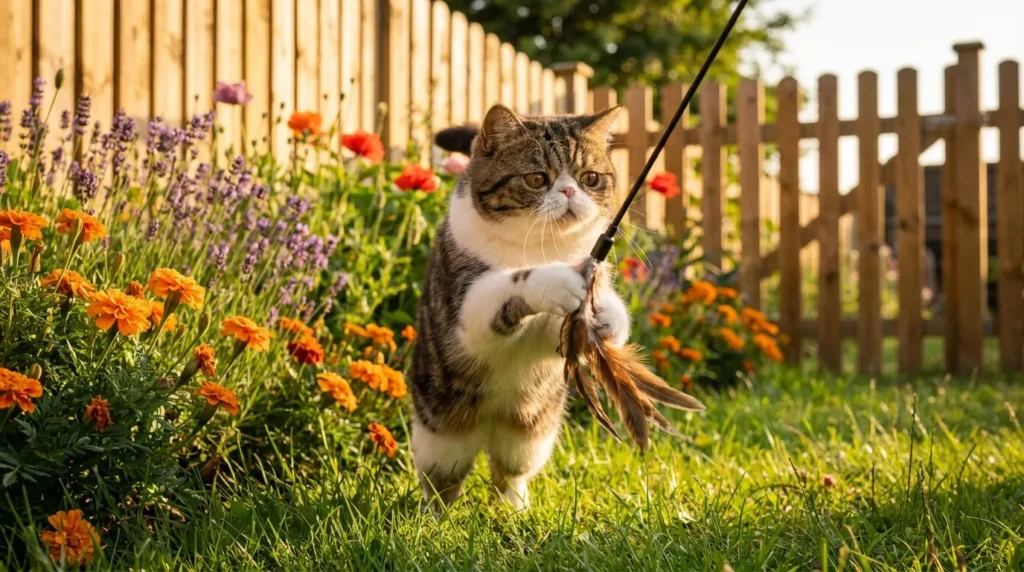
This is the answer most people are hunting for. The cerebellum is the brain’s coordination center, and in these kittens it never finished growing. Feline panleukopenia virus reaching the litter before birth is the usual cause, and it damages that part while it is still forming.
It looks alarming. Mostly it is not. Affected kittens stand with their legs splayed wide, sway as they walk, and bob their heads whenever they concentrate hard on something in front of them. Tremors get worse the moment they try to do something deliberate, like eat.
Four points matter most, and they are the four our cat health articles return to again and again.
- It is present from birth. You see it as soon as the kitten starts walking.
- It is not progressive. Damage already done does not spread.
- It is not contagious to you, to other pets, or to anyone else in the house.
- It causes no pain, and these animals are not distressed by it.
Many of them compensate as they mature and look steadier at a year old than at eight weeks. Keep them indoors, use low-sided litter trays, put food and water somewhere they cannot topple off, and skip the tall cat tree. That is roughly the whole care plan.
Faces and skulls that formed differently
A flat bridge with wide-set eyes is a structural difference, not a syndrome. Monty, the Danish rescue whose photos launched much of this myth, was born without the bone that forms the nasal bridge. His owners have said a vet linked it to a chromosome abnormality. Whatever the mechanism, it was not trisomy 21, and his balance and temperament were normal.
Flat-faced breeding, an injury during birth, or a disruption in the womb can all produce the same look.
Feline dysautonomia
This one is rare, and it is the reason a strange-looking face deserves an actual exam. Also called Key Gaskell syndrome, it damages the autonomic nervous system, the part running pupils, tear glands, gut, and bladder. The MSD Veterinary Manual lists dilated pupils with an absent or delayed light reflex, reduced tear production, a third eyelid across the eye, regurgitation with a widened esophagus, and constipation. You might also like What Is a Group of Cats Called.
In a photo, that staring, dry-faced look reads as “different”. This is a sick animal. The outlook is poor, and the appointment belongs today rather than in a caption.
Head trauma and what it leaves behind
A fall from a balcony or a glancing hit from a car can permanently change how a brain works. Owners describe a personality shift, new clumsiness, circling in one direction, seizures, or an eye that no longer tracks straight.
Timing gives it away. Cerebellar hypoplasia was there from the first week of life, while trauma leaves a clear before and after that the people living with the animal can usually date.
Congenital hydrocephalus
Here, fluid builds up inside the brain and pushes outward, so the skull grows domed and the soft spot on top may stay open. Kittens with it can be slow to learn, unsteady, and prone to eyes that drift down and out.
It matters that this one is sometimes managed. Medication reduces fluid production, and surgeons can place a shunt in selected patients, which is a real reason not to settle for an internet label.
Infections that reach the developing brain
Panleukopenia is the headline example and not the only one. Toxoplasma and other infections in a pregnant queen can damage a litter before birth. Several kittens usually share the problem, often from an unvaccinated mother in a shelter or feral colony.
The chromosome disorder cats really do get
Cats with Down Syndrome: Felines do have their own aneuploidy, and it is the reason a male tortoiseshell or calico is such an event. Coat color patterning in tortoiseshells depends on two X chromosomes, so those coats are normally female. A male wearing one usually carries XX plus a Y, the feline version of Klinefelter syndrome.
Feline genetics texts quote roughly one male in every 3,000 tortoiseshell or calico cats. Almost all are sterile.
It is a genuine extra chromosome. It is not Down syndrome; it is not trisomy 21, and it produces no flat face, no wobble, and no developmental delay. A calico tom is just a cat in an unusual coat. Nothing more.
What to do if your cat looks or moves differently
Book the appointment. Several conditions on this page are treatable or need managing, and the ones that are not still deserve to be named properly so you stop worrying about the wrong thing.
Here is what a vet works through, in order:
- History first: age when you noticed it, whether littermates share it, the mother’s vaccination status, and any fall or accident.
- A physical and neurological exam, testing reflexes, pupil responses, posture, and how the animal places its feet.
- Bloodwork and infectious disease testing, which rules out causes that mimic brain disease.
- Imaging only when the first three leave a question. An MRI can confirm a small cerebellum in a living patient, and a referral hospital handles it.
One thing not to do: treat the internet nickname as a diagnosis. It sounds gentle, and it wastes time, because a dysautonomia case and a hydrocephalus case both get filed under a label with no treatment attached. If your cat has an unusual face or an unsteady walk, get it examined, then read up properly. Our latest pet care posts are a reasonable place to start once you have a name to work with.
The short version
Genetics rules this diagnosis out, and that is not a hedge: nineteen pairs, no pair 21, no trisomy 21. What remains is a handful of real conditions, most manageable and one or two urgent. Call your vet, describe what you see, and let the exam do the labeling.
Frequently asked questions
You cannot, because no vet anywhere diagnoses cats with Down syndrome. Trisomy 21 needs a human chromosome 21, and felines do not have one. What you can do is describe the signs precisely: when they started, whether they are getting worse, and whether the litter shares them.
Monty was born without the bone forming his nasal bridge, which gave him his flat, crooked face. His owners have described a chromosome abnormality behind it. His coordination and personality were unaffected.
Yes. Brain injury, malformation and infection can leave an animal slower to learn or less coordinated. Vets name those as specific neurological conditions, not as a feline copy of a human syndrome.
Not from cerebellar hypoplasia. The condition affects coordination, not sensation, and these animals live full lives indoors. Sudden new wobbliness in an adult is different and needs checking.
Not alone. Poor balance makes climbing and traffic dangerous, so a secure yard or a harness walk is safer.