
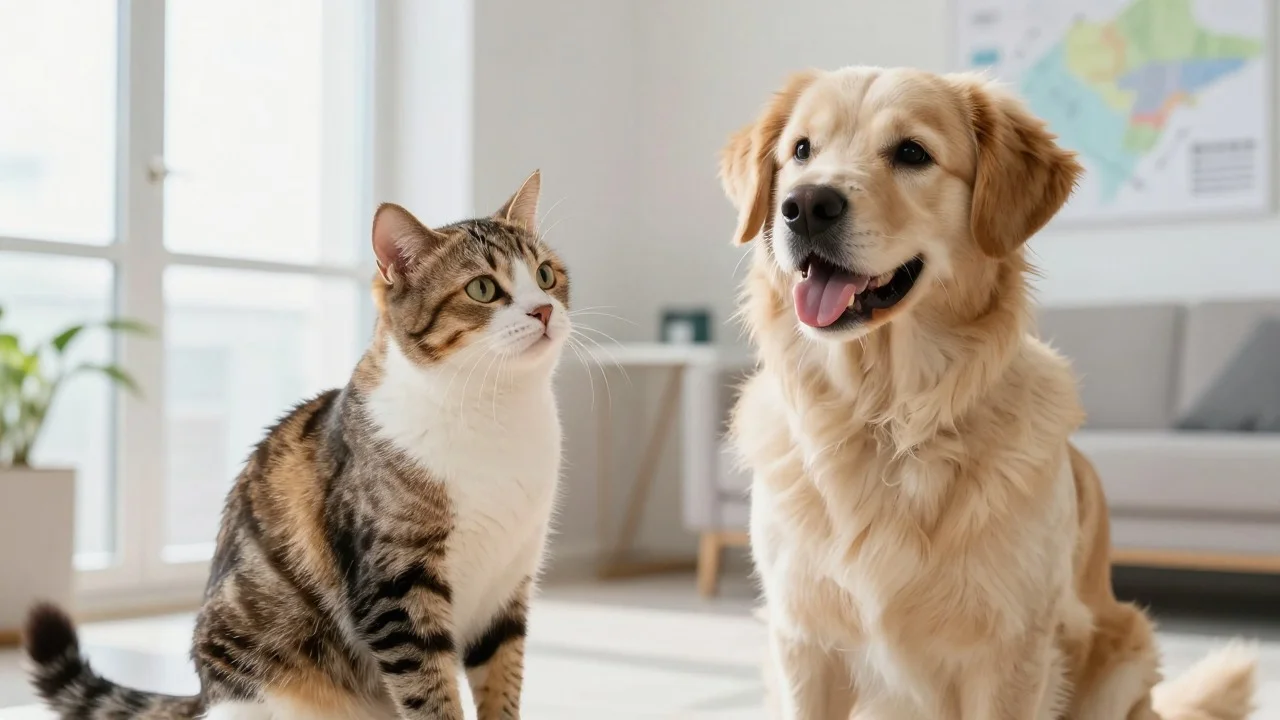
A cat dog hybrid sounds believable enough to keep resurfacing online. Cats and dogs live in the same homes, sometimes form unusually close bonds, and can even develop surprisingly similar looks or behaviors. Add an unusual-looking pet, an edited photo, or an AI-generated image, and the idea of a half-cat, half-dog animal becomes easy to sell.
Science gives a much clearer answer. Domestic cats and dogs are separated by major genetic, chromosomal, and evolutionary differences, so they cannot reproduce with each other and produce hybrid offspring. A real “kuppy,” “ditten,” or other feline-canine cross has never been scientifically verified.
The Short Answer: Is a Cat Dog Hybrid Real?
No. A true cat dog hybrid cannot exist through normal breeding. Domestic cats have 38 chromosomes, while dogs have 78, and the two animals belong to evolutionary lineages separated for roughly 50 million years. Their reproductive genetics are far too different to create a viable feline-canine offspring.
| Question | What the evidence shows |
|---|---|
| Can a cat and dog breed successfully? | No |
| Can they produce a baby together? | No |
| How many chromosomes does a cat have? | 38, arranged in 19 pairs |
| How many chromosomes does a dog have? | 78, arranged in 39 pairs |
| Is a “kuppy” or “ditten” a recognized hybrid? | No |
| Has science verified a genuine cat-dog offspring? | No credible case has been established |
Why Cats and Dogs Cannot Produce a Hybrid
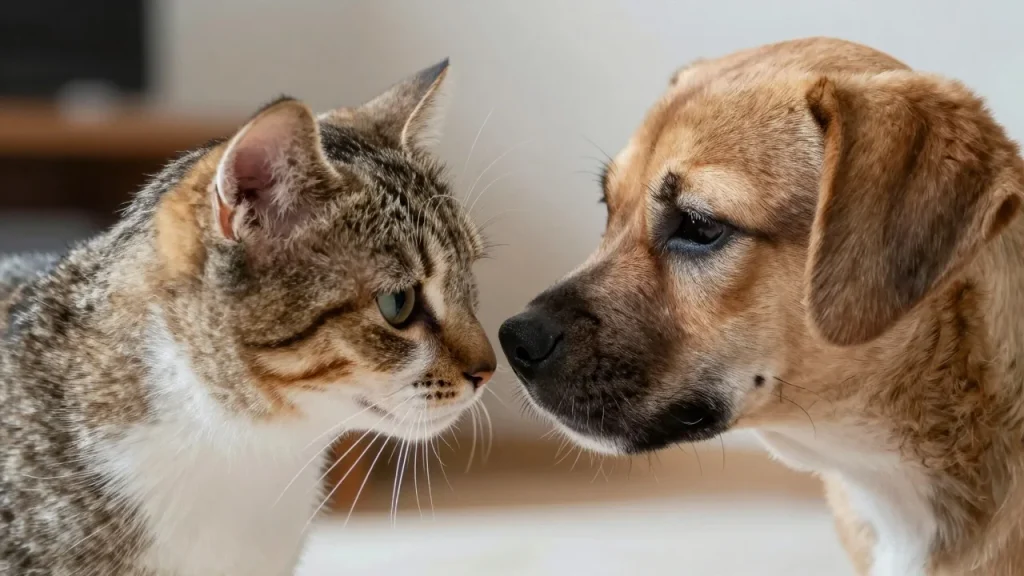
The easiest place to start is genetics. A domestic cat normally has 38 chromosomes, while a domestic dog has 78, and chromosomes contain the DNA needed to build and maintain the animal. Successful reproduction requires far more than sperm reaching an egg; the genetic instructions contributed by both parents must be sufficiently compatible for fertilization, embryo development, and eventually a viable animal.
The chromosome difference is important, but it should not be treated as the only reason. Some closely related animals with different chromosome numbers can produce hybrids, which is why simply comparing 38 with 78 does not tell the entire story. Cats and dogs also have profoundly different chromosome structures and genetic organization, with comparative research documenting extensive rearrangement between feline and canine genomes.
That distinction also explains a related genetics myth Petistra has covered before. Cats cannot literally have the human condition Down syndrome either, because feline chromosomes are organized differently from ours; unusual appearance does not automatically prove the label attached to a viral photo. Pet owners interested in that example can read Petistra’s guide to cats with Down syndrome and the real conditions behind the myth.
Cats and Dogs Are Evolutionarily Too Far Apart
Cats and dogs are both mammals and both belong to the order Carnivora, but that broad relationship does not make them close enough to interbreed. Domestic cats belong to the felid lineage, while domestic dogs belong to the canid lineage. A 2025 study in Proceedings of the National Academy of Sciences describes cats and dogs as evolutionarily separated by about 50 million years.
Fifty million years provides an enormous amount of time for reproductive biology and genomes to diverge. Even though selective breeding has occasionally produced cat and dog breeds with surprisingly similar skull shapes, similarity in appearance does not restore reproductive compatibility. The same PNAS research found striking shape convergence in some breeds while still emphasizing their very different evolutionary origins.
This is why appearance can be misleading in viral “hybrid” pictures. A flat-faced cat may resemble a small dog in certain angles, while a long-haired dog may have a face or movement that viewers describe as feline. Those similarities come from breed variation and convergent traits, not from a hidden cat-dog family tree.
But Horses and Donkeys Make Mules, So Why Not Cats and Dogs?
Mules are a useful comparison because they show that two different species can sometimes produce an offspring when those species remain genetically close enough. A horse has 64 chromosomes and a donkey has 62, producing a mule with 63. The unmatched chromosome set usually makes reproduction difficult, which is why mules are generally sterile.
The important point is that horses and donkeys are much closer relatives than domestic cats and dogs. Hybridization is not a matter of simply combining any two mammals and averaging their features; the parents need a high degree of biological compatibility at many levels. Cats and dogs diverged far too long ago for mating to produce a comparable hybrid.
The same principle applies to well-known feline hybrids. Lions and tigers can produce ligers or tigons because they are closely related big cats, while certain domestic-cat hybrids also involve another member of the feline family. None of those examples provides evidence that a cat can reproduce with a member of the dog family.
What Happens If a Cat and Dog Try to Mate?
A dog may mount a cat, and owners sometimes interpret that behavior as proof that mating between the species is possible. Mounting does not demonstrate reproductive compatibility, however, and the behavior can occur because of excitement, play, stress, social interaction, or sexual arousal. It cannot overcome the genetic barriers separating the two species.
Owners should pay more attention to the animals’ comfort than to the possibility of a hybrid pregnancy. A large dog repeatedly mounting a much smaller cat can frighten or physically injure the cat, so the behavior should be interrupted and the animals separated when necessary. Persistent or sudden behavior changes can also be discussed with a veterinarian or qualified behavior professional.
Similar misunderstandings happen with ordinary behaviors because people naturally assign simple explanations to what they see. Petistra’s guide to why dogs lick people shows how one visible behavior can have several possible causes rather than one universal meaning. The same caution is useful when interpreting unusual interactions between cats and dogs.
Where Did the “Kuppy” and “Ditten” Stories Come From?
The idea is much older than modern AI images. Historical claims of alleged cat-dog offspring have appeared in newspapers and popular stories, including a widely publicized 1970 claim in England involving animals advertised as half cat and half dog. Stories like these attracted attention precisely because they appeared to contradict established biology, but no scientifically demonstrated new feline-canine species emerged from them.
Internet culture gave the myth new vocabulary. Names such as “kuppy,” usually imagined as a kitten-puppy combination, and “ditten” have circulated as playful labels for an animal that supposedly combines the two pets. These are informal fictional terms, not recognized biological categories or established breeds.
Modern image-generation tools make the claim harder to judge at a glance. A picture can now show convincing whiskers, paws, ears, coat patterns, and facial proportions from both animals without depicting anything that has ever lived. An extraordinary-looking image therefore needs biological evidence behind it, not merely realistic pixels.
Why Some Real Pets Look Like a Cat-Dog Mix
Selective breeding has produced enormous physical variation within both domestic species. The 2025 PNAS study found that certain short-faced cat and dog breeds have converged so strongly in skull shape that some resemble one another more closely than they resemble various members of their own broader groups. That is an example of similar traits evolving under similar selective pressures, not genetic mixing between cats and dogs.
Behavior creates another source of confusion. Some cats retrieve toys, follow their owners from room to room, enjoy harness walks, or greet people enthusiastically, while some dogs are quiet, independent, selective about affection, and fond of climbing onto elevated furniture. Calling one of these animals “dog-like” or “cat-like” is a description of personality, not ancestry.
Individual behavior can also vary enormously within the same species. Petistra’s discussion of common reasons cats bite and what each behavior means illustrates how even one familiar feline action can arise from play, overstimulation, fear, pain, or another cause. A quirky personality is therefore a poor genetic test.
How to Check a Viral Cat Dog Hybrid Claim
Start with the source rather than the animal’s face. A scientifically important mammalian hybrid would require documented parentage, veterinary examination, genetic testing, and scrutiny from specialists, not simply a social-media caption saying that a breeder witnessed the birth. An anonymous clip, unusual coat pattern, or owner testimony does not provide that evidence.
Next, look for independent confirmation. Genuine discoveries can be examined by people outside the original claim, and genetic material can be tested instead of relying on appearance alone. When the only evidence consists of recycled photographs, changing backstories, or highly polished images without veterinary documentation, skepticism is justified.
Finally, remember how much natural variation already exists in cats and dogs. Unusual ears, short muzzles, long coats, atypical proportions, congenital differences, and mixed ancestry within the same species can all produce an animal that looks unfamiliar. None requires a biologically impossible feline-canine parentage to explain it.
Can Genetic Engineering Make a Cat-Dog Hybrid?
Genetic engineering can alter individual genes or introduce specific genetic sequences, but that is very different from producing a reproductive hybrid between two distant species. Combining selected DNA in a laboratory would not transform a cat and dog into compatible parents or create an animal that is literally half of each in the ordinary breeding sense. The millions of years of genomic divergence between them involve chromosome organization and development across the whole genome, not one switch scientists can simply turn on.
Future biotechnology will undoubtedly become more sophisticated, but it is important to use the word “hybrid” accurately. A genetically modified organism containing a selected gene from another species would still be conceptually different from offspring produced by crossing those two species. There is currently no credible evidence of a living cat-dog reproductive hybrid.
Frequently Asked Questions About Cat Dog Hybrids
Can a cat and dog have babies?
No, a domestic cat and domestic dog cannot produce babies together. Their genomes, chromosome arrangements, and evolutionary histories are too different for normal hybrid reproduction. A mating attempt does not change that biological incompatibility.
Is a kuppy a real animal?
No scientifically verified “kuppy” exists as the offspring of a cat and dog. The name is an informal term used in jokes, fictional descriptions, viral claims, and discussions of hypothetical hybrids. An animal advertised under that label should not be taken as evidence without independent genetic documentation.
Could a cat become pregnant by a dog?
No, a cat cannot have a viable pregnancy fathered by a dog. The two animals are reproductively incompatible despite both being familiar domestic mammals. If an apparently pregnant cat has spent time around a dog, the dog is not the biological father of her kittens.
Why can lions and tigers breed but cats and dogs cannot?
Lions and tigers are much more closely related to each other and belong to the same genus, Panthera. Cats and dogs come from separate felid and canid evolutionary branches that diverged tens of millions of years ago. Hybridization between certain close relatives therefore does not mean any two mammals can successfully reproduce.
Are pictures of half-cat, half-dog animals fake?
Some may be edited or AI-generated, while others can simply show an unusual-looking real cat or dog. Appearance alone cannot establish hybrid parentage, especially when selective breeding already creates substantial variation in both species. A genuine claim would require verifiable genetic evidence rather than a photograph.
The Bottom Line
A cat dog hybrid belongs to fiction, viral folklore, and imaginative image generation rather than real-world animal breeding. Cats carry 38 chromosomes, dogs carry 78, and the two lineages have been evolving separately for roughly 50 million years, leaving them far too genetically distant to produce offspring together. Real hybrids exist in nature and captivity, but they occur between animals with much closer evolutionary relationships.
The useful lesson is not simply that “cat-dogs are impossible.” It is that unusual appearance and unusual behavior are weak evidence for extraordinary biological claims, especially when genetics can settle the question much more reliably. When a viral animal looks impossible, check the source, look for genetic evidence, and enjoy the picture without mistaking it for a new species.