
Great Pyrenees behavior confuses new owners because the habits that frustrate them are the habits the breed was built for. This is a livestock guardian dog, developed to live out with a flock and decide things alone, with no handler in sight. Read the barking, the roaming, and the flat refusals through that history, and they stop looking like faults. They start looking like a job nobody canceled. More from us: Coyote vs Dog.
The short answer
A Pyr barks, patrols, works nights, screens visitors, and ignores commands because guardian dogs were bred to do all five unsupervised. You manage those instincts rather than removing them. Owners who match their fencing, their noise tolerance, and their training style to that job tend to cope well. Everyone else struggles badly.
Behavior to origin, side by side
| What owners notice | The original job | What it means at home |
| Barking, worst after dark | Warning predators off the flock overnight | Manage the noise, do not expect silence |
| Patrolling, digging, escaping | Claiming and checking a wide territory | Six-foot fencing, leash outside it |
| Ignoring a command it knows | Deciding alone with no shepherd present | Reward cooperation, drop repetition drills |
| Cool reception for visitors | Screening anything new near the flock | Plan social exposure from puppyhood |
| Dozing all day, alert at 2 am | Resting while the shepherd watched | Your dog runs on a different clock |
| Blocking the door with its body | Standing between flock and threat | Teach a settle spot away from entries |
| Hair on everything, twice a year | A coat built for mountain winters | Brush weekly, never shave it down |
| Still goofy at eighteen months | Guardians grow into the work slowly | Full maturity takes two to three years |
Key takeaways
- Every trait on that list is the guardian job still running, not a training failure.
- Barking and roaming are managed by setup, mainly fencing and indoor sleeping, rather than by correction.
- Off leash reliability is a goal to drop, not one to chase with this breed.
- A naturally suspicious dog needs deliberate socialization to be safe with guests.
- Heavy shedding, double dewclaws, and slow maturing all come with the package.
Barking is perimeter work, and night is the shift
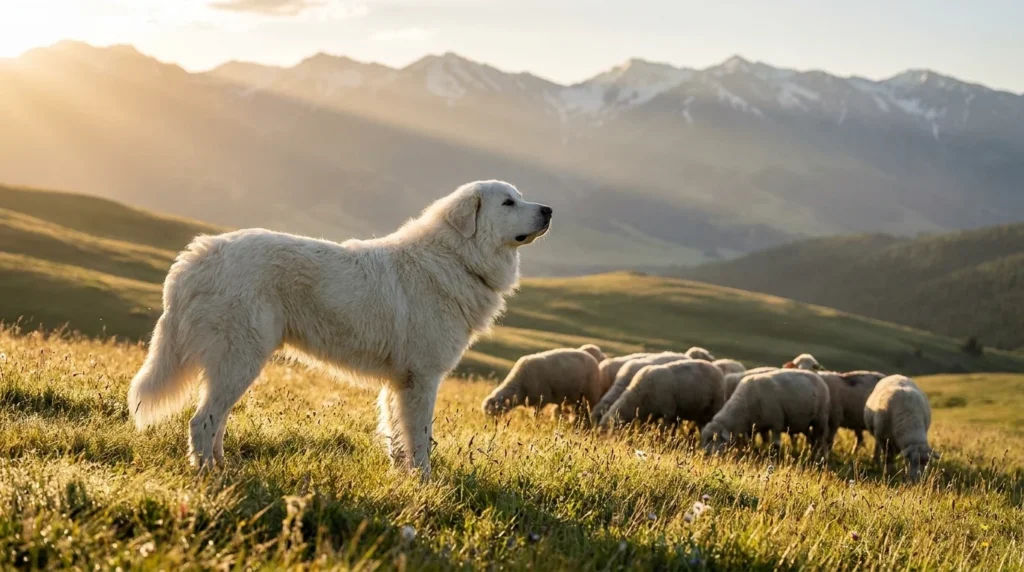
A guardian dog’s first tool is its voice. Barking pushes a predator away before anything physical happens, so the breed announces everything it notices: a car door, a deer at the treeline, a neighbor’s porch light. Volume was the feature. A silent guardian was a useless one.
Barking peaks overnight, and that timing is not random. Predators worked flocks after dark, so the dog worked the dark too. The Great Pyrenees Club of America is blunt: these dogs bark, especially at night, and city owners generally bring them indoors once the sun goes down.
Aim for fewer false alarms instead of quiet. Thank the dog, mark the all clear, then reward the stop. Blocking sightlines with solid fence panels or planting helps more than any correction. If nightly barking would end your lease or your relationship with the neighbors, that settles the question. This is the wrong breed for that home.
Roaming, fencing, and why off-leash stays off the table
Patrolling is territory maintenance. A working Pyr decides where the flock’s safe zone ends and then walks that line, so a suburban yard reads as a starting point rather than a boundary. Given a gap, the dog expands. It is not running away from you. It is going to work.
National Great Pyrenees Rescue recommends a six-foot fence as the minimum. It also warns against buried electric systems, since a heavy double coat blunts the correction and plenty of these dogs push through anyway. Reinforce the base against digging and use latches that a shoulder cannot pop open.
Recall is the other casualty. A dog bred to override instruction at distance will not hold a stay when something moves in the woods. Treat off-leash freedom as unavailable, not as a training project you have not finished yet. Containment is a setup problem more than an obedience problem. If you are still building the rest of the routine, our pet care and training guides cover the everyday side.
Independence was the job, not a training failure
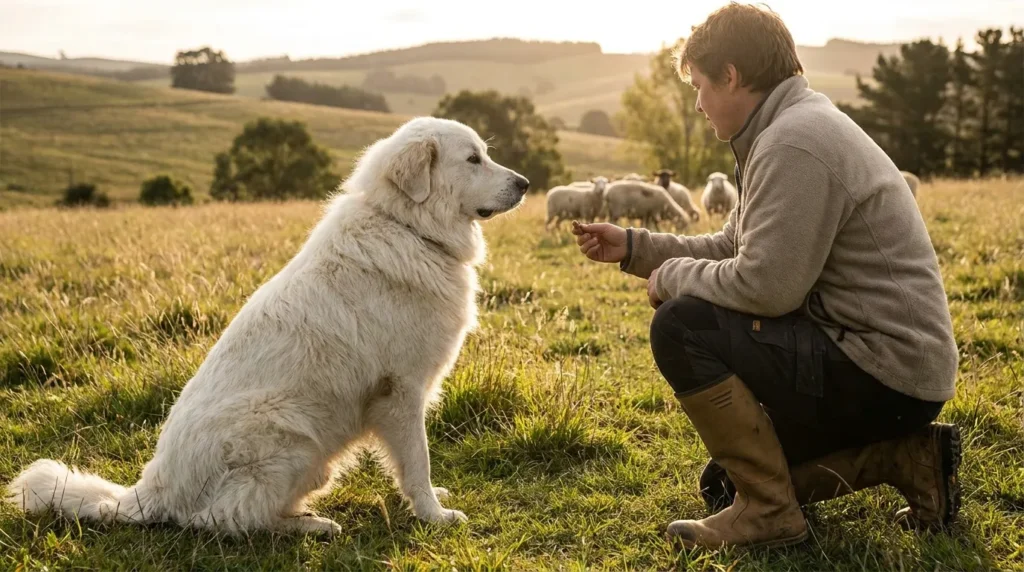
The AKC breed standard describes the Great Pyrenees as strong-willed, independent, and somewhat reserved. That wording is doing real work. Shepherds needed a dog that could judge a threat at 3 am from half a mile away without asking anyone.
So the pause you get after a cue is usually thought, not defiance. Your dog heard you and is weighing whether it agrees. National Great Pyrenees Rescue puts it neatly: because I said so does not cut it with this breed.
What works is cooperation. Short sessions, high-value food, one repetition instead of ten, and a reason the dog can see. What fails is drilling, escalating corrections, or expecting the crisp response a herding breed gives you. Owners who need obedience precision should look at a different group entirely.
Great Pyrenees behavior around visitors and strangers
Guarding here is instinct, not training. The Great Pyrenees Club of America calls the breed a guard dog by instinct rather than by instruction. Nobody has to teach the suspicion, and nobody can uninstall it.
Most Pyrs are not attack dogs. Expect a bark, then a body placed between the visitor and the family, then watchful tolerance once you signal the person is fine. That is still intimidating for a delivery driver or a nervous guest.
Deliberate socialization is the difference between a discerning dog and an unpredictable one. Start in puppyhood, keep exposures calm and frequent, and let the dog observe new people rather than be swarmed by them. Manage doors and gates permanently, since a guardian that has never met the person on the porch is doing exactly what it was bred to do.
The coat, the dewclaws and the slow climb to adulthood
Shedding is constant, with two heavier coat blows a year when the woolly undercoat lets go in clumps. Weekly brushing keeps it manageable. Rescue groups are firm that the coat should never be shaved except for a medical reason. That double coat insulates against heat as well as cold, and shaved regrowth often comes back patchy.
Then there are the feet. The AKC standard requires double dewclaws on each rear leg and lists their absence as a fault, a detail that surprises new owners and occasionally alarms a groomer. Keep those extra nails trimmed, since they touch nothing and will curl into the skin if ignored.
Maturity arrives late. A Pyr can look adult at a year and still act like an adolescent well past two. Breed clubs describe the calm, settled dog as a two- to three-year project. Judge the temperament you will live with by the adults you meet, not by the puppy in front of you.
Feeding, bloat and joints in a giant breed
Size changes the health picture. Deep-chested dogs of this build carry a raised risk of gastric dilatation volvulus, the twisted stomach commonly called bloat. It is a surgical emergency, not a wait-and-see problem. Cornell University’s Riney Canine Health Center puts survival above 80 percent when a case gets prompt medical and surgical treatment. The same center reports that a preventive gastropexy cuts the chance of recurrence to 3 to 5 percent, against as high as 80 percent without one.
Practical steps: split the daily ration into two or more meals, skip the raised bowl, and keep hard exercise away from mealtimes. Ask your vet about a gastropexy during a spay or neuter, which is when most owners of at-risk breeds have it done.
Joints deserve the same attention. Hips and elbows carry 85 to 100 pounds or more. Keep the dog lean, skip forced stair and jumping work in the first year, and buy from breeders who screen. Diet gets argued over hard in giant breeds. If legume-heavy formulas are on your shortlist, read up on peas in dog food and what they actually do first. Heat is the last piece. That coat is engineered for mountain winters, so walk early in summer and keep shade and water available.
Is this breed right for you?
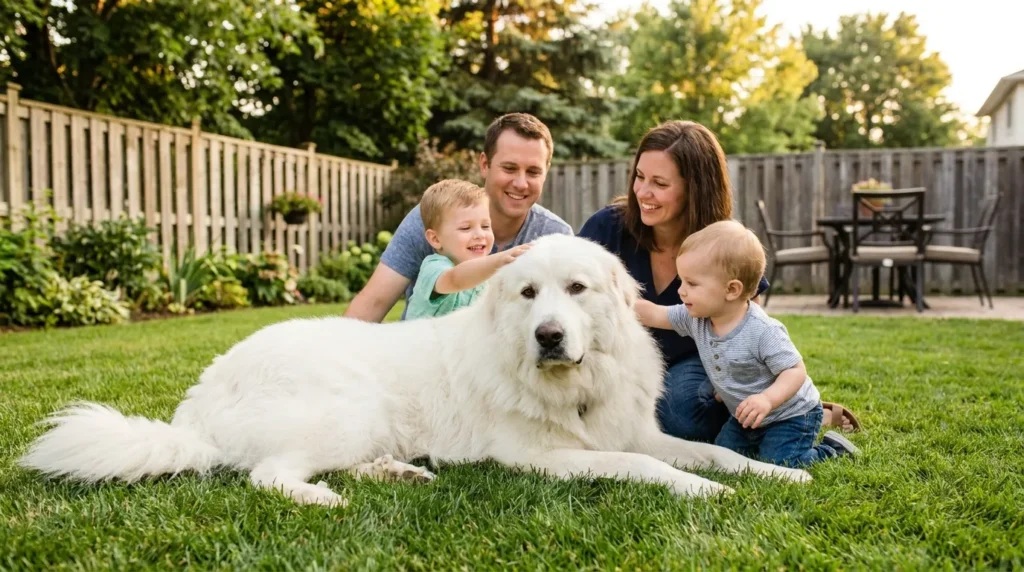
This checklist states plainly which homes suit this breed and which do not. Answer honestly.
- Can your household and your neighbors live with regular barking, including at night?
- Do you have, or will you build, a fully fenced yard at six feet with a secured base?
- Are you fine never walking this dog off leash, anywhere, for its whole life?
- Does a dog that negotiates rather than obeys amuse you or infuriate you?
- Will you commit to socializing a naturally wary dog for years, not weeks?
- Can you handle hair on everything and a vet bill sized for a giant breed?
Six yes answers and you are the home this breed needs. Two or three no answers is a warning to take seriously. Rescues are full of dogs whose owners answered these optimistically. Rural homes, homesteads with stock, and patient owners with real fencing do well. Apartments, shared walls, and anyone wanting an obedient off-leash hiking partner do not.
Where to go from here
Spend an afternoon with adult dogs at a breed rescue before you commit to a puppy. If you have already decided, get the fence up first and plan the feeding routine early, because a giant breed puppy grows faster than most owners expect. Our dog food safety and nutrition guides are a sensible next stop while you sort out the rest.
Frequently asked questions
Night was the working shift for a flock guardian, so darkness raises alertness rather than lowering it. Bring the dog inside overnight, block sightlines to the street, and reward the stop instead of punishing the start.
No, and planning around that is safer than testing it. Independent decision-making beats recall reliably in this breed, so leash and fencing carry the job.
Independent. This breed was selected to act without a handler, so a pause before responding is thought rather than refusal. Cooperative, reward-based training gets far more out of it than repetition.
Often yes, with adult supervision around small children. They are typically gentle and patient with their own family, though their size alone means accidents happen in tight spaces.
They shed year-round and blow coat heavily twice a year. Do not shave it. That double coat regulates heat in summer, and shaving can leave the regrowth thin or patchy.
Most settle between two and three years old. Great Pyrenees behavior in the first year looks far more chaotic than the placid adult you were promised, which is normal for a slow-maturing guardian breed.
Usually, if socialized early and managed at the door. A guardian that has never learned what a normal visitor looks like will treat every one of them as a decision to make alone.