

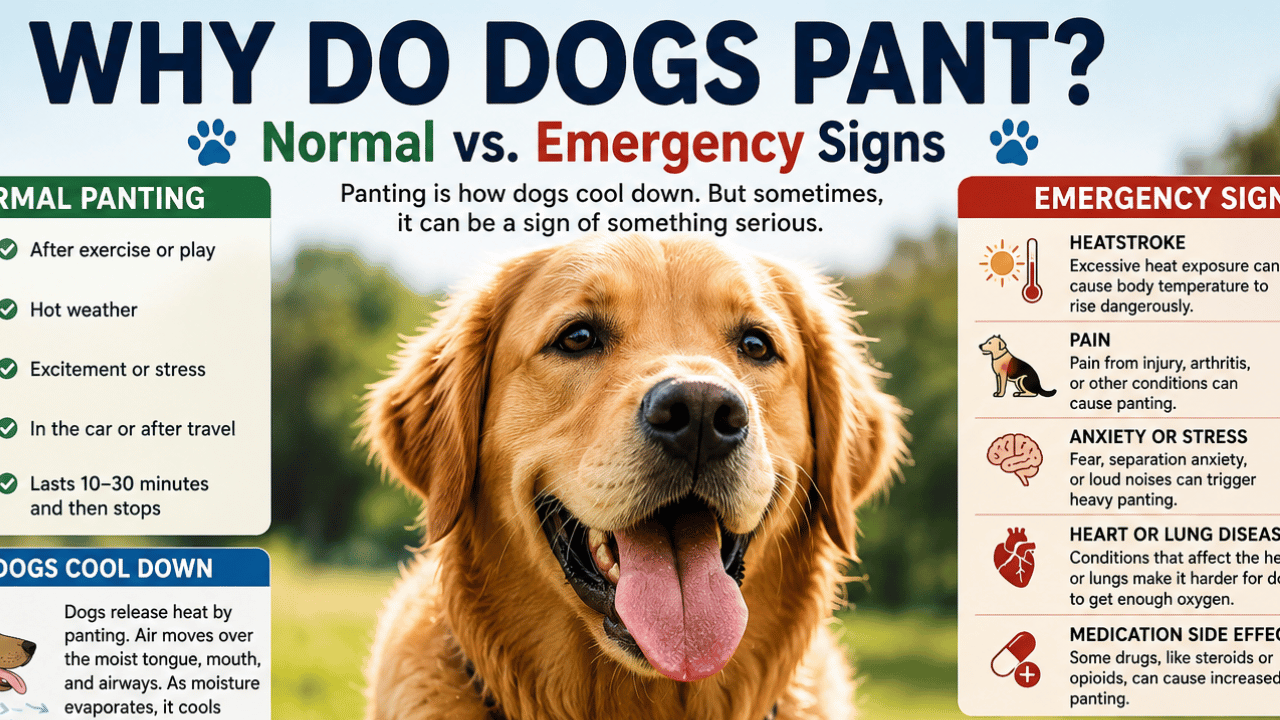
Why do dogs pant? Almost always to cool down, since they can’t sweat their way out of heat the way you can. That mechanism is the easy part. Telling an ordinary episode apart from one that needs a car ride to the vet is the hard part. For a closer look at this, see Littermate Syndrome (2026).
Dogs shed most of their heat by moving air fast over a wet tongue, mouth, and upper airway, so moisture evaporates and carries heat away. Their sweat glands sit mainly in the paw pads and do almost nothing for body temperature. Heavy breathing that has an obvious cause and fades within 10 to 30 minutes is normal.
The Numbers That Matter
| What owners ask. | The figure or rule. |
| Normal body temperature. | 100.5 to 102.5 degrees Fahrenheit. |
| Heatstroke threshold. | 105 degrees Fahrenheit or higher. |
| Resting breathing rate. | Under about 30 breaths a minute while asleep or relaxed. |
| How long a normal episode lasts. | Usually 10 to 30 minutes once the dog is cool and watered. |
| Where the cooling happens. | Evaporation from the tongue, mouth, and upper airway. |
| Where a dog’s sweat glands sit. | Mainly the paw pads, with little effect on temperature. |
| Dogs are at highest risk. | Flat-faced breeds, seniors, overweight dogs, and heart patients. |
| First move in an emergency. | Out of the heat, cool running water, then a vet. |
Key Takeaways
- Normal heavy breathing has a visible trigger and stops soon after the trigger does.
- Breathing that starts at rest, at night, or in a cool room deserves a vet’s opinion.
- Check two things alongside the breathing: the effort behind it and the gum color.
- A temperature of 105 degrees Fahrenheit or above is heatstroke, and the clock matters as much as the number.
- Cool with cool running water, never ice, and go to the vet even after the dog perks up.
How Your Dog Actually Gets Rid of Heat
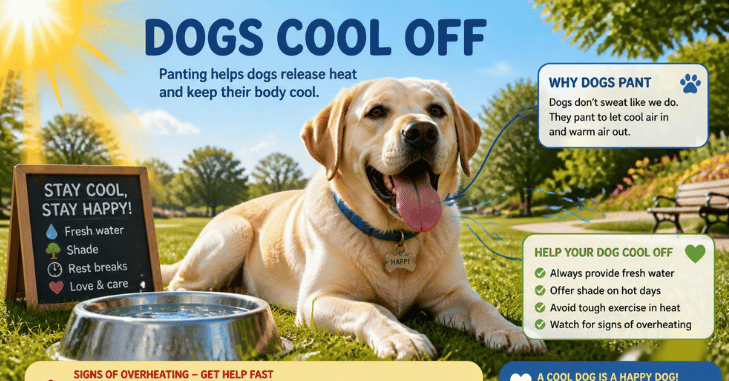
Why Do Dogs Pant? You cool down through skin. Sweat spreads over a large surface, evaporates, and pulls heat out of the blood underneath. Dogs don’t have that option, because their sweat glands are largely limited to the paw pads and a few other hairless spots.
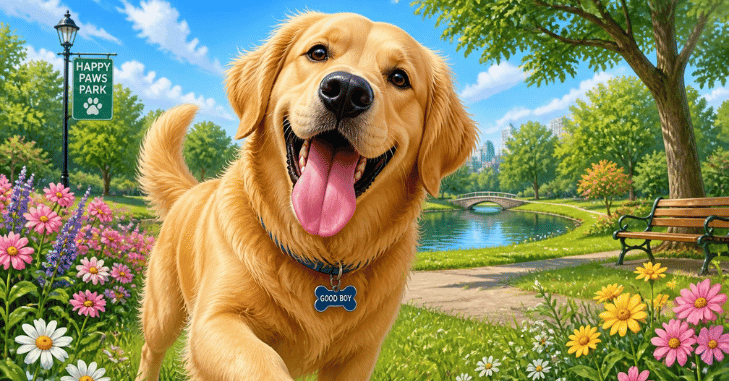
So they use the surface they do have: the wet lining of the mouth, tongue, and airway. Fast, shallow breaths push air across those wet surfaces, moisture evaporates, and heat leaves with it. That’s why the mouth opens, and the tongue hangs out and widens. It’s an air conditioner made of tongue.
Two things make this system fragile. It works far worse in humid air, since damp air absorbs less moisture. And it takes muscular effort, so a dog fighting to cool itself generates more heat while doing it.
The Trigger Test: A Reason and An Ending
Here’s the single most useful habit. Before you worry, look for the trigger.
Normal heavy breathing follows something you can point at: a walk, a hot afternoon, a car trip, the doorbell, or a wrestling match with another dog. Take the trigger away, and it winds down. Shade, still air, a bowl of water, and 10 to 30 minutes later your dog is breathing quietly again.
Anything that fails either half of that test needs a closer look. No trigger, or a trigger that ended an hour ago and the breathing carried on, and you’re no longer watching thermoregulation—recent food counts as a trigger too, which owners forget. A stolen salty snack drives thirst and restlessness. Sodium in a couple of spears is enough to matter, as our breakdown of pickles and dog sodium limits lays out.
Normal versus concerning, side-by-side
Most guides list causes and stop there. This comparison table sets ordinary panting beside the worrying kind, so you can place what you are watching in about ten seconds.
| Ordinary panting. | Panting to take seriously. |
| Follows heat, exercise, or excitement. | Starts at rest, in a cool room, or at 2 am. |
| Settles in 10 to 30 minutes. | Carries on for hours, or never fully settles. |
| Tongue relaxed and wide, breathing easy. | Belly and rib muscles working, elbows pushed out. |
| Gums bubblegum pink. | Gums are pale, white, brick-red, blue, or gray. |
| Quiet. | Raspy, honking, or a harsh noise on the way in. |
| Dog is otherwise itself. | Pacing, hiding, drooling, wobbly, or won’t lie down. |
| Fits the weather and the day. | New this week, with no change in weather or routine. |
Red Flags That Mean Call a Vet Now
Any one of these earns a phone call, not a wait-and-see:
- Gums that are pale, white, brick-red, blue, or gray.
- Visible effort: rib and belly muscles pumping, elbows held away from the body, neck stretched out.
- Noise on the intake of breath, or a honking, raspy sound.
- Collapse, staggering, disorientation, or a seizure.
- Vomiting or diarrhea alongside the heavy breathing, especially after time in the heat.
- Breathing that starts suddenly and never settles in a dog that was fine yesterday.
Pale gums matter because they point at blood, not air. Anemia leaves too few red cells to carry oxygen, so your dog breathes faster to compensate. Some causes are dietary. Onions and garlic damage canine red blood cells directly, and the signs of garlic toxicity in dogs include pale gums and fast breathing days after the meal.
Why Do Dogs Pant When Nothing Has Made Them Hot?
This is the version that brings people to a search bar at midnight. Heat is off the table, your dog hasn’t moved, and the breathing won’t stop. Several things sit behind that picture.
Pain
Pain is the most under-diagnosed cause on this list. A dog with a sore back, an aching hip, a dental abscess, or a swollen abdomen often pants steadily and refuses to settle. Look for pacing, a reluctance to lie down, or a dog that lies down and gets straight back up.
Anxiety and stress
Fear produces the same picture: rapid breathing, drooling, dilated pupils, and a lowered body. Thunderstorms, fireworks, car rides, and vet waiting rooms are the classics. Separation anxiety shows up as heavy breathing that starts within minutes of you leaving and stops when you’re back.
Heart and Lung Disease
A failing heart or diseased lungs mean less oxygen per breath, so your dog takes more breaths. Coughing, tiring on short walks, and a sleeping breath rate creeping above 30 a minute all point this way. Diet enters the conversation here too, because of the open questions about grain-free formulas, which our guide to peas and canine heart disease goes through in detail.
Cushing’s Disease
Too much cortisol thins the muscles that drive breathing and lays fat around the chest. Classic patients are middle-aged or older dogs that drink more, pee more, eat more, grow a pot belly, lose their coat, and pant at rest. Blood tests sort it out.
Laryngeal paralysis
Cartilage flaps at the top of the windpipe stop opening properly, so air struggles through a narrowed gap. Older large-breed dogs are the usual patients, Labradors above all. The tell is sound: a harsh, roaring noise on the way in, worse in heat and worse with excitement. These dogs overheat quickly, because their cooling route is the same route that’s blocked.
The Prescription You Just Started
Drugs are the cause owners rarely connect. Steroids such as prednisone produce noticeable panting in many dogs, and opioid painkillers do the same. Did the breathing change within days of a new medication? That’s your first suspect. Don’t stop the drug yourself. Call the prescribing vet and describe the timing.
Heatstroke: the version Where Minutes Matter
Everything above can wait for an appointment. This one can’t. According to the Riney Canine Health Center at Cornell University College of Veterinary Medicine, a dog’s normal temperature runs between 100.5 and 102.5 degrees Fahrenheit. Heatstroke starts at 105 degrees or higher. Cornell also warns that prolonged high temperatures damage every organ in the body, commonly causing acute kidney injury, clotting problems, and shock. Damage tracks duration as well as height, so 40 minutes at 105 degrees can do more harm than a brief spike to 106.
Suspect heatstroke and do this in order:
- Get your dog out of the heat: shade, an air-conditioned room, or anywhere cooler.
- Start cooling immediately with cool running water over the whole body, from a hose or a shower.
- Skip the ice and the ice baths. Very cold water tightens surface blood vessels and slows heat loss.
- Add moving air with a fan or an open car window, because evaporation does the work.
- Offer small drinks of cool water if your dog is alert enough to swallow.
- Call the vet while you cool, then go, even if your dog looks fine again.
That last step is the one people skip. Kidney injury and clotting failure can show up hours after the temperature came down and the dog seemed to bounce back.
Flat-Faced Breeds Pant Harder For Less Cooling
Pugs, French Bulldogs, English Bulldogs, Boston Terriers, and Boxers run the same cooling system through a shortened, crowded airway. Vets call these breeds brachycephalic. Narrow nostrils, a long soft palate and a tight windpipe mean more effort per breath and less air moved. That effort itself makes heat.
Researchers have measured this risk rather than assumed it. A 2020 study of UK primary care records, published in Scientific Reports, found flat-faced dogs had roughly twice the odds of heat-related illness. Hall, Carter, and O’Neill put that odds ratio at 2.10 against medium-muzzled dogs. Their paper also reported a fatality rate of 14.18 percent across heat-related illness events. Own one of these breeds? Treat warm days as a planning problem. Walk early, walk late, and accept a shorter route in July.
What To Do Next?
Why Do Dogs Pant? Spend a week learning your dog’s baseline. Count breaths while they sleep, look at their gums in good light, and note how long they take to settle after a walk. Baselines make changes obvious, and a change you can describe is far more useful to your vet than a vague worry.
Then keep reading. Our dog and cat care hub covers the everyday health questions that sit next to this one, from diet risks to behavior changes to keep an eye on.
Frequently Asked Questions
Usually a mix of heat and nerves. Cars get hot fast, and many dogs find motion, noise, and confinement stressful. Crack a window, run the air conditioning, and watch for drooling or trembling, which point to anxiety rather than temperature.
Somewhat, since senior dogs carry weaker breathing muscles and more arthritis. Aging doesn’t explain a new, persistent change, though. In a dog over eight, a fresh habit of breathing hard at rest is a reason to book a check, not to shrug.
Remove the cause rather than the symptom. Cool your dog, offer water, quiet the room, and give the episode 10 to 30 minutes. Breathing that doesn’t respond to those things isn’t asking to be stopped; it’s telling you something.
Yes. Excitement raises heart rate and body temperature, so a dog greeting you at the door often breathes hard for a minute or two. Loose body, wagging tail, quick recovery: that’s the happy version.
Above 80 degrees Fahrenheit, be careful with any dog, and skip midday walks with a flat-faced one. Humidity matters as much as the reading. Press the back of your hand to the sidewalk for seven seconds, and if you can’t hold it there, neither can their paws.