
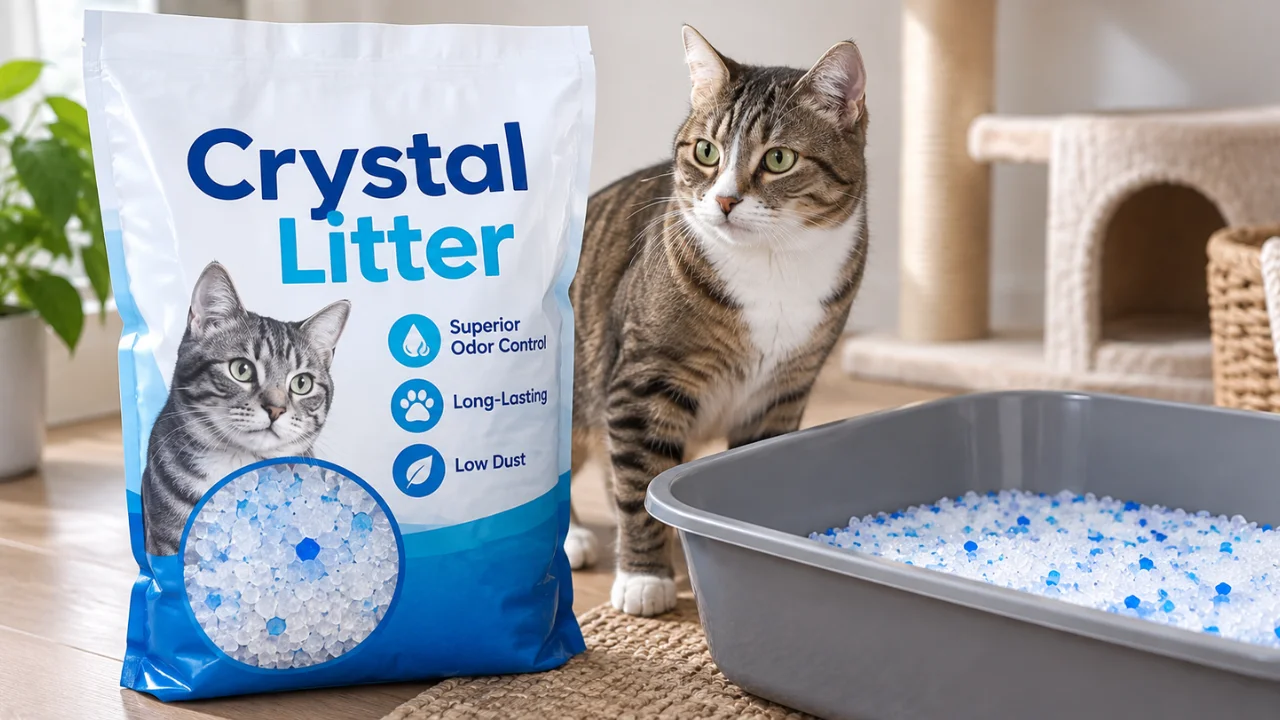
Crystal litter can make litter-box care lighter, drier, and less dependent on scooping urine clumps. Most products use porous silica gel granules that absorb liquid while you remove solid waste separately. The trade-off is that some cats dislike the coarse feel, and saturated crystals can hide changes in urine output. You might also like Pine Pellet Litter for Cats.
Crystal litter is silica gel cat litter that absorbs urine into porous granules instead of forming clay clumps. It can reduce daily scooping and keep boxes drier, but texture, dust, cost, and urine monitoring still matter. The right choice depends on your cat’s comfort and your cleaning routine.
| Question | Short answer |
|---|---|
| What is it made from? | Porous silica gel, usually in bead or crystal form. |
| Does it clump? | Most formulas do not; they absorb urine instead. |
| Daily care | Remove solid waste and stir the granules. |
| Full replacement | Follow the product label and replace sooner when odor or saturation appears. |
| Main advantages | Lightweight, strong moisture control, and less urine scooping. |
| Main drawbacks | Texture rejection, higher price, variable dust, and less visible urine volume. |
This summary reflects current veterinary guidance and common silica-gel litter instructions. Most formulas absorb urine rather than forming clay clumps, while care intervals vary by product. Your cat’s comfort and the product label should guide use.
Key takeaways
- Silica gel granules absorb urine rather than forming traditional clay clumps.
- Most cats still need solid waste removed daily and the litter stirred regularly.
- Cats generally prefer fine, unscented material, so texture can determine whether a switch succeeds.
- Low-dust claims vary by formula, and some crystal products still create noticeable dust.
- Health-monitoring colors can prompt attention, but they do not diagnose urinary disease.
How silica gel cat litter works
Silica gel contains many tiny pores that hold moisture inside the granules. That structure lets the material absorb urine without swelling into the hard clumps bentonite clay makes. Solid waste remains on top, so you still need to remove feces every day.
Veterinary sources describe silica-based litter as an absorbent, non-clay option with odor-control benefits. The material is related to desiccant silica gel used to manage moisture in packaging. Cat-litter formulas are made for tray use, not for eating or chewing.
Is crystal litter safe for cats?
Standard silica gel litter is generally considered non-toxic for healthy adult cats when it is used as directed. That does not mean swallowing a large amount is harmless, especially for cats that eat non-food items. PetMD notes that ingested litter can cause stomach problems, and some formulations may increase the risk of blockage.
The ASPCA reports that silica gel can cause gastrointestinal upset after ingestion. A swallowed packet can rarely obstruct the intestinal tract, so non-toxic does not mean edible. Call your veterinarian after substantial ingestion or if vomiting, diarrhea, or unusual behavior develops.
Why some cats accept silica crystals and others refuse them
Cats often prefer soft, fine, unscented material under their paws. AAFP and ISFM guidance recommends fine, sand-like, non-scented litter for many cats with house-soiling problems. Cornell also says most cats prefer unscented, fine-textured litter, although individual preferences still matter.
That preference explains why large, sharp-feeling granules can fail even when odor control is strong. Microcrystal products may feel closer to sand, while larger beads can feel unfamiliar or rough. Your cat’s behavior is a better acceptance test than the package claims.
Watch for hesitation, edge-perching, quick exits, or elimination beside the box after a change. Those behaviors can indicate texture aversion, dirty litter, box problems, or a medical issue. Petistra’s litter box enclosure guide also explains why box size and ventilation can affect use.
Silica crystals versus clumping clay and plant-based litter
| Feature | Silica crystals | Clumping clay | Plant-based litter |
|---|---|---|---|
| Urine handling | Absorbs into granules | Forms scoopable clumps | Usually clumps, depending on material |
| Weight | Usually light | Usually heavy | Often lighter than clay |
| Texture | Coarse beads to microcrystals | Often fine and sand-like | Fine grains to pellets |
| Urine monitoring | Volume is harder to see without clumps. | Clump size can show changes. | Depends on clumping strength |
| Disposal | Trash: not biodegradable | Trash; mineral-based | Varies by product and local rules |
Compared with clumping clay, silica litter usually asks you to stir instead of scoop urine. That can reduce daily handling, but it also removes a simple visual measure of urine volume. Owners monitoring urinary health may prefer a litter that clearly shows each wet clump.
Plant-based litter can offer lighter bags and biodegradable materials, but performance varies by ingredient and formula. Clay usually offers stronger clumps and a familiar texture for many cats. Petistra’s cat litter comparison covers these categories side by side.
How to use silica litter without creating odor problems
Start with a clean, dry box and follow the depth listed on the product package. Scoop solid waste at least once daily, because absorbed urine does not remove feces. Gently stir the remaining granules so wetter areas mix with drier material.
Do not wait for the box to smell strongly before checking saturation. Darker, wetter granules, pooling liquid, or returning ammonia odor usually mean absorption is declining. Replace the full tray when the product reaches its stated limit, or sooner if those signs appear.
How long does a tray last?
No single replacement interval fits every home. Product directions vary by granule type, box size, cat size, and the number of cats using the tray. A single-cat box often lasts longer than a shared box, but the label should guide your schedule. Use the condition, not the calendar, as your final decision point.
Persistent odor, wet material, urine pooling, and poor absorption show that the granules are saturated. Replace sooner if your cat starts avoiding the tray before the advertised interval ends.
What about kittens and cats that eat litter?
Young kittens explore with their mouths, so choose litter with extra care. PetMD warns that eating silica litter can create gastrointestinal problems, especially with larger amounts. A paper-based non-clumping option can be easier to manage for kittens that still chew their bedding.
Petistra’s 8-week-old kitten care guide recommends a cautious non-clumping choice when a young cat tastes litter. That approach prioritizes safety while the kitten learns consistent box habits. Ask your veterinarian before changing materials if chewing continues.
Adult cats that repeatedly eat litter also need attention beyond a product swap. Pica can have behavioral or medical causes, and frequent ingestion can make any litter risky. A veterinary exam is the safest next step when the behavior persists.
Health-monitoring colors are prompts, not diagnoses.
Some silica products change color in response to urine chemistry. That feature may help you notice a change, especially when the litter looks different from its usual pattern. It cannot identify the cause of the change or replace diagnostic testing.
Watch the cat as closely as the color chart. Repeated box visits, straining, crying, blood, or producing little urine can signal urinary disease. Petistra’s male cat anatomy guide explains why obstruction can become an emergency in male cats.
How to switch without triggering box avoidance
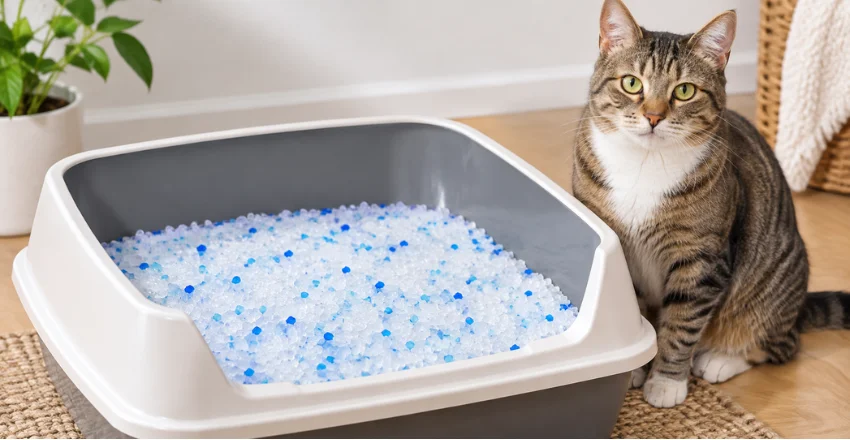
Change the substrate gradually unless your veterinarian gives different instructions. Keep the box location, size, and cleaning routine stable while the material changes. That way, your cat only needs to judge one new variable.
- Place a second box with the new material beside the familiar box.
- Keep both boxes equally clean for several days.
- Watch which texture your cat chooses without forcing a preference.
- If acceptance is good, gradually reduce access to the old material.
- If accidents begin, restore the familiar option and check for medical causes.
A side-by-side test is often clearer than mixing two materials together. It lets your cat show a preference without changing how either product performs. Sudden avoidance, straining, or repeated accidents should trigger a veterinary check before more experiments.
When silica litter makes sense, and when it does not
Silica litter can suit owners who want light bags and less urine-clump scooping. It also works well when the cat accepts the texture, and the owner keeps up with stirring. Unscented, finer-grained formulas may improve acceptance for cats that dislike coarse beads.
Choose another material if your cat refuses the texture or keeps eating the granules. A clumping litter may also be better when you need to monitor urine volume closely. Paper-based products can be useful for some young kittens or cats needing a softer temporary substrate.
Your next step
Choose one unscented formula with a particle size your cat is likely to tolerate. Test it beside the current litter and watch behavior before changing every box. Then compare your results with the broader litter options before buying the next bag. A good litter choice should make care easier without making the box less comfortable.
Your cat’s consistent use matters more than any odor-control claim on the package. If urinary behavior changes, call your veterinarian instead of waiting for the litter to explain it.
Frequently asked questions
How often should you change crystal litter?
Follow the specific product label, because formulas and recommended depths differ. Replace it earlier if odor returns, urine pools, or the granules stay visibly wet. Multi-cat boxes usually saturate faster and may need more frequent full changes.
Does silica gel litter clump?
Most standard formulas do not create clay-like urine clumps. The granules absorb liquid, while you scoop solid waste and stir the remaining material. Some hybrid products behave differently, so read the package before assuming the cleaning method.
Is silica litter better for odor control?
Silica gel can control urine odor well because it traps moisture inside porous granules. Performance drops when the material becomes saturated or isn’t maintained properly. Daily solid removal and regular stirring still matter for a clean box.
Can you flush silica cat litter?
Do not flush silica litter unless the manufacturer specifically says the product is flushable. Standard mineral crystals do not biodegrade like many plant-based materials. Trash disposal is the safer default for most U.S. households.
What should you do if your cat stops using the box after switching?
Restore a familiar litter option and check the box for cleanliness, size, and access problems. If avoidance continues, schedule a veterinary exam because urinary pain can look like litter rejection. Do not punish accidents, because that can add stress without fixing the cause.