
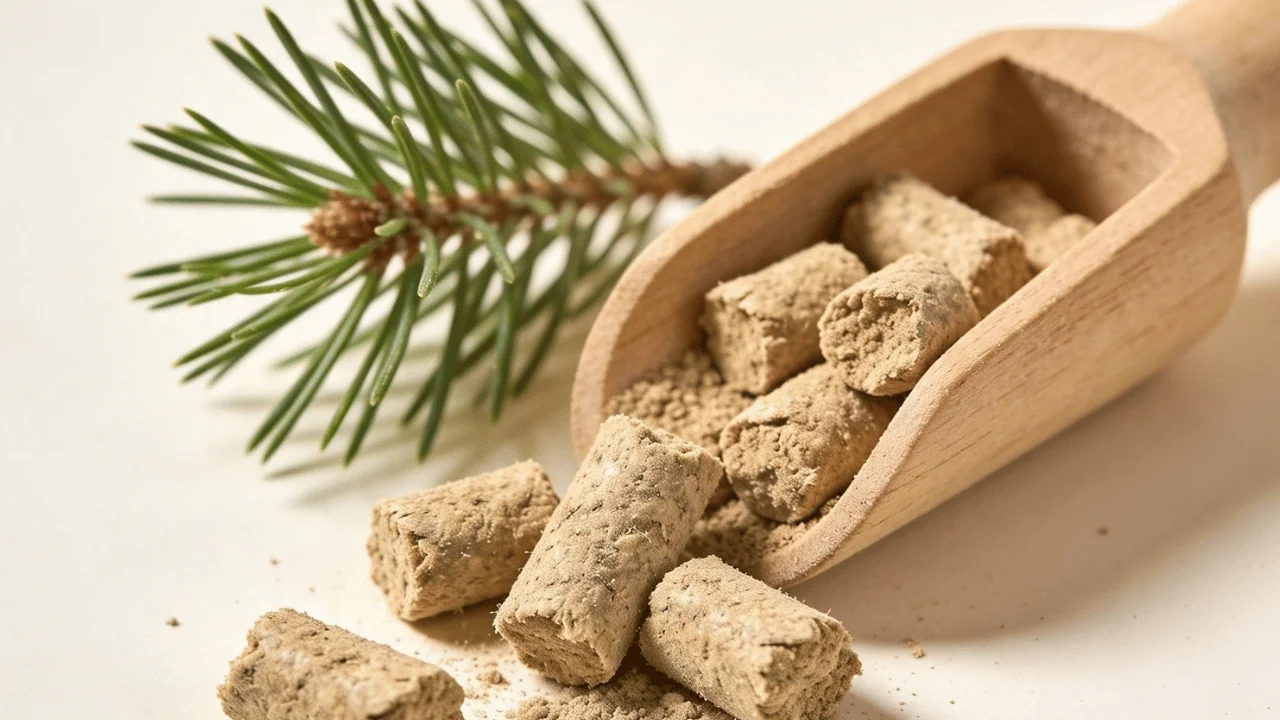
Pine pellet litter is a non-clumping cat litter made from compressed pine fibers or sawdust. The pellets absorb urine and break down into loose sawdust. You remove solids, manage the spent sawdust, and add fresh pellets as needed.
It can be a practical choice for homes that want less scattered litter and less dust. The tradeoff is texture, because many cats prefer fine, unscented, clumping material. A gradual switch matters more than any marketing claim.
| Question | Quick answer |
|---|---|
| How does it handle urine? | Pellets absorb liquid and break into sawdust. |
| Does it clump? | Traditional pellets do not; some wood litters use separate clumping formulas. |
| Does it track? | Usually less than fine litter, although sawdust can escape. |
| Is it right for every cat? | No. Texture and scent preferences vary. |
| Easiest setup | A sifting box, plus daily solid-waste removal. |
| Main caution | Do not force a cat that avoids the new substrate. |
Pine pellets absorb urine, soften, and eventually break into sawdust instead of forming hard clumps. They can reduce tracking because the pieces are larger than fine-grain litter. They work best for cats that accept the texture and owners who do not mind sifting or removing spent sawdust.
Key Takeaways
- Pine pellets behave differently from clumping clay, so the cleaning routine changes.
- The larger pieces can reduce tracking, although broken sawdust can still escape the box.
- Many cats prefer finer litter, so acceptance should come before convenience.
- A sifting box can make daily maintenance easier, but a standard box can still work.
- Choose products clearly labeled for cat litter or suitable animal bedding, not unknown fuel pellets.
How Pine Pellet Litter Works
Most non-clumping pine products start as compressed wood fibers formed into small cylinders. Feline Pine says its original formula uses reclaimed, kiln-dried pine shavings from lumber production. Its pellets absorb urine and gradually break apart as they become wet.
That breakdown is the main difference from clumping clay. Clay surrounds urine and forms a removable clump, while pellets change into loose material. Your routine therefore focuses on removing feces and separating fresh pellets from used sawdust.
Pine Litter Benefits and Drawbacks
The strongest advantages are practical rather than magical. Large pellets usually travel less easily on paws, and many branded products are sold as low-dust. The main disadvantages are a harder texture, non-clumping cleanup, and possible rejection by texture-sensitive cats. Petistra’s best cat litter guide compares these tradeoffs with other common litter types.
Pros
- Larger pieces can reduce tracking around the box.
- Many commercial products create less pouring dust than fine clay.
- Wood fibers are lightweight compared with many clay products.
- Non-clumping pellets can be simple to manage with a sifting setup.
- Some products use reclaimed lumber byproducts instead of newly mined mineral material.
Cons
- Many cats prefer fine, sand-like litter instead of firm pellets.
- Wet pellets become sawdust rather than neat, scoopable clumps.
- Some cats dislike the natural wood scent or coarse feel.
- Older cats with painful joints may find hard pellets uncomfortable.
- A sifting routine feels unfamiliar if you have always used clumping litter.
Is Pine Litter Safe for Cats?
Commercial pine products marketed for cats are designed for feline litter boxes. Feline Pine states that its original litter uses kiln-dried reclaimed pine and contains no synthetic perfume. That does not mean every wood pellet sold for another purpose is interchangeable.
Do not assume stove-fuel pellets are a suitable substitute because they look similar. Products made for another purpose may follow different ingredient or manufacturing specifications. Choose cat litter or suitable animal bedding with clear ingredients and no unexplained additives.
How to Use Pine Pellets in a Litter Box
Start with a clean, dry box and a shallow layer of pellets. One inch is enough for some non-clumping products, although directions vary by brand. Check the package first because clumping wood litter follows a different routine.
- Fill the clean box with the amount recommended by the manufacturer.
- Remove feces at least once daily so solid waste does not sit uncovered.
- Let urine-soaked pellets break down instead of searching for a clay-style clump.
- Sift or separate spent sawdust according to your box design and product directions.
- Add fresh pellets as the clean layer becomes thinner.
- Wash and fully refresh the box before odor or damp material builds up.
A sifting litter box can make the separation step easier. The upper tray holds intact pellets while smaller sawdust falls below during gentle sifting. A standard open box also works if you can remove spent material without discarding too many clean pellets. Petistra’s litter box enclosure guide can help when box size or furniture placement also matters.
How Often Should You Clean Pine Litter?
Remove feces every day, and check the box for damp or saturated material during the same routine. There is no universal full-change schedule because box size, cat count, diet, and product design all affect use. Replace the contents when the product directions say to do so or the box cannot stay clean and dry.
The box itself also needs regular washing with mild, cat-safe cleaning methods. Strong fragrances can make a litter area less appealing to some cats. Keeping the box clean matters more than trying to cover odor with perfume.
Pine Pellets vs. Clumping Clay
Neither material wins every category. Pine pellets favor low tracking, lighter handling, and a sifting-style routine. Clumping clay favors familiar texture and fast removal of urine clumps.
| Feature | Pine pellets | Clumping clay |
|---|---|---|
| Urine handling | Absorbs liquid and breaks into sawdust | Forms scoopable clumps |
| Daily routine | Scoop solids and manage sawdust. | Scoop urine clumps and solids. |
| Texture | Large and firm | Usually fine to medium grain |
| Tracking | Often lower because pieces are larger | Varies, but fine grains can travel farther. |
| Dust | Often marketed as low-dust | Varies widely by formula |
| Cat acceptance | Can be harder for some cats | Fine, unscented types are widely preferred. |
| Best box style | Sifting boxes are convenient. | The standard scoopable box works well. |
Feline behavior guidance gives clumping litter one important advantage. AAFP and ISFM guidance says cats generally prefer fine, unscented, clumping substrates. That preference can outweigh your reasons for choosing a cleaner floor.
Will Your Cat Use Pine Pellets?
Some cats accept pellets quickly, while others object to the smell, size, or feel. Veterinary guidance recommends respecting individual litter preferences rather than forcing one substrate. A second box lets your cat show a preference without losing access to a familiar toilet.
Switch gradually if your cat has used fine litter for years. Put the new material in a separate box, or follow the transition directions on the chosen product. Keep both options clean while your cat learns the new texture and routine.
Watch behavior during the change instead of watching only the floor. Hesitation, balancing on the box edge, or eliminating elsewhere can signal litter aversion. Petistra’s guide to why female cats spray covers the triggers behind a sudden change in bathroom habits. Straining or producing little urine can be especially urgent in males, as Petistra’s male urinary anatomy guide explains.
Who Is a Good Candidate for Pine Pellets?
This litter can suit a healthy adult cat that readily accepts coarser substrates. It can also suit owners who value less tracking and do not mind a sifting routine. The cat’s comfort should remain the deciding factor.
Consider another substrate if your cat has sore paws, mobility problems, or a strong preference for fine litter. Older cats with degenerative joint disease may find firm pellets less comfortable. A veterinarian can help when pain or urinary problems are already part of the picture.
What Should U.S. Shoppers Look for When Buying Pellets?
Start with products labeled for cats or appropriate animal bedding. Read the ingredient list and avoid products with added fragrance or unclear materials. If a product is sold as fuel, do not assume it meets pet-use requirements.
Also check whether the product is clumping or non-clumping before buying. Wood-based clumping litter behaves differently from traditional compressed pellets. Matching the product to your preferred cleaning routine prevents most setup mistakes.
Frequently Asked Questions
Is pine pellet litter safe for cats?
Commercial products made and labeled for cat litter can be appropriate for many healthy cats. Follow the package directions and avoid assuming unrelated fuel pellets are equivalent. Stop using any substrate that causes avoidance, irritation, or other concerning changes.
Does pine litter control odor?
Pine fibers absorb moisture, and branded products may make specific odor-control claims. Odor performance still depends on cat count, diet, box size, and cleaning frequency. Remove feces daily and replace saturated material before smell becomes the signal to clean.
Do pine pellets track less than clay?
Large pellets are less likely to cling to paws than very fine grains. Broken sawdust can still escape, especially around busy boxes or vigorous diggers. A mat and a high-sided box can help contain what leaves the tray.
Can kittens use pine pellets?
A young kitten needs an easy-entry box and a litter texture it will use consistently. Petistra’s eight-week-old kitten guide recommends watching chewing behavior and using a cautious litter choice during this stage. Ask your veterinarian about the best substrate if a kitten mouths litter or has medical needs.
What if my cat stops using the litter box after switching?
Restore access to a familiar, clean litter box rather than forcing the change. House-soiling can reflect litter aversion, stress, pain, or urinary disease. Seek veterinary care promptly if you see straining, frequent small urinations, blood, crying, or little urine.
A Better Switch Starts With Your Cat
Pine pellets can be useful when your cat accepts them and your cleaning routine fits the way they break down. They are not automatically better than clay, and a cleaner floor does not matter if the cat avoids the box. Treat the first bag as a trial rather than a permanent decision.
Keep a familiar backup box during the transition and watch actual litter-box behavior. Compare textures, box sizes, and maintenance options before changing your whole setup. Your best choice is the clean substrate your cat uses comfortably and consistently.