

Can Dogs Eat Zucchini? Owners who ask, “Can Dogs Eat Zucchini?” usually brace for a long list of risks. The honest answer is much simpler—and far more useful. Summer squash is roughly 95% water and contains very few calories, making it one of the healthiest treats you can offer your dog. For the full picture, read Can Dogs Eat Cauliflower.
That makes it the rare snack you can hand out with confidence, even when your veterinarian is encouraging your dog to lose a few pounds. Plain raw or cooked summer squash is safe; skin and seeds included, and ordinary store-bought fruit carries no toxic compounds. Keep it under 10% of your dog’s daily calories, cut it into coin-sized pieces, and skip anything battered, salted, or baked into a loaf.
Summer Squash at a Glance
| Question about Can Dogs Eat Zucchini? | Answer |
| Safe to feed? | Yes, plain and unseasoned, raw or cooked |
| Calories | About 20 in a cup of raw slices |
| Water content | Roughly 95%, which is why it fills without loading calories |
| Skin and seeds | Leave both on; the skin holds most of the fiber |
| Daily limit | Under 10% of your dog’s daily calories |
| Best form | Coin-sized pieces, or grated over dinner |
| Main risks | A bitter garden fruit, and anything baked |
| Puppies | From about 12 weeks, in pea-sized pieces |
Key Takeaways
- A cup of raw slices runs about 20 calories, so it replaces a 40-calorie biscuit without a fight.
- Portion by calories, not by handfuls. The 10 percent treat rule does the math for you.
- Raw is fine. Cooked plain is gentler on an older or sensitive gut.
- Bitter squash is the only genuine poisoning risk, and your own tongue is the test.
- Zucchini bread, muffins, and fritters cause real trouble, not vegetables.
Why Can Dogs Eat Zucchini? It Beats Almost Every Other Diet Treat
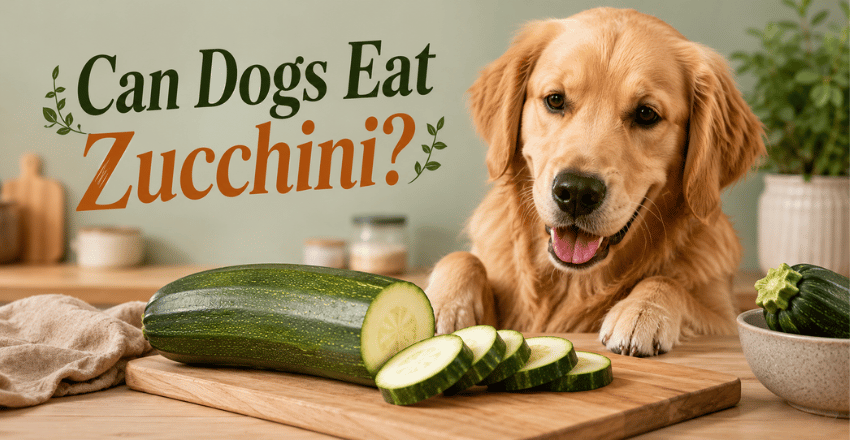
When asking “Can Dogs Eat Zucchini?”, the answer matters because dogs gain weight from treats, not meals. One dental chew can contain more calories than a small dog’s daily treat allowance, and a few biscuits quickly add up. Swapping them for plain zucchini offers a filling, low-calorie alternative that supports healthy weight management.
The numbers behind the swap are not marketing. According to the USDA’s SNAP-Ed seasonal produce guide, one whole medium zucchini, close to 7 ounces, carries 33 calories. That is under 5 percent of what a 25-pound dog eats in a day. A cup of raw slices lands near 20. Here is what that buys you at the treat jar.
| Treat | Typical serving | Approximate calories |
| Zucchini, raw | 1 cup sliced | 20 |
| Canned plain pumpkin | 2 tablespoons | 10 |
| Carrot | 1 medium | 25 |
| Dog biscuit, medium size | 1 biscuit | 40 |
| Cheddar cheese cube | 1 inch cube | 70 |
| Dental chew, medium dog | 1 chew | 70 |
Pumpkin compares well on calories but arrives from a can and gets sloppy. Carrot carries more sugar per bite and less bulk. Neither gives you the sheer volume of a bowl of watery green slices, and volume is what stops a hungry dog nagging you at four in the afternoon. One squash off the shelf costs around $1 and covers a week of treats.
Other garden vegetables work the same way as a low-calorie topper, though the numbers differ. Our guide to which pea varieties are safe for dogs shows where the starch and protein sit in that group, which matters more than it does here.
How Much Is Safe, by Body Weight
Portion by calories rather than by handfuls. Vets use a 10 percent rule: everything outside the complete diet- treats, chews, training bits, and table scraps- stays under a tenth of the day’s calories. Work that ceiling out once, and the serving size answers itself.
| Dog weight | Rough daily calories | 10 percent treat budget | Sensible daily serving |
| 10 lbs | 350 | 35 calories | 2 tablespoons diced, about 3 calories |
| 25 lbs | 700 | 70 calories | Quarter cup sliced, about 5 calories |
| 50 lbs | 1,100 | 110 calories | Half cup sliced, about 10 calories |
| 75 lbs | 1,500 | 150 calories | Three-quarter cup, about 15 calories |
| 90 lbs and up | 1,700 | 170 calories | 1 cup sliced, about 20 calories |
Look at how much room is left in every row. Even a 10-pound terrier eating two tablespoons has spent under a tenth of its treat budget, which is why this vegetable behaves differently from anything else in the fridge.
Fiber sets the real ceiling, not calories. Too much at once brings gas and loose stools, so introduce it over four or five days and watch what happens at the other end.
Can Dogs Eat Zucchini Raw, or Is Cooked Better?
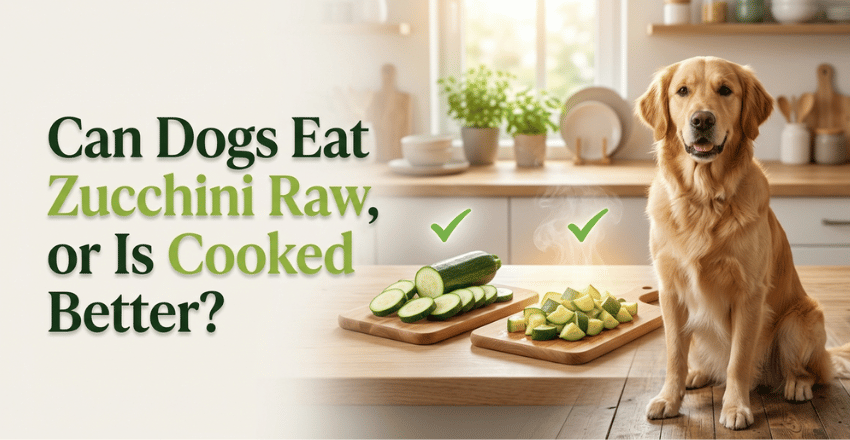
Both work, and the choice is about your dog rather than the food. Raw slices stay crunchy and keep their vitamin C, which heat breaks down. Steamed or roasted pieces go soft, suit older teeth, and sit easier on a gut that has been unsettled.
Leave the skin on. It holds most of the fiber and a good share of the antioxidants, so peeling throws away the part doing the work. Seeds in an ordinary supermarket fruit are soft and harmless. An overgrown marrow from somebody’s garden is a different proposition. Its seeds turn woody, its flesh goes spongy, and its flavor sharpens.
Cut to size before you hand anything over. Coin-sized pieces suit a small dog, half-inch chunks a big one, and whole rounds are a choking shape for either. Cook it plain: no butter, no oil, no salt, no garlic powder. Salt is a quiet problem with human vegetable dishes. Our breakdown of how much sodium one pickle carries shows how fast a plain vegetable turns into a bad idea once someone seasons it.
Bitter Squash: The One Real Poisoning Risk
Everything above assumes an ordinary fruit from a shop, which is what most people mean when they ask dogs to eat zucchini. Home-grown and ornamental cucurbits are the exception, and almost nobody writing about this covers it.
Squash plants make cucurbitacins, bitter compounds the plant uses as a defense. Commercial breeding has stripped them out. Cross-pollination with ornamental gourds, seed saved from last year’s crop, or heat and drought stress can all bring them back into a home-grown fruit.
In people, this is called toxic squash syndrome, and it is documented rather than theoretical. A 2018 case series in the journal Clinical Toxicology reviewed 353 poisonings by non-edible squash reported to French poison control centers. Among those patients, 57.8% developed symptoms, mostly vomiting and diarrhea. A quarter of the squash involved had come out of the garden.
A dog is smaller, so the same mouthful hits harder. Violent vomiting and diarrhea are the signs, and a dog that cannot keep water down dehydrates fast.
The test costs you five seconds. Taste one raw slice yourself before the dog gets any. Normal summer squash tastes of almost nothing. If it tastes sharply bitter, throw the whole fruit out, including the parts that seem fine, because cooking does not destroy cucurbitacins. The decorative gourds on a fall display follow the same rule: bred for looks, not for eating, so keep them off the floor.
Zucchini Bread, Muffins and Fritters
This is how most dogs actually meet the vegetable, and this is the version that causes vet bills. Squash is not a problem. Everything baked in alongside it is.
- Nutmeg sits in nearly every zucchini bread recipe. In quantity, its myristicin causes disorientation, a racing heart, and tremors.
- Raisins turn up in loaf variations and can trigger acute kidney failure in dogs. No safe dose has been established.
- Xylitol hides in sugar-free baking and crashes into a dog’s blood sugar within minutes. Even a small amount is an emergency.
- Onion and garlic powder flavor savory fritters and damage red blood cells.
- Butter, oil, and sugar push one slice toward 200 calories, which is a small dog’s whole day of treats.
Owners underestimate the allium risk most often, because dried powder is concentrated far beyond fresh cloves. Our guide to the toxic garlic dose by body weight puts real numbers on that gap.
Stole a slice of plain loaf with no raisins and no sweetener? Watch and wait. If nutmeg, raisins, or xylitol are in it, ring your vet now rather than in the morning.
If Your Dog Eats Too Much
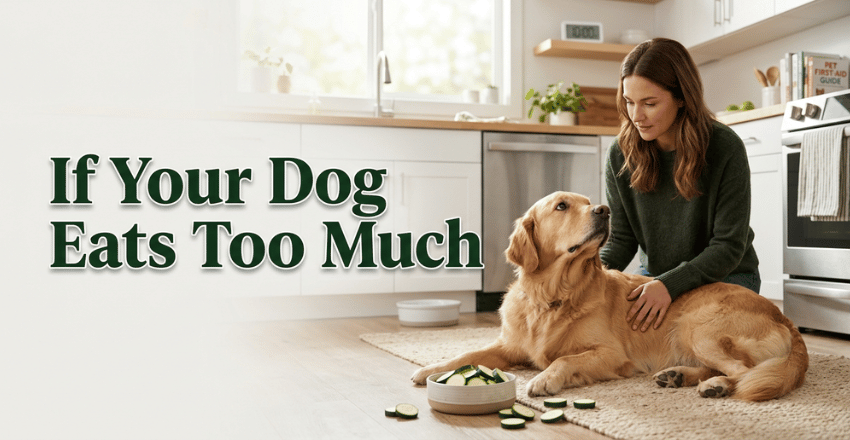
A dog that works through half a raw fruit off the counter will usually be fine. Expect gas, a loose stool or two, and a slightly sorry evening.
Call your vet if you see repeated vomiting, blood in the stool, a hard, swollen belly, or a dog that refuses water. Those point to either a blockage from a large chunk or a bitter fruit, and neither one settles on its own.
What to Do This Week
Weigh your dog, work out the 10 percent calorie ceiling once, and write the number on the treat jar. Then swap one biscuit a day for a few slices of squash and check the scale in a month. For the rest of the produce drawer, our pet food and nutrition guides cover what else is worth sharing.
Frequently Asked Questions
Yes, if it stays inside the 10 percent treat budget and your dog’s stomach handles it. Daily fiber from a new source loosens stools at first, so build up slowly.
From around 12 weeks, in pea-sized pieces. Puppies need most of their calories from a growth diet, so vegetables stay a token amount.
Flowers are edible and harmless. Leaves and stems are prickly and hard to digest, so keep a dog off the plant itself.
Not in practice. Even a plain slice carries sugar, fat, and flour your dog does not need, and most recipes hide nutmeg in the mix. Grate the raw squash over dinner instead.
Skip both. Frying adds the kind of fat that can set off pancreatitis, and pickling adds salt in amounts no dog should touch.
Grate it raw over their usual food or freeze slices in a little water for a summer chew. Cold and crunchy sell far better than warm and soft.