
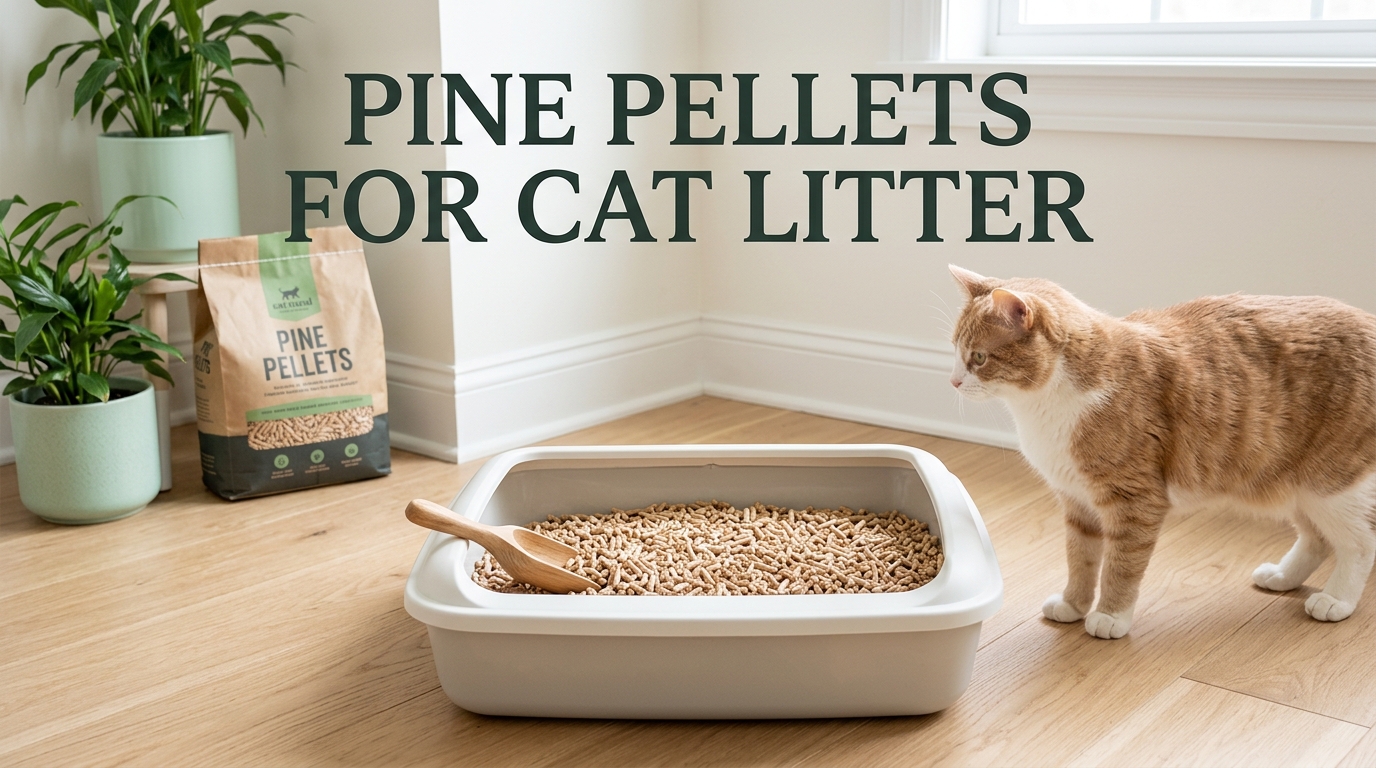
Pine pellets for cat litter can reduce tracking, dust, and the weight of litter you carry. Traditional wood pellets absorb urine, then break apart into sawdust instead of forming scoopable clumps. They work well for some cats, but texture and scent can make others reject the box.
Quick answer: Pine pellet litter can be a practical choice for cats that accept a firm, coarse substrate. Wet pellets absorb urine and gradually crumble into sawdust, so cleaning differs from clumping clay. Choose products made for cat litter or clearly suitable animal bedding, and switch slowly.
Pine Pellet Litter at a Glance
| Question | Quick answer |
|---|---|
| What is it made from? | Compressed, dried pine fibers or sawdust |
| Does it clump? | Traditional pellets do not |
| What happens to urine? | Wet pellets absorb it and break into sawdust |
| Does it track? | Usually less than fine litter, though sawdust can escape |
| Is it dusty? | Many products create less pouring dust than fine clay |
| Best box style | Standard boxes work, but sifting boxes simplify cleanup |
| Biggest drawback | Some cats dislike the firm texture |
| Best buying rule | Choose litter or animal-bedding products with clear ingredients |
Key Takeaways
- Wood pellets handle urine differently from clumping clay.
- Larger pieces often scatter less around the litter box.
- Cats commonly prefer fine, unscented substrates over coarse pellets.
- A sifting box can make it easier to separate spent sawdust.
- Products intended only as heating fuel should not be assumed suitable for pets.
- A gradual transition gives your cat time to accept the different texture.
What Are Pine Pellets for Cat Litter?
Most traditional pellet litter consists of compressed pine fibers formed into short cylinders. The material expands and softens after absorbing moisture. Eventually, wet pieces lose their shape and become loose sawdust.
That process makes pellet litter different from bentonite clay. Clay surrounds urine and forms a firm clump you can scoop. Wood pellets instead require you to manage both intact pieces and used sawdust.
Commercial formulas can also differ from one another. Some wood-based cat litters contain clumping ingredients and behave more like conventional scoopable litter. Always read the package before deciding how to clean the box.
How Pine Pellet Cat Litter Works
Dry pellets begin as dense pieces of compressed wood fiber. When urine reaches them, the fibers absorb moisture and begin to separate. The affected material becomes softer and eventually crumbles.
The remaining intact pellets are still usable. Used material collects lower in the box as smaller particles. Your cleaning routine should focus on removing feces and managing the broken-down material.
Manufacturer directions matter because cleaning advice varies between products. For example, Feline Pine instructs owners to scoop solids daily and manage the sawdust according to its product directions. Follow the label on the litter you buy rather than assuming every wood product works the same way.
7 Benefits and Drawbacks to Consider
1. Larger Pellets Can Reduce Tracking
Large pellets are harder for paws to carry across the floor than fine grains. That can mean fewer particles in hallways, beds, or carpets. Saturated pellets can still break down and leave the box.
A litter mat can help catch loose particles near the entrance. Box shape also affects how far material travels. Petistra’s litter box enclosure guide explains how size and ventilation affect enclosed setups.
2. Many Products Produce Less Pouring Dust
Fine mineral litter can release visible dust when you pour it or disturb it. Pellet products contain much larger pieces, so the initial pour may feel cleaner. Dust levels still vary by brand and by how much sawdust accumulates.
Low dust doesn’t guarantee every cat will prefer the material. Comfort under the paws remains a separate issue. A cleaner floor doesn’t help if a cat refuses the box.
3. The Pellets Usually Do Not Form Urine Clumps
Traditional wood pellets absorb liquid instead of forming a removable clay clump around it. That changes the entire maintenance routine. Owners accustomed to scoopable litter often need time to adjust.
A sifting setup can make separation easier. Intact pieces stay on top while finer used material falls through the openings. A normal litter box can also work if you follow the manufacturer’s cleaning directions.
4. Firm Texture Can Be a Deal Breaker
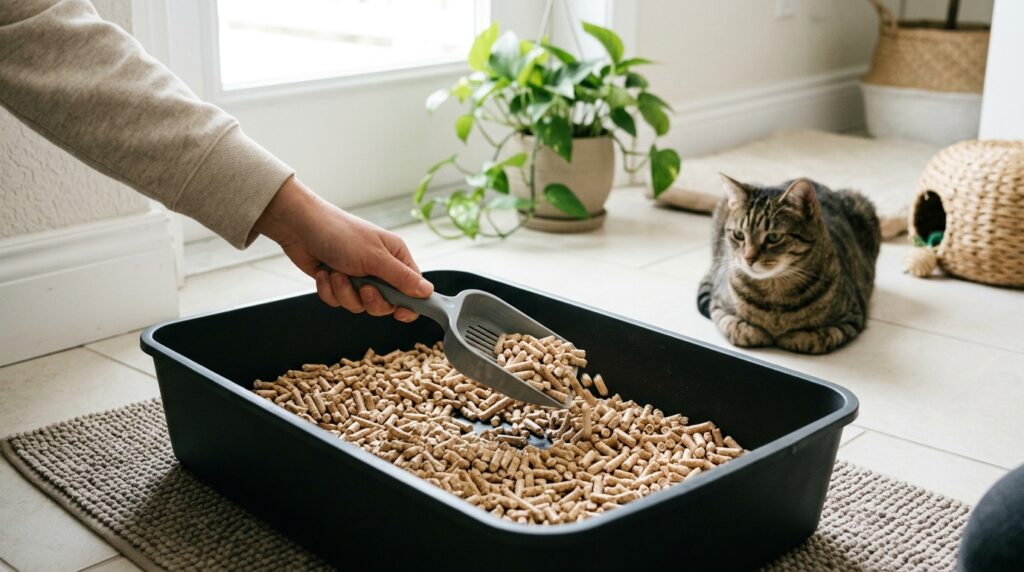
Cats often prefer fine, unscented, sand-like litter. AAFP and ISFM house-soiling guidance specifically discusses that preference. Large pieces therefore may feel unfamiliar or uncomfortable to a cat raised on fine clay.
The concern can be greater for cats with painful paws or joint problems. Cat Friendly Veterinary Environment Guidelines note that some cats find pellet litter uncomfortable. Individual preference should outweigh owner convenience.
5. Natural Wood Scent May Affect Acceptance
Pine litter has a natural wood odor even without added perfume. Some owners enjoy that smell, while a cat may respond differently. Cats have strong scent preferences around their toileting areas.
Avoid using scented deodorizers to mask odor. Feline behavior guidance warns that aromatic litter products can discourage box use. Regular cleaning is safer than trying to cover waste smells.
6. Bags Can Be Lighter Than Clay Alternatives
Wood fiber is often lighter to carry than an equivalent volume of dense clay. That can make refilling and full changes less demanding. Weight varies by product, package size, and formula.
Lighter does not automatically mean cheaper. Compare cost by how much you use over time, not by bag weight alone. Petistra’s best cat litter guide compares common materials and their different tradeoffs.
7. Cat Acceptance Matters More Than the Material
No litter matters if your cat avoids it. Watch for hesitation, balancing on the edge, incomplete digging, or elimination elsewhere. These behaviors can indicate discomfort with the substrate or box.
Return a familiar option if problems begin after a switch. House-soiling can also have medical causes unrelated to litter. Contact a veterinarian if the change seems sudden or is accompanied by urinary symptoms.
Are Pine Pellets Safe for Cats?
Commercial pellet products sold specifically as cat litter are intended for litter-box use. Reputable manufacturers provide clear ingredient and usage information. Feline Pine, for example, says its non-clumping formula uses kiln-dried reclaimed pine shavings.
That does not make every wood pellet interchangeable. Heating-fuel pellets may follow different production specifications and are not automatically pet products. Avoid any bag with unclear ingredients, additives, treatments, or intended uses.
For U.S. shoppers, the simplest rule is to buy products labeled for cats or suitable animal bedding. Check the ingredient list before purchase. When the label leaves you uncertain, choose a product designed specifically for litter boxes.
How to Use Pine Pellets in a Cat Litter Box
You can use pellets in a standard box, although sifting models often make maintenance easier. Start with a clean and completely dry tray. Follow the product’s recommended fill depth, and avoid adding an unusually deep layer.
- Fill the box. Add the amount listed on the package.
- Remove feces daily. Do not let solid waste remain in the tray.
- Check wet areas. Urine-soaked pieces will soften and break apart.
- Manage the sawdust. Sift or remove spent material as directed by the product instructions.
- Top up fresh litter. Add clean material as the usable layer decreases.
- Wash the box regularly. Use mild soap and rinse it thoroughly.
- Watch your cat. Comfort and consistent box use matter more than the cleaning system.
The box itself also needs enough room for comfortable movement. Veterinary guidance commonly recommends generous litter-box dimensions. A cramped setup can cause avoidance, no matter which substrate you choose.
How to Switch Your Cat Without Causing Litter-Box Problems
Do not assume an immediate replacement will work. Cats can develop strong preferences for the substrate they already know. A gradual transition gives them time to investigate the unfamiliar smell and texture.
One approach is to keep the familiar box while adding another box with the new material. Your cat can then show a preference without losing access to a trusted toilet. Keep both trays equally clean so cleanliness doesn’t skew the comparison.
Another option is following the transition directions supplied by your chosen manufacturer. Some brands recommend gradually reducing the old litter over several changes. Never force a reluctant cat to accept a new substrate by removing every alternative.
Kittens deserve extra attention because they explore unfamiliar objects with their mouths. A low-sided box and easy-to-use litter are especially important during early training. Petistra’s 8-week-old kitten care guide covers litter-box setup alongside other first-week needs.
Pine Pellets vs. Clumping Clay Litter
Neither choice wins every category. The better option depends on your cat’s preferences and the cleaning routine you can maintain. Texture acceptance should come before convenience.
| Feature | Pine pellet litter | Clumping clay |
|---|---|---|
| Urine handling | Absorbs and breaks into sawdust | Forms scoopable clumps |
| Texture | Large and firm | Usually fine to medium |
| Tracking | Often lower | Can travel farther on paws |
| Pouring dust | Often lower | Varies by formula |
| Daily care | Scoop solids and manage sawdust | Scoop urine clumps and solids |
| Cat preference | Some cats resist coarse pieces | Fine unscented types are commonly preferred |
| Useful box style | Sifting or standard box | Standard scoopable box |
If pellets fail because of texture, other low-maintenance materials remain available. Silica products absorb moisture differently and have their own advantages and drawbacks. Petistra’s crystal litter guide explains how that option compares.
Who Should Consider Pine Pellet Litter?
Pellet litter can suit a healthy adult cat that accepts coarse material. It can also suit households focused on lower tracking and a lighter litter bag. Owners must be comfortable with a cleaning method that differs from clay.
It may not suit cats that strongly prefer soft substrates. Cats with paw sensitivity, mobility problems, or joint pain may also dislike hard pieces. A familiar fine litter may be the kinder choice for those animals.
Treat your first bag as a trial instead of a permanent commitment. Watch what your cat does rather than relying on product claims. Consistent box use is the clearest sign that the arrangement works.
Frequently Asked Questions
Are pine pellets for cat litter better than clay?
They can be better for households that prioritize lower tracking and lighter litter. Clay usually makes urine clumps easier to remove and has a more familiar texture. Your cat’s willingness to use the box should decide between them.
Do pine pellets control cat urine odor?
Wood fibers absorb moisture, and many commercial products make odor-control claims. Results depend on product design, cat count, diet, and cleaning frequency. Removing waste before the box becomes saturated remains essential.
Can I use horse bedding pellets for cats?
Some animal-bedding products may have simple ingredients suitable for multiple species. You still need to verify the label, ingredients, and manufacturer directions. Don’t assume an unfamiliar product is safe just because the pellets look similar.
Can I use wood-stove pellets as cat litter?
Heating pellets are made for fuel, not feline toileting. Their ingredients and production requirements may differ from dedicated pet products. Choose clearly labeled cat litter or suitable animal bedding instead.
How often should pine litter be changed?
No single schedule fits every product or household. Cat count, box size, fill depth, and manufacturer directions all affect replacement timing. Remove feces daily and replace litter before the box becomes damp or unpleasant.
What should I do if my cat refuses the pellets?
Restore a familiar, clean substrate and give your cat another option. Don’t force the switch by leaving the unwanted litter as the only toilet. Seek veterinary advice if avoidance continues or urinary symptoms appear.
The Bottom Line
Pine pellets can reduce litter-box dust and the amount of material scattered around your home. They also require a different urine-cleaning routine and can feel uncomfortable for cats with sensitive skin. Their success depends as much on feline acceptance as on absorbency.
Start with a small trial, and keep a familiar backup box on hand. Choose a product with clear pet-use labeling, then follow its cleaning directions closely. For more alternatives, compare the other litter types covered across Petistra’s cat care guides.